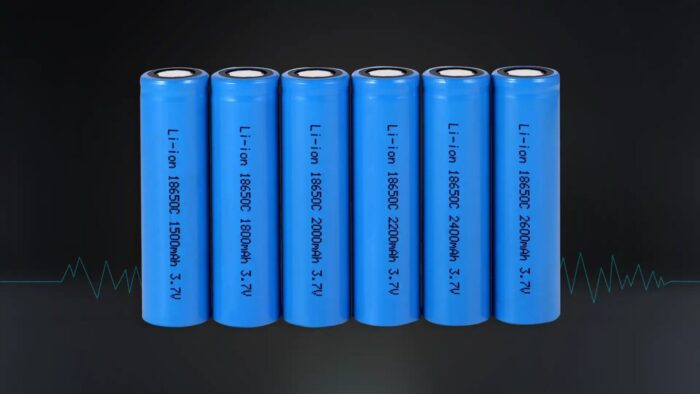
Decoding 18650 Batteries: A Comprehensive guide
You’ve likely encountered teh designation “18650” when exploring rechargeable batteries, especially in devices like laptops, flashlights, and increasingly, electric vehicles. But what does this number sequence actually mean? This guide breaks down everything you need to no about 18650 batteries, going beyond just the size to cover safety, usage, and past context.
what Does 18650 Mean?
Simply put,18650 is a standardized naming convention for lithium-ion cylindrical batteries. It directly refers to the physical dimensions of the cell. The numbers represent:
* 18: The battery’s diameter in millimeters (18mm).
* 65: The battery’s length in millimeters (65mm).
* 0: Indicates a cylindrical format.
Therefore, an 18650 battery is 18mm in diameter and 65mm long, shaped like a common AA battery but with substantially different capabilities.
Why is 18650 a Popular Format?
The 18650 format gained prominence as it struck a crucial balance. It offered a superior combination of size, capacity, and ease of manufacturing compared to earlier battery designs. Laptop manufacturers in the 1990s and early 2000s were among the first to widely adopt 18650 cells, needing reliable, rechargeable power sources at scale.
This early adoption cemented the 18650 as an industry standard. Even with the emergence of newer formats like 21700, the 18650 remains prevalent due to established manufacturing infrastructure and a wide range of available options.
Understanding Battery Chemistry & Specifications
Knowing the size is just the first step. Two batteries labeled “18650” can perform very differently. Here’s what you need to consider:
* Chemistry: Lithium-ion batteries come in various chemistries (like Lithium Cobalt Oxide, Lithium Manganese Oxide, or lithium Nickel Manganese Cobalt Oxide - NMC). Each chemistry offers different characteristics regarding energy density, discharge rate, and safety.
* Capacity (mAh): Measured in milliampere-hours, capacity determines how long a battery can deliver power. Higher mAh means longer runtimes.
* Voltage (V): Most 18650 batteries have a nominal voltage of 3.6V or 3.7V.
* Discharge Rate (C-Rating): This indicates how quickly a battery can safely discharge its energy. A higher C-rating means a faster discharge.
* Internal Resistance (mΩ): Lower internal resistance allows for higher current delivery and less heat generation.
Safety First: Crucial Considerations
Lithium-ion batteries, while powerful, require careful handling. Prioritizing safety is paramount.
Here’s a checklist to ensure safe usage:
* Always choose cells from reputable manufacturers. Avoid unknown brands or suspiciously cheap options.
* Never mix old and new cells in a battery pack. This can lead to imbalances and potential hazards.
* Utilize a proper charger specifically designed for lithium-ion cells. Using the wrong charger can cause overcharging, overheating, or even fire.
* Be mindful of charge and discharge rates. exceeding the battery’s specified limits can cause damage and safety risks.
* Store batteries in a cool, dry place. Extreme temperatures can degrade performance and safety.
* Inspect batteries regularly for damage. Discontinue use if you notice any swelling, leakage, or corrosion.
Some cells include built-in safety features, while others rely on external battery management systems (BMS) for protection. A BMS monitors voltage, current, and temperature, preventing overcharge, over-discharge, and short circuits.
Common Applications of 18650 Batteries
The versatility of 18650 batteries makes them suitable for a wide range of applications:
* Laptops & Power Banks: Providing portable power for computing devices.
* Flashlights & Headlamps: Delivering bright, reliable illumination.
* **Electric Vehicles (EVs) & E-