
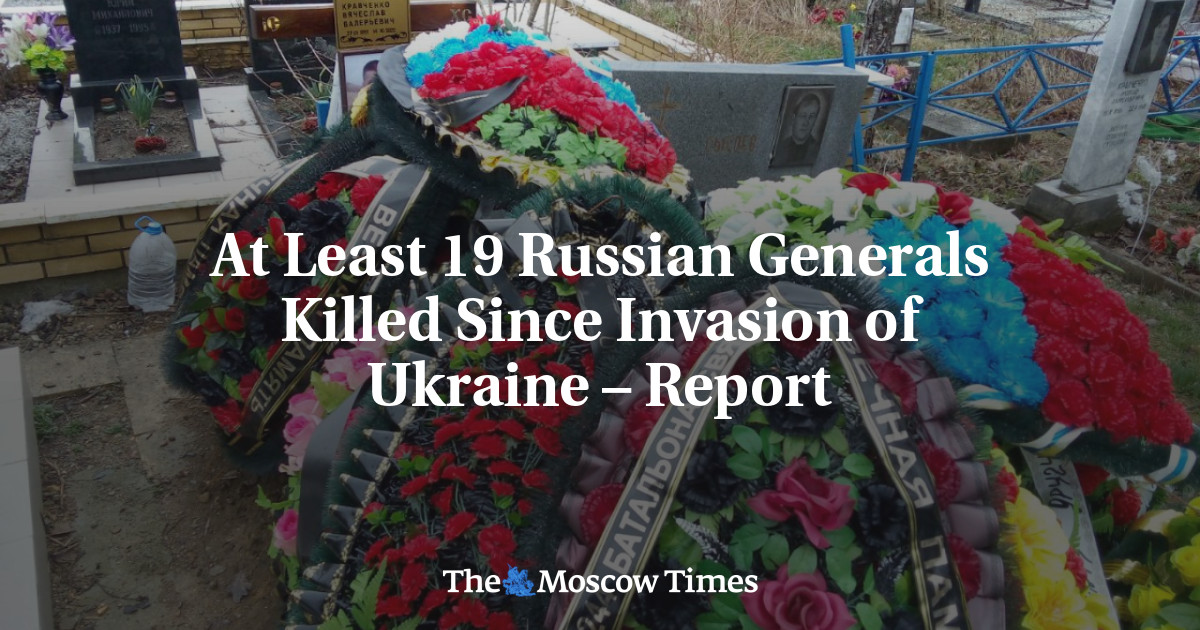
The conflict in Ukraine has, tragically, resulted in critically important losses within the Russian military leadership, with at least 19 generals confirmed to have died as the full-scale invasion began nearly four years ago. Understanding these losses, and the circumstances surrounding them, provides a crucial lens through which to view the evolving dynamics of the war. As of January 11, 2026, the impact of these high-ranking officer casualties continues to be a subject of intense scrutiny and analysis.
While official confirmation from Russian authorities has been inconsistent,open-source intelligence and reports from both Russian and ukrainian sources paint a concerning picture. It’s critically important to remember that verifying information in a conflict zone is incredibly challenging, and figures are constantly being updated.
Russian General Fatalities: A deep Dive
The first wave of reported general deaths occurred in 2022, with figures like Andrei sukhovetsky, Oleg Mityaev, Vladimir Frolov, Andrei Simonov, Kanamat Botashev, and Roman Kutuzov falling in the early stages of the conflict. These initial losses signaled a level of resistance and effectiveness from Ukrainian forces that may not have been fully anticipated.
Subsequent years witnessed further casualties among Russia’s senior military personnel. Generals Sergei Goryachev, Oleg Tsokov, and Vladimir Zavadsky were among those killed, demonstrating the sustained risk faced by commanders throughout the war.
More recently, the deaths of Igor Kirillov, who led Russia’s defense against radiological, chemical, and biological threats; Yaroslav Moskalik, a key figure in the General staff’s operational planning; Mikhail Gudkov, a deputy commander of the Navy; and Fanil Sarvarov, responsible for operational training, highlight the breadth of the impact. these losses span various branches and specializations within the Russian armed forces.
did You Know? The loss of experienced military leaders can significantly disrupt command structures,operational planning,and overall battlefield effectiveness. This is notably true in a complex and rapidly evolving conflict like the one in Ukraine.
Reports indicate that these senior officers have been killed in a variety of circumstances.Some perished near the front lines, while others were struck in attacks on command posts or during aviation incidents. Explosions and potential sabotage operations have also contributed to the casualties. early in the war, sniper fire and artillery strikes were reportedly responsible for the deaths of several generals.
Interestingly, not all of those killed were actively serving in customary military roles. Some were retired officers brought back into service, while others were involved with volunteer formations, including mercenary groups and the Defense Ministry’s “Storm Z” units, comprised of recruited prisoners. This highlights the extent to which Russia has mobilized various resources in its war effort.
the scale of Russian losses extends beyond just generals. A senior NATO official stated in early December 2025 that the total number of Russian soldiers killed or wounded could be nearing 1.15 million. This figure underscores the immense human cost of the conflict.
Further corroborating these high casualty figures, BBC Russian and Mediazona reported that at least 152,142 Russian military deaths had been confirmed through open-source data

AI in 340B: Improving Program Efficiency with Prescreening
Denmark & Trump: Growing Frustration & Trade Tensions


Related Posts

Creche Closures: Ireland Faces Childcare Shortages After Christma ...
January 11, 2026
Venezuela News: Latest on Trump’s Actions Against Maduro’s Regime ...
January 11, 2026


