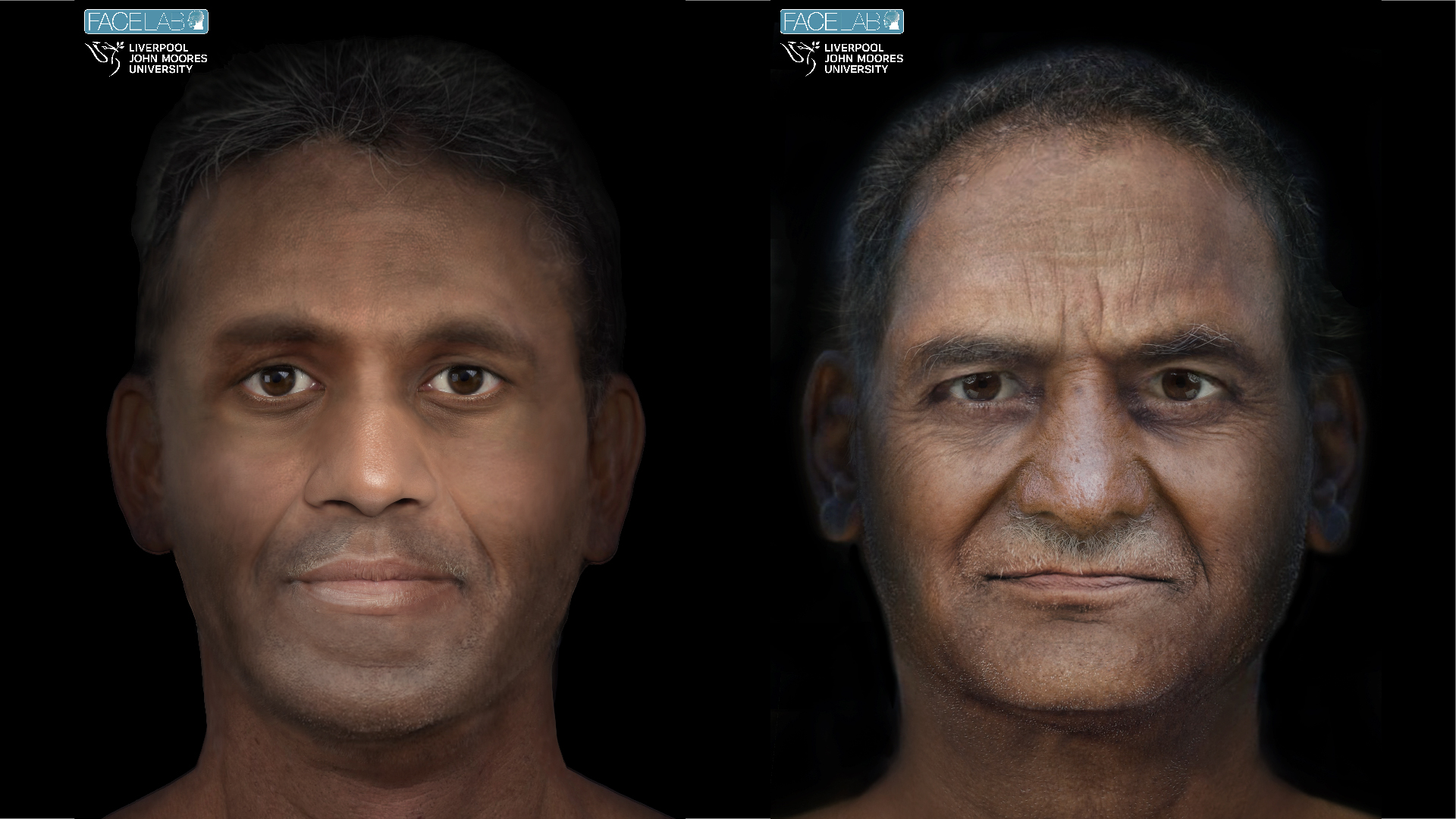
Faces of the Past: Reconstructing Ancient South Indians from 3,000-Year-Old Skulls
For the frist time, scientists have unveiled remarkably lifelike facial reconstructions of individuals who lived in south India over 3,000 years ago. These aren’t just artistic renderings; they’re based on meticulous anatomical analysis and cutting-edge forensic technology, offering a compelling glimpse into the lives of our ancestors. This breakthrough provides valuable insights into the genetic history and physical characteristics of early populations in the region.
Unearthing the Past: The Discovery & Initial Findings
The skulls, discovered during archaeological excavations in Tamil Nadu, India, date back to around 1500 BCE. Initial research suggests these men were likely part of a pastoral or agricultural community.Interestingly, analysis indicated they were between 50 and 60 years old at the time of their deaths, though the exact causes remain a mystery.
What makes this discovery particularly exciting is the potential to connect these ancient individuals to modern populations. Preliminary genetic findings hint at a close relationship between these ancient men and present-day South Asian communities. However, more detailed genetic analysis is needed to confirm these connections.
From Skull to Face: The Reconstruction Process
Bringing these ancient faces to life required a elegant, multi-stage process. Hear’s a breakdown of how the researchers achieved these stunning reconstructions:
* CT Scanning: High-resolution CT scans were taken of the skulls, creating detailed 3D virtual models. this allowed scientists to map the underlying bone structure with unbelievable precision.
* Facial Muscle & Tissue Reconstruction: These 3D models were then sent to Face Lab at Liverpool John Moores University in the U.K.,a leading research unit specializing in facial reconstruction.Experts digitally rebuilt the muscles, fat, and skin layers around the skull.
* Referencing Modern Populations: To ensure accuracy, the team utilized extensive databases of modern South Asian populations. This provided crucial information about typical soft tissue depths and facial characteristics.
* artistic Interpretation: While grounded in scientific data, some degree of interpretation was necessary. Researchers made informed decisions regarding eye,skin,and hair colour,as well as the depiction of age-related features. currently,the reconstructions utilize the average characteristics of South Indians,but will be refined with further DNA analysis.
“These [reconstructed] models can help us to understand people from the past and allow us to compare ourselves to our ancestors,” explains Caroline Wilkinson,director of Face Lab.
The Importance of DNA Analysis: Refining the Picture
While the initial reconstructions are impressive, the research team emphasizes this is just the beginning. Ongoing DNA studies promise to unlock even more details about these ancient individuals.
Specifically, scientists hope to:
* Pinpoint Ancestry: More precise DNA analysis will help trace the specific ancestries of these men, possibly revealing their origins and migration patterns.
* Determine Physical Traits: DNA can provide clues about eye color, skin pigmentation, and hair color, allowing for more accurate facial reconstructions.
* Understand Health & Diet: Genetic information can also shed light on the health status, dietary habits, and potential diseases experienced by these ancient people.
currently, researchers are limited by a lack of region-specific DNA data for Tamil Nadu and broader South India. Ganesan, the lead researcher, notes that the current reconstructions are a “first draft” that will be updated as new genetic information becomes available.
Why This Matters: Connecting to Our Roots
This project isn’t just about recreating faces; it’s about connecting with our shared human history. By visualizing the past, we gain a deeper understanding of who we are and where we come from.
As Ganesan explains, these ancient men may, in part, be the ancestors of people living in South India today. Further research will hopefully confirm this connection, offering a powerful link to the past for modern communities.
This research underscores the power of interdisciplinary collaboration – combining archaeology, genetics, and forensic science – to unlock the secrets of our ancestors and illuminate the story of human evolution.
Resources:
* [Caroline Wilkinson – Liverpool John moores University Profile](https://profiles.ljmu.ac.uk/8896-