
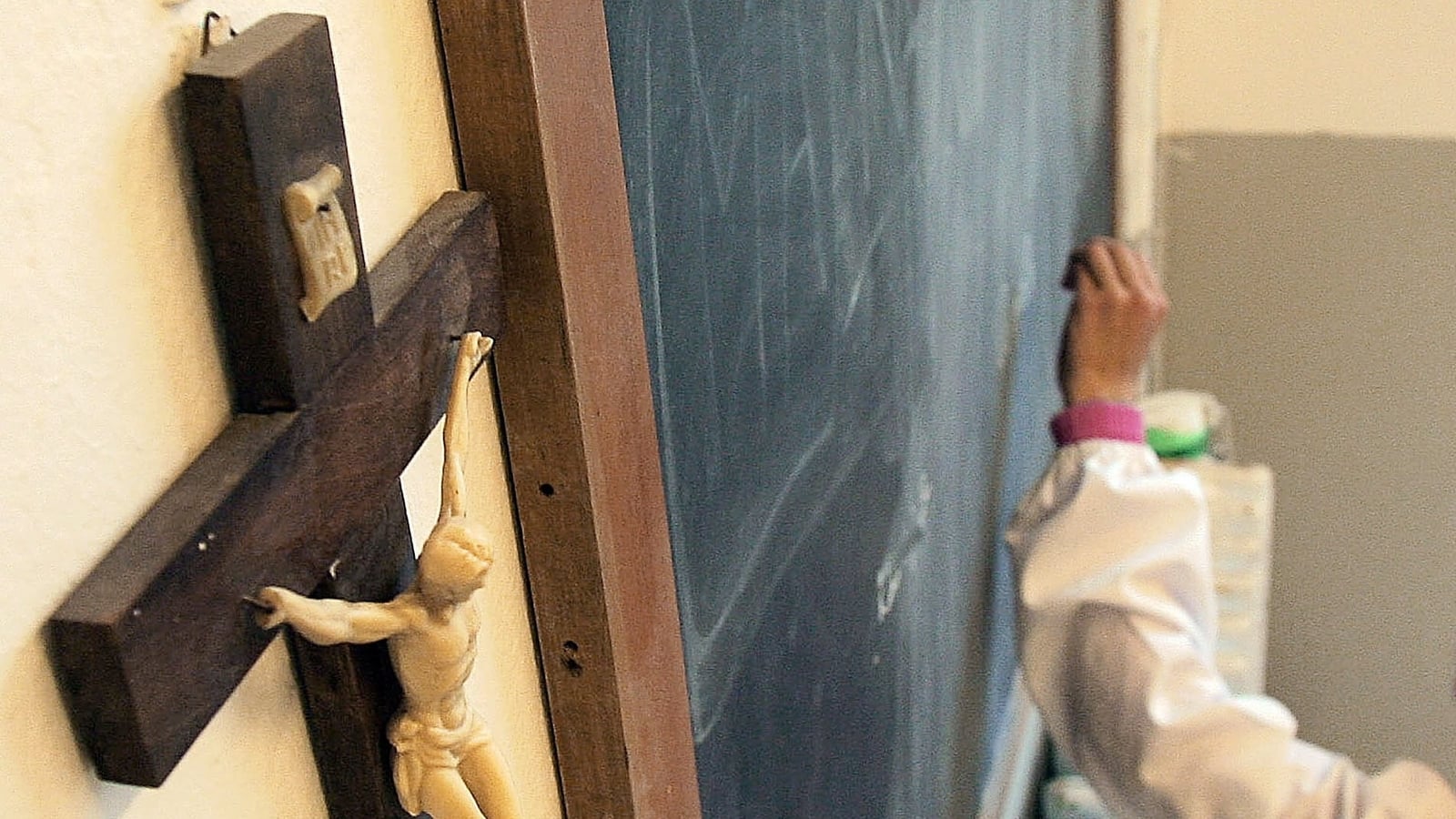
A significant shift in parental preference is emerging within the Irish education system, as a national survey reveals that around 40% of parents with children in Catholic or other religious denomination primary schools would prefer their children to attend a multi-denominational school.
The data, gathered through a survey conducted by the Department of Education and Youth, highlights a growing demand for diverse educational options in a landscape historically dominated by religious patronage. This trend reflects broader societal changes in Ireland, where secularization and shifting demographics are prompting a re-evaluation of how primary education is delivered.
For many families, the desire for multi-denominational education is tied to a preference for a curriculum where children learn about all faiths and belief systems. This movement is gaining momentum as the government seeks to increase parental choice and ensure that both faith-based and non-religious options are accessible to all families.
Understanding the Shift Toward Multi-Denominational Education
To understand why this shift is occurring, it is necessary to define the existing structures of the Irish school system. A denominational school is one with a religious patron. historically, the vast majority of primary schools in Ireland have fallen under Catholic patronage according to the Department of Education and Youth. The patron is the entity that determines the school’s ethos and appoints the board of management.
In contrast, a multi-denominational school operates under a non-religious patron. In these institutions, students engage with a multi-denominational programme that covers various belief systems rather than focusing on a single faith. Notable examples of such providers include Educate Together schools, An Foras Pátrúnachta schools and Community National Schools within the ETB sector as detailed by government publications.
The preference for these schools is often linked to Ireland’s changing demographic profile. Since the “Celtic Tiger” era, immigration and increased secularization have led many parents to seek an environment that reflects a more pluralistic society. This has led to ongoing discussions regarding the separation of church and state in the realm of public education.
The Scale of Religious Patronage in Ireland
The dominance of religious influence in Irish primary education is reflected in the statistics. As of 2021, out of 3,126 standard schools, 2,760 (88%) had Catholic patrons per Wikipedia’s record of denominational education. Other religious affiliations include the Anglican-associated Church of Ireland, which controlled 172 schools (5.7%), while 1% were managed by other religious organizations.

Only 168 schools, or 5.4% of the total, were controlled by organizations not affiliated with any particular religion at that time via Wikipedia. This high concentration of religious control dates back to the Stanley Letter of 1831, creating a system where the denomination heavily influences the school’s ethos, even though the Department of Education prescribes a standard curriculum for all publicly funded schools in subjects other than religion.
Key Components of School Patronage
- The Patron: The entity (religious or non-religious) that owns or manages the school and determines its overall ethos.
- Board of Management: Appointed by the patron to handle the day-to-day management of the school.
- Ethos: The character or spirit of the school, which can include specific religious instruction or a multi-faith approach.
- Public Funding: Most national schools, regardless of patronage, are funded by the Department of Education.
Schools Reconfiguration for Diversity
In response to the growing demand for non-religious options, the Irish government has introduced the “Schools Reconfiguration for Diversity” process. The primary aim of this initiative is to increase the number of multi-denominational primary schools across the country according to the Department of Education and Youth.
This process facilitates the “transfer of patronage,” where a school moves from a denominational (Church) patron to a multi-denominational (non-religious) patron. Crucially, this transition occurs if the school community expresses a desire for the change. When patronage is transferred, the new patron takes over responsibility for the school, which typically results in a change in the school’s ethos.
This policy aligns with the Programme for Government, which includes a specific commitment to increase choice for parents by ensuring families can access both faith-based and multi/non-denominational education per official government guidance.
Impact on Admissions and Accessibility
The current system allows denominational schools to give priority of admission to pupils of their specific denomination. However, there is a notable exception for Catholic schools, and no school is permitted to refuse admission based solely on religion via Wikipedia.
Despite these rules, the prevalence of Catholic schools remains a point of contention for advocates of the separation of church, and state. Some religious leaders have acknowledged this tension; for example, the Catholic Archbishop of Dublin, Diarmuid Martin, has previously expressed a desire to divest the archdiocese of some of its schools to provide more options for non-Catholic parents per Wikipedia.
Comparison of School Types
| Feature | Denominational School | Multi-Denominational School |
|---|---|---|
| Patron | Religious organization/cleric | Non-religious body (e.g., ETB, Educate Together) |
| Ethos | Influenced by a specific faith | Inclusive of all faiths and belief systems |
| Curriculum | Standard state curriculum + religious instruction | Standard state curriculum + multi-faith programme |
| Primary Goal | Education within a faith tradition | Education reflecting societal diversity |
The Department of Education and Youth continues to engage with the public through online surveys for parents of primary school children—and those with children not yet in school—to better understand the needs of the community and guide the reconfiguration process according to government publications.
The next phase of this transition depends on the ongoing “Schools Reconfiguration for Diversity” process and the willingness of individual school communities to pursue a transfer of patronage. Parents seeking more information on how to participate in these changes can refer to the official publications from the Department of Education and Youth.
We welcome your thoughts on the balance between faith-based and multi-denominational education. Please share this article and join the conversation in the comments below.