
Poland’s WWII Predicament: A Cautionary Tale for Today’s World
The Second World War presented Poland with an unfeasible situation, a strategic bind where every option led to further hardship. Forced to balance reliance on allies with it’s own military capabilities – including a clandestine program involving biological and chemical weapons – Poland ultimately found itself abandoned. This article examines Poland’s experience as a stark warning for nations navigating today’s increasingly volatile international landscape.
A Nation caught in Zugzwang
Poland’s plight during WWII can be described, in chess terms, as zugzwang.This means every possible move only worsened their position. Even leveraging unconventional warfare tactics, like their secret weapons program, couldn’t overcome the overwhelming German forces.
Furthermore, Poland’s Western allies ultimately failed to provide meaningful support. In 1944-1945, they effectively turned their backs on Poland, a betrayal that continues to resonate today.
The Warsaw Uprising and Allied Abandonment
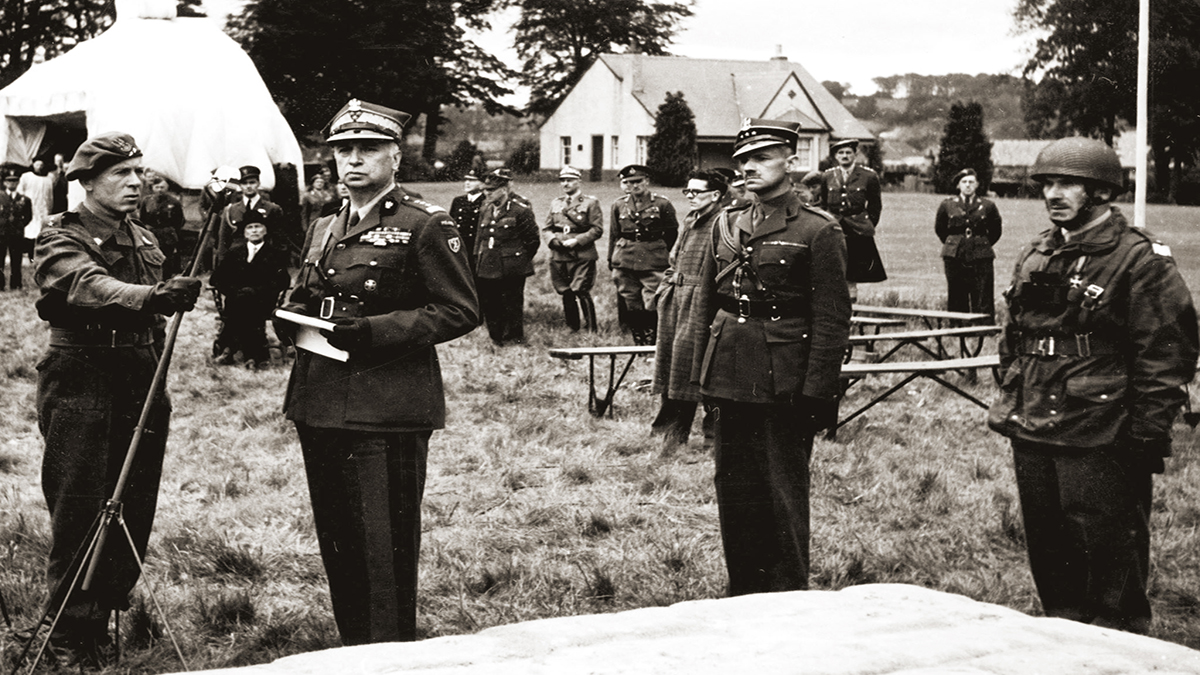
The Warsaw Uprising of 1944 vividly illustrates this abandonment. When General Sosnkowski, a key figure in the Polish government-in-exile, openly criticized the allies’ inaction, he faced swift repercussions. The British government pressured his removal in September 1944.
This pattern continued after the war.In 1945, Western powers withdrew recognition of the legitimate Polish government-in-exile, rather recognizing the Soviet-controlled regime. Sosnkowski himself was denied entry to both the UK and the US for years, and, like many Polish veterans, was denied a military pension. He eventually settled in Canada, where he passed away in 1969.
Lessons from History: Human Nature Remains constant
As American historian John Toland observed, history doesn’t repeat, but human nature does. Today, the post-WWII international order is fracturing, and interstate conflicts are on the rise. Consequently, many nations are grappling with how to secure their future.
You might be considering relying on:
International law
Alliances with stronger partners
Independent military strength
A combination of thes approaches
However, the Polish experience demonstrates that none of these strategies guarantee success. It’s a sobering reminder of what happens when a nation, stripped of everything, fights with everything it has left.
The Will to Survive
Ultimately, survival hinges on a nation’s unwavering will to endure. This spirit is powerfully captured in the lyrics of the Polish national anthem, Mazurek Dąbrowskiego, written in 1797:
Poland has not yet perished,
So long as we still live.
What the foreign force has taken from us,
We shall with sabre retrieve.
These words encapsulate the enduring Polish spirit of resistance and determination.
Implications for Today
The Polish case offers critical insights for contemporary geopolitical challenges.you must understand that relying solely on external factors – alliances or international norms - can leave you vulnerable. Building a strong defense and fostering national resilience are essential, but even these may not be enough.
Therefore, a realistic assessment of potential threats and a commitment to self-reliance are paramount. The story of Poland in WWII serves as a potent reminder that in a world of shifting alliances and competing interests, a nation’s fate frequently enough rests on its own resolve.Robert Petersen, Ph.D., is a special advisor at the Center for Biosecurity and Biopreparedness in Denmark.
Image: Centralne Archiwum Wojskowe via Wikimedia Commons


