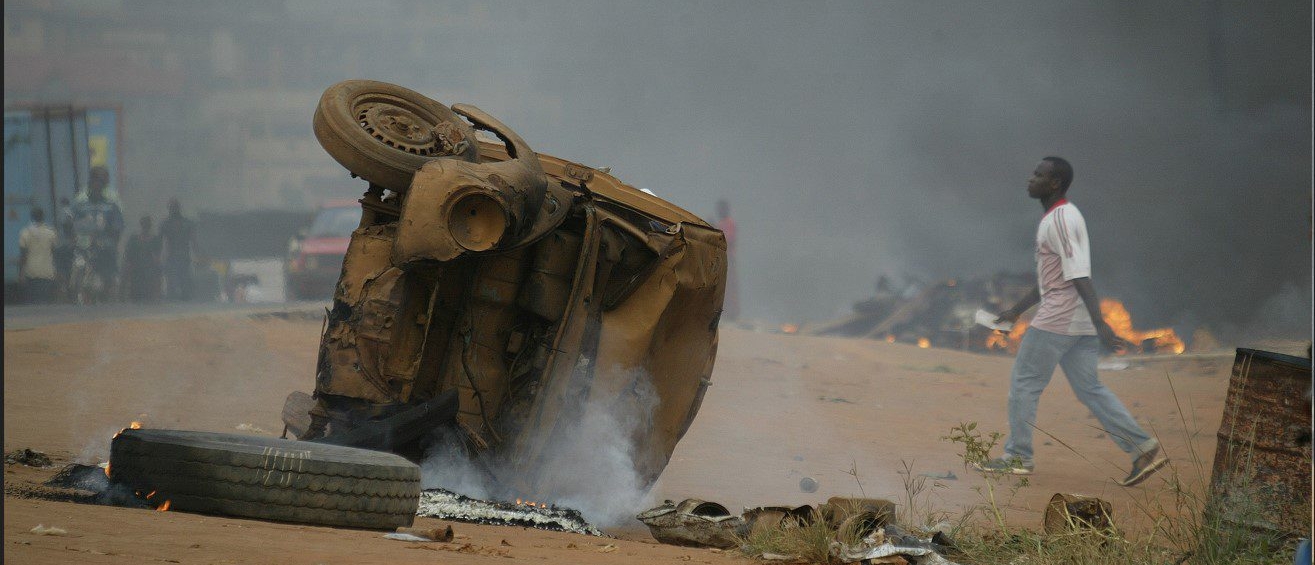
Escalating Violence and Human Rights Crisis in South-East Nigeria: A Deep Dive into the Biafran Conflict and Regional Insecurity
For years, South-East nigeria has been gripped by a spiraling security crisis, marked by escalating violence, widespread human rights abuses, and a pervasive climate of fear. While the roots of the conflict are complex, stemming from long-standing grievances related to marginalization and self-determination, the current situation demands urgent attention and a complete understanding of the actors involved and the devastating impact on civilian populations.This report, drawing on extensive documentation by Amnesty International and independent analysis, provides a detailed overview of the crisis, its key drivers, and the urgent need for accountability and a rights-respecting approach to security.
The Core of the Conflict: IPOB, ESN, and the “Unknown Gunmen”
The current unrest is inextricably linked to the Indigenous People of Biafra (IPOB), a secessionist group advocating for the independence of the South-East, historically the Biafran region during the Nigerian Civil War (1967-1970). IPOBS militant arm, the Eastern Security Network (ESN), was established in December 2020, ostensibly to protect communities from attacks by herdsmen and other criminal elements. Though,the group has been increasingly implicated in a wave of violence across the region.Nigerian authorities consistently attribute the majority of deadly attacks in the South-East to IPOB/ESN. These accusations range from targeted killings of security personnel and government officials to attacks on infrastructure and the enforcement of a disruptive “sit-at-home” order. IPOB/ESN vehemently deny direct involvement in the activities of the so-called “unknown gunmen” – a shadowy collective responsible for numerous attacks – claiming these are separate actors exploiting the situation.However, the enforcement of the sit-at-home order, initiated on August 9, 2021, has had a profoundly negative impact on the region. Individuals defying the order have faced brutal consequences,including beatings and even death. Schools have been forced to close, disrupting education for countless children, and markets have shuttered, crippling local economies in Abia, Anambra, Ebonyi, Enugu, and Imo states. This demonstrates a clear pattern of coercion and control exerted by IPOB/ESN, nonetheless of their direct involvement in all violent incidents.
A Climate of Fear and the Erosion of Daily Life
The pervasive insecurity has fundamentally altered life for millions in South-East Nigeria. Fundamental human rights – the right to life, physical integrity, security, liberty, and freedom of movement – are routinely violated.Many residents have been unable to return to their ancestral homes for years, fearing attack or abduction. Customary cultural practices, such as weddings and funerals, are increasingly being relocated outside the South-East to avoid the risk of violence.
This fear has allowed criminal elements to exploit the vacuum of security,turning some communities into “ungoverned spaces.” Traditional rulers have been targeted and removed, residents displaced, and entire communities brought under the control of gunmen, notably in areas like Agwa and Izombe in Imo State, and Lilu in Anambra State. This breakdown of traditional authority structures further exacerbates the instability and creates fertile ground for further abuse.
Beyond the actions of IPOB/ESN and the “unknown gunmen,” Amnesty International’s research reveals a disturbing rise in activity by various cult groups,operating with impunity amidst a thriving illicit drug trade. These groups contribute to the overall climate of lawlessness and violence, particularly in towns like Obosi, Awka, Onitsha, Ogidi, and Umuoji in Anambra State.
Abuse of Power: State-backed Paramilitary and Security Force Violations
The response to the crisis has been marred by importent human rights violations committed by both state and non-state actors. The Ebube Agu paramilitary force,established by the South-east governors in April 2021,intended to bolster security,has instead become a tool for harassment,intimidation,and repression. Reports document arbitrary arrests and detention, torture, extrajudicial executions, enforced disappearances, and the destruction of property carried out by Ebube Agu operatives.
Critically, Nigerian security agencies – including the military and police – have also been implicated in serious abuses during operations in the South-East.These include unlawful killings, arbitrary arrests and detention, torture, enforced disappearances, and the destruction of civilian property. The lack of accountability for these actions fuels resentment and further erodes trust in the state.
The scale of these atrocities is staggering, yet justice and adequate reparations remain elusive for victims of the violence. The exact number of deaths since August 2015