EU Distances Itself from Commissioner’s “Genocide” Accusation Against Israel amidst Growing International Debate
The European Commission has publicly distanced itself from remarks made by Executive Vice President Teresa Ribera, who accused Israel of committing genocide in Gaza during a speech at Sciences Po university in France. This comes as a growing number of organizations and scholars are debating the legal and moral implications of Israel’s military operations, while simultaneously, the conflict continues to exact a devastating toll on civilians.
A Controversial Statement and Immediate Backlash
Ribera, a prominent voice critical of Israel’s actions in Gaza within the EU, explicitly used the term “genocide” for the first time in a public address on Thursday. She stated that the situation in Gaza “exposes Europe’s failure to act and speak with one voice,” even as international calls for a ceasefire mount. The israeli government swiftly condemned Ribera’s statement, labeling her a “mouthpiece for Hamas.”
However, the European Commission was quick to clarify that Ribera’s views do not represent an official EU position. During a press conference in Brussels on Friday,Commission Chief Spokesperson Paula Pinho emphasized that determining whether genocide has occurred is a matter for the courts,stating,”It’s not up to the Commission to judge on this question and definition… there has been no Collage [of Commissioners] decision on this particular subject.” EU Spokesperson for Foreign Affairs and Security Policy, Anouar El Anouni, further reinforced this position, stressing the need for a thorough legal process to establish facts and determine if the criteria for genocide, as defined by international law, have been met.
The International association of Genocide Scholars Weighs In
Ribera’s comments arrive alongside a meaningful progress in the academic sphere. The International Association of Genocide Scholars (IAGS), a leading institution comprised of approximately 500 genocide studies experts, recently passed a resolution asserting that “Israel’s policies and actions in Gaza meet the legal definition of genocide.”
The IAGS resolution cites “indiscriminate and deliberate attacks against civilians and civilian infrastructure” as evidence supporting their determination. they have called for an immediate cessation of all actions constituting genocide, war crimes, and crimes against humanity. Israel has vehemently rejected the IAGS’s accusation, dismissing the resolution as a “disgrace to the legal profession.”
Understanding the Legal Definition of Genocide
The term “genocide” carries immense weight, rooted in the horrors of the Holocaust.It is legally defined by the 1948 Genocide Convention as acts “committed with intent to destroy, in whole or in part, a national, ethnical, racial or religious group.” Establishing this intent is a crucial and complex element in determining whether acts constitute genocide.
The international community largely agrees that a formal ruling on whether genocide has occurred requires a judgment from a competent court – either national or international. This highlights the sensitivity surrounding the term and the importance of due process.
The Context of the Ongoing Conflict
The current conflict was ignited by the October 7th, 2023, attacks on southern Israel by Hamas-led militants, resulting in the deaths of approximately 1,200 peopel, the majority of whom were civilians.Hamas also took 251 hostages,50 of whom remain captive,with 20 believed to be alive.
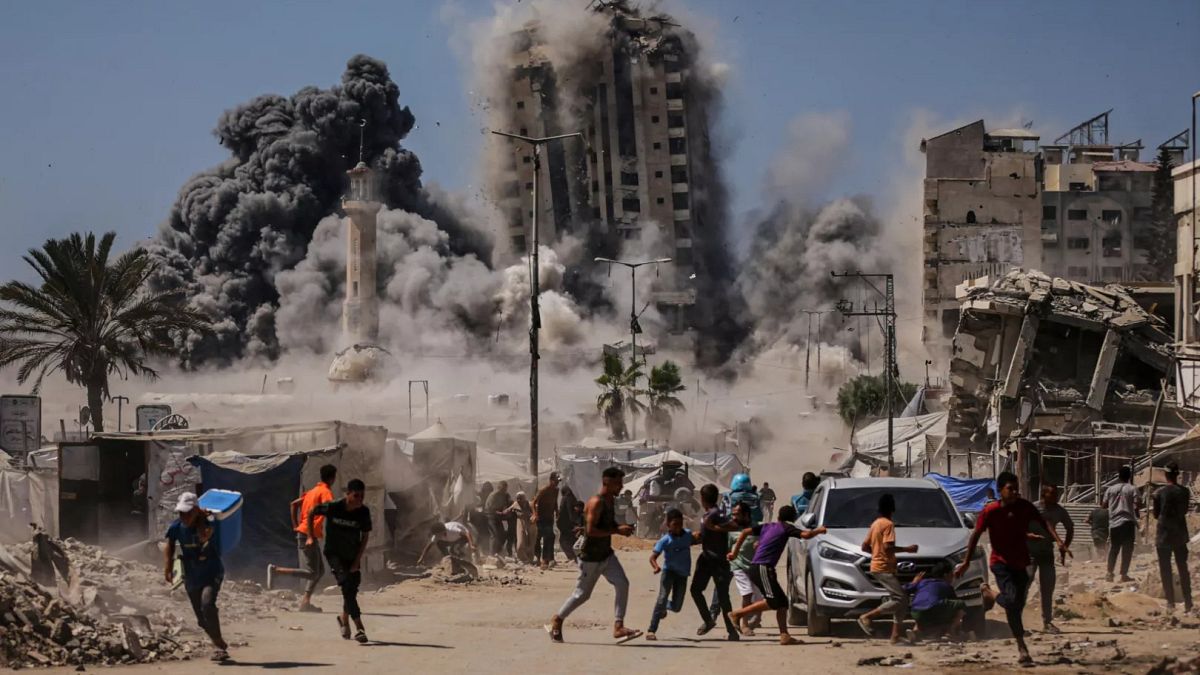
Israel’s subsequent military offensive in Gaza has resulted in a catastrophic humanitarian crisis. According to the Hamas-run Gaza Health Ministry,over 64,000 Palestinians have been killed,a figure that does not differentiate between combatants and civilians. Large portions of Gaza have been reduced to rubble, and over two million people – the vast majority of the population – have been displaced. The accuracy of casualty figures reported by the Gaza Health Ministry,which is controlled by Hamas,has been questioned by some sources.A Deepening Crisis and the Need for Accountability
The diverging opinions on whether the situation in gaza constitutes genocide underscore the complexity of the conflict and the urgent need for a thorough investigation. While the European Commission has sought to distance itself from Ribera’s specific accusation,the growing international debate,coupled with the IAGS resolution,highlights the increasing pressure on Israel to address concerns about the proportionality and legality of its military actions.
The situation demands a renewed focus on achieving a lasting ceasefire, providing humanitarian aid to the affected population, and ensuring accountability for any violations of international law. The international community must prioritize a path towards a just and lasting resolution that protects the rights and dignity of all involved.
[AuthorBio-[AuthorBio-[AuthorBio-[AuthorBio-Crucial for E-E-A-T]
[Insert a
Worth a look