Echoes of the Punic Wars: Remarkable Underwater Finding Reveals Details of Ancient Naval Battle
A stunning archaeological find in the Mediterranean Sea is offering unprecedented insight into one of historyS most pivotal conflicts: the First punic War between Rome and Carthage. Researchers have unearthed a wealth of artifacts from the decisive 241 B.C. Battle of the Aegates Islands, including a remarkably preserved 2,200-year-old naval battering ram. This discovery isn’t just about ancient weaponry; it’s about bringing a dramatic clash of civilizations to life.
A Battering Ram and a New Inscription
the recovered bronze battering ram,designed to be mounted on the prow of a Roman warship,underwent meticulous cleaning and study. Surprisingly, a new inscription was revealed, directly linking the ram to Gaius Sulpicius Gallus, a prominent Roman magistrate during the First Punic War. This connection provides a tangible link to a key figure in Roman history and offers valuable context to the artifact’s origins.
Uncovering the Tools of War
Utilizing advanced CT scan technology, the team investigated approximately 30 newly discovered metal artifacts encrusted wiht centuries of rust. These scans revealed a collection of weaponry – swords, spears, and javelins – believed to have been used during the intense naval battle.The presence of these weapons suggests a chaotic and violent encounter, and raises questions about how they ended up on the seabed.
Theories on the Artifacts’ Fate
Several theories attempt to explain the presence of these artifacts. One possibility is that a Roman ship, captured by the Carthaginians, was stripped of its heavy equipment. According to some experts, the Carthaginian crew may have jettisoned the equipment in a desperate attempt to outmaneuver the pursuing Roman navy.
Another intriguing hypothesis suggests the Carthaginians employed mercenaries from Gaul and Iberia.These mercenaries were known to utilize Montefortino helmets, several of which have been previously discovered alongside the rams near the Egadi Islands.
The Importance of the Montefortino Helmets
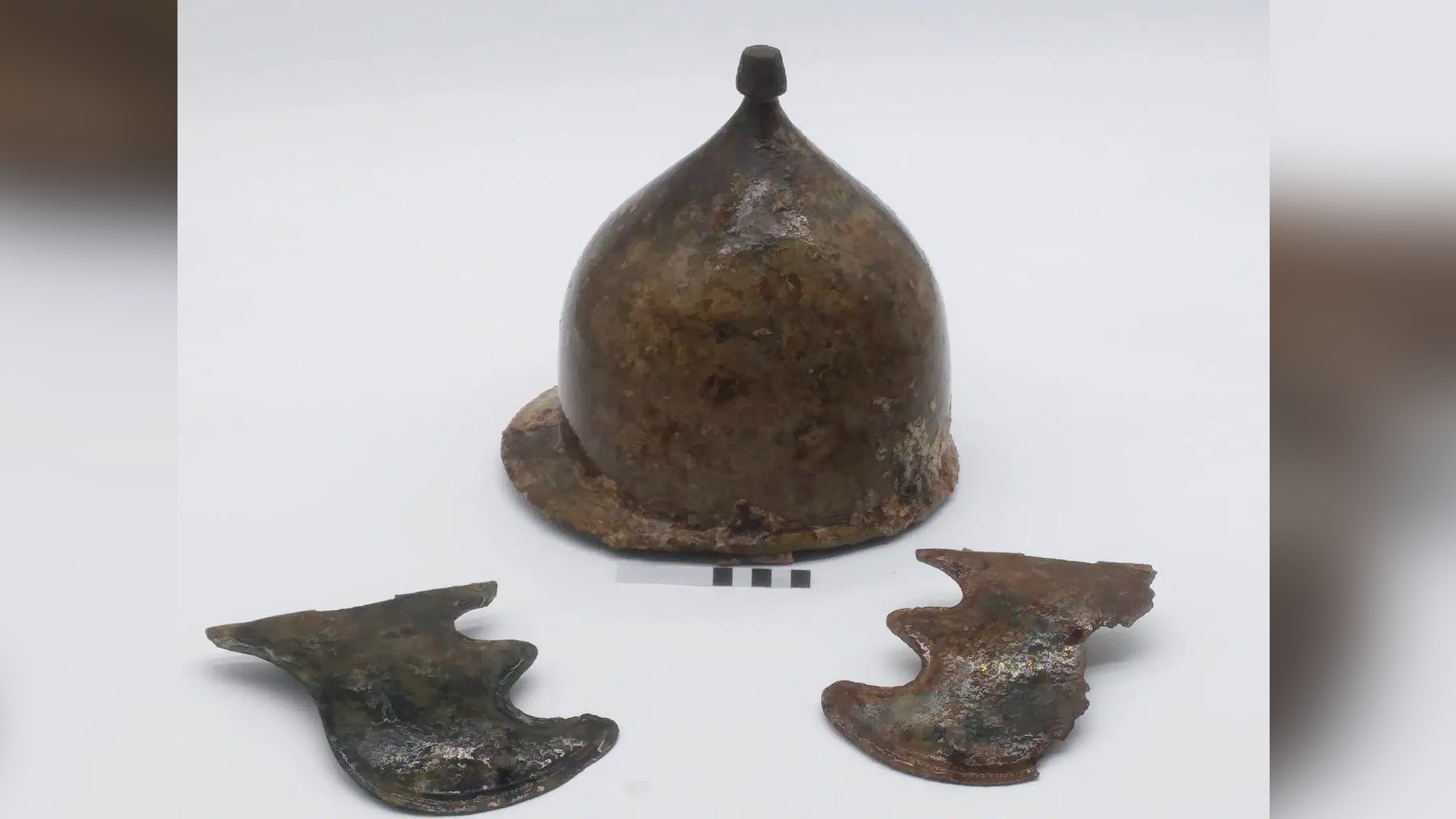
The discovery of a well-preserved Montefortino helmet is particularly exciting for archaeologists. These helmets were common during that era,but finding one with its cheek pieces intact is rare. Most previously discovered helmets have had their components scattered across the seabed, making this find exceptionally valuable for understanding the construction and use of this protective gear.
As one archaeologist noted, the intact cheek pieces offer a unique prospect to study the helmet’s design in greater detail. This allows for a more accurate reconstruction of how Roman and allied soldiers were equipped during the Punic Wars.
What This Means for Our Understanding of the Punic Wars
These discoveries are more than just a collection of ancient objects. They represent a direct connection to a pivotal moment in history. You can almost visualize the clash of ships, the shouts of soldiers, and the desperate struggle for control of the Mediterranean.
Enhanced Historical Detail: The artifacts provide tangible evidence that complements historical accounts of the battle.
insights into Military Tactics: The weaponry and equipment offer clues about the tactics and strategies employed by both sides.
* Understanding Cultural Exchange: The potential involvement of mercenaries highlights the complex cultural interactions of the ancient world.
This ongoing research promises to continue revealing new details about the Battle of the Aegates Islands and the broader context of the Punic Wars, enriching our understanding of this crucial period in history.
Related reading