The unexpected Teeth on a Fish’s Forehead: A Window into Evolutionary Innovation
Have you ever imagined a fish with teeth…on its forehead? It sounds like something out of science fiction, but it’s a reality for the engaging spotted ratfish, also known as the chimaera. Recent research reveals a surprising story about how these creatures evolved a unique reproductive strategy,and what it tells us about the very nature of tooth development.
A Relic of the Past Reveals Its Secrets
For years, paleontologists have noted intriguing evidence in the fossil record – teeth appearing on the tenaculum, a structure found in ancient relatives of the ratfish. This raised a compelling question: what was the purpose of these unusual teeth? Now,scientists have uncovered the answer,linking this ancient trait to modern mating rituals.
Meet the Spotted Ratfish
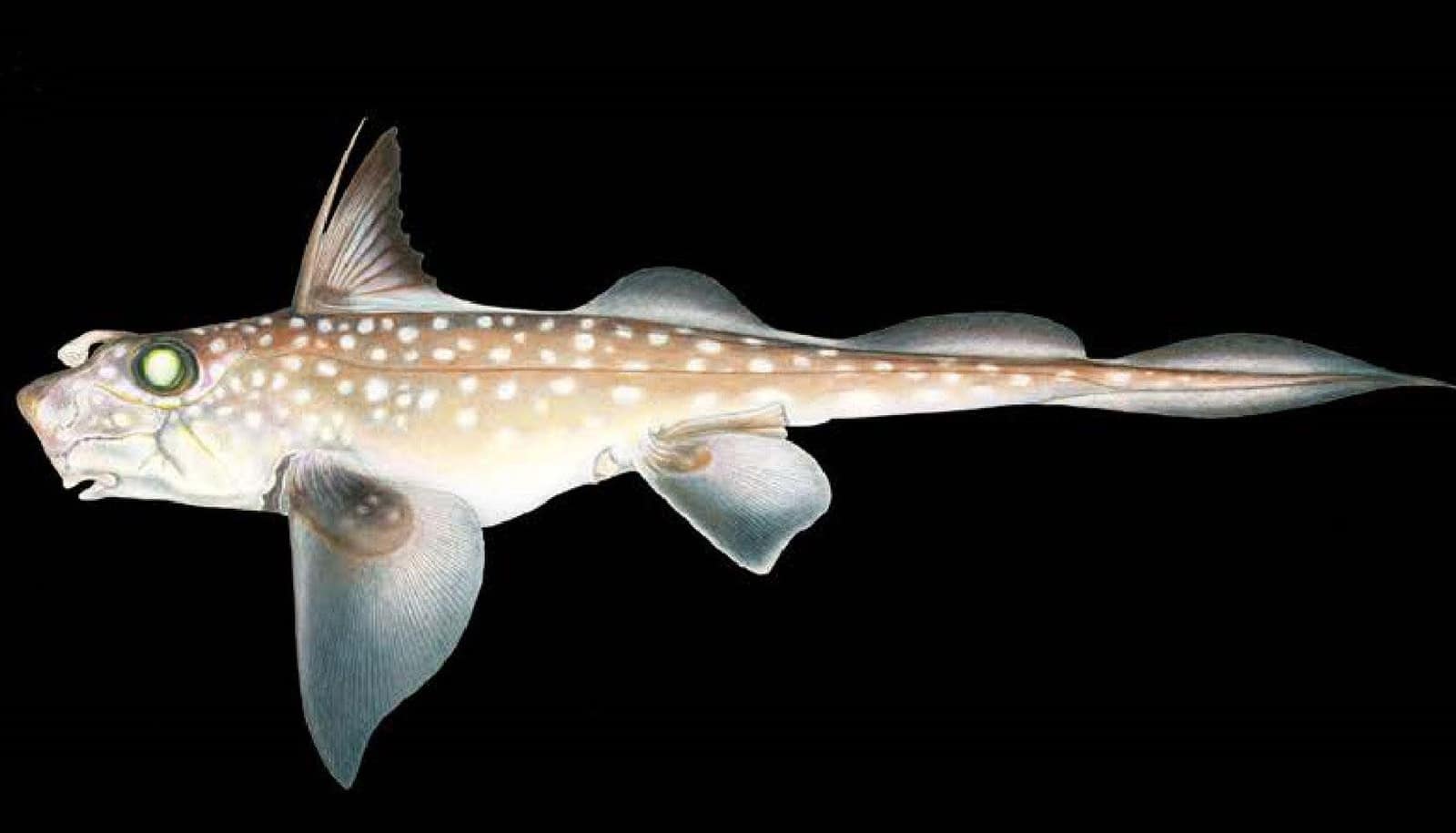
The spotted ratfish is a distinctive fish, easily recognized by its yellowish hue and white spots.It possesses fins along its back, sides, and a small, noticeable bump on its forehead. This bump is the tenaculum, and it’s covered in microscopic teeth – invisible to the naked eye, yet crucial for reproduction.
How Forehead Teeth Aid in Mating
Male spotted ratfish utilize these tenaculum teeth to firmly grasp onto a female during mating.These aren’t your average teeth; they retract and flex with remarkable agility, providing a secure hold while the pair swims. Interestingly, the size of the tenaculum doesn’t correlate with the fish’s overall length. Instead, its development mirrors that of the pelvic claspers, suggesting a shared regulatory pathway.
A New Understanding of Tooth Development
this discovery isn’t just about a quirky fish. It fundamentally shifts our understanding of how teeth develop. Researchers have demonstrated that these fishes repurposed an existing genetic program for tooth creation to build this novel reproductive structure. As Michael Coates, a leading researcher on the project, explains, this shows how organisms can “coopt” existing biological mechanisms for entirely new functions.
Beyond Sharks: The Dental Diversity of Chimaeras
Sharks are often the go-to model for studying tooth development,given their abundance of teeth and denticles. However, they represent only a small fraction of the dental diversity found throughout evolutionary history. Chimaeras, like the spotted ratfish, offer a rare glimpse into the past, revealing a wider range of possibilities.
Gareth Fraser, a senior author of the study, notes that observing these ”strange chimaeras” with teeth on their heads encourages us to reconsider the flexibility of tooth development in general.
What Does this Mean for the Future?
This research suggests that teeth – or tooth-like structures – might potentially be more widespread in the animal kingdom than previously thought. Cohen, another researcher involved in the study, believes that as we examine more “spiky structures” on vertebrates, we’ll likely uncover more instances of teeth existing outside the jaw.
This opens up exciting new avenues for research, potentially revealing hidden evolutionary connections and a deeper understanding of the remarkable adaptability of life on Earth. It’s a reminder that the natural world is full of surprises, and that even the most seemingly bizarre traits can hold valuable clues to the history of life.
Related reading