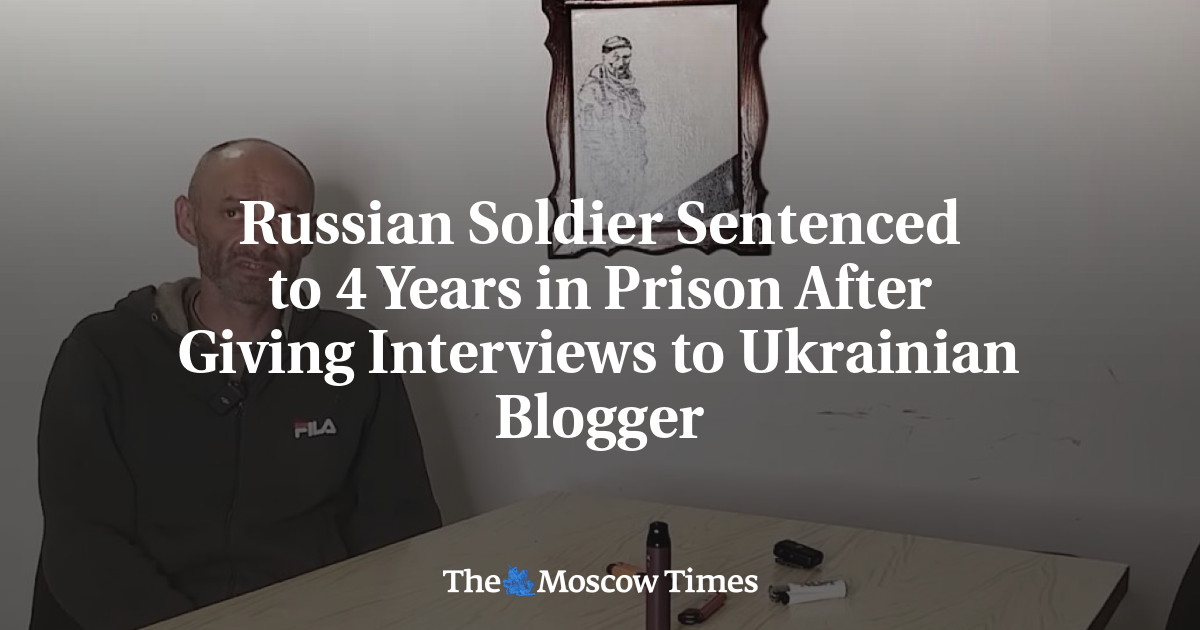
Russian Soldier Sentenced for Speaking Out: A Case of Wartime Censorship
The case of pavel Guguyev, a Russian soldier recently sentenced to four years in a penal colony, highlights a disturbing trend: the suppression of truth and dissent within Russia regarding the war in Ukraine. this isn’t simply about a soldier’s actions; it’s a stark illustration of the Kremlin‘s control over facts and the consequences faced by those who challenge the official narrative. Understanding this case requires examining the context of prisoner exchanges, wartime censorship, and the pressures faced by Russian military personnel.
Key Facts: pavel Guguyev’s case
- Original Sentence: 12 years for murder, bodily harm, and theft.
- Deployed to Ukraine: Signed a military contract with 2 years remaining on his initial sentence.
- Captured & interviews: Gave interviews to Ukrainian blogger Dmitry Karpenko detailing Russian losses.
- Second Interview: Continued criticism of Russian military leadership after prisoner exchange.
- New Sentence: 4 years in a penal colony for “confidential cooperation” with foreign nationals.
The Story behind the Sentence
Guguyev’s journey is complex. Initially serving a lengthy sentence for serious crimes, he was offered a path to potential freedom – a military contract and deployment to Ukraine. This practice, while controversial, has become increasingly common as Russia seeks to bolster its forces. Captured in Ukraine, guguyev bravely spoke to Ukrainian blogger Dmitry Karpenko, offering a rare glimpse into the realities of the conflict. His accounts of heavy Russian losses quickly circulated, challenging the carefully curated image presented by the Russian government.
Did You know? Russia has reportedly been offering convicts reduced or commuted sentences in exchange for military service,a tactic reminiscent of historical practices but raising serious ethical concerns. (Source: Reuters)
Censorship and control: Why Was He Punished?
The core issue isn’t necessarily what Guguyev saeid, but to whom he said it. the charge of “confidential cooperation” with foreign nationals is a broad and frequently enough politically motivated accusation used to silence dissent. His interviews directly contradicted the Kremlin’s narrative, portraying a struggling military and questioning leadership decisions. This is unacceptable in a system prioritizing absolute control over information.
Pro Tip: Understanding the legal framework used to suppress dissent is crucial. In Russia, laws regarding “discrediting” the armed forces and spreading “false information” are frequently employed to stifle criticism of the war.
What does this case tell us about the state of free speech in Russia? Is it a warning to other soldiers considering speaking out?
The Aftermath: Arrest and Re-Imprisonment
Despite being released in a prisoner swap in July 2023,Guguyev’s freedom was short-lived. He was re-arrested in June 2024 and swiftly sentenced. This demonstrates the long reach of the Russian security apparatus and its determination to punish those perceived as disloyal. The fact that he was pressured to publicly denounce his initial interview as coerced further underscores the extent of the control exerted by authorities.
This situation raises serious questions about the safety and well-being of Russian soldiers who may hold dissenting views. Are there others who have faced similar repercussions? What protections,if any,are available to them?
Broader Implications: Wartime Information Warfare
Guguyev’s case is a microcosm of the larger information war being waged alongside the physical conflict in Ukraine. Russia has consistently sought to control the narrative, suppressing independent media and criminalizing dissent. This is not a new tactic; however, the scale and intensity of the censorship
Keep reading