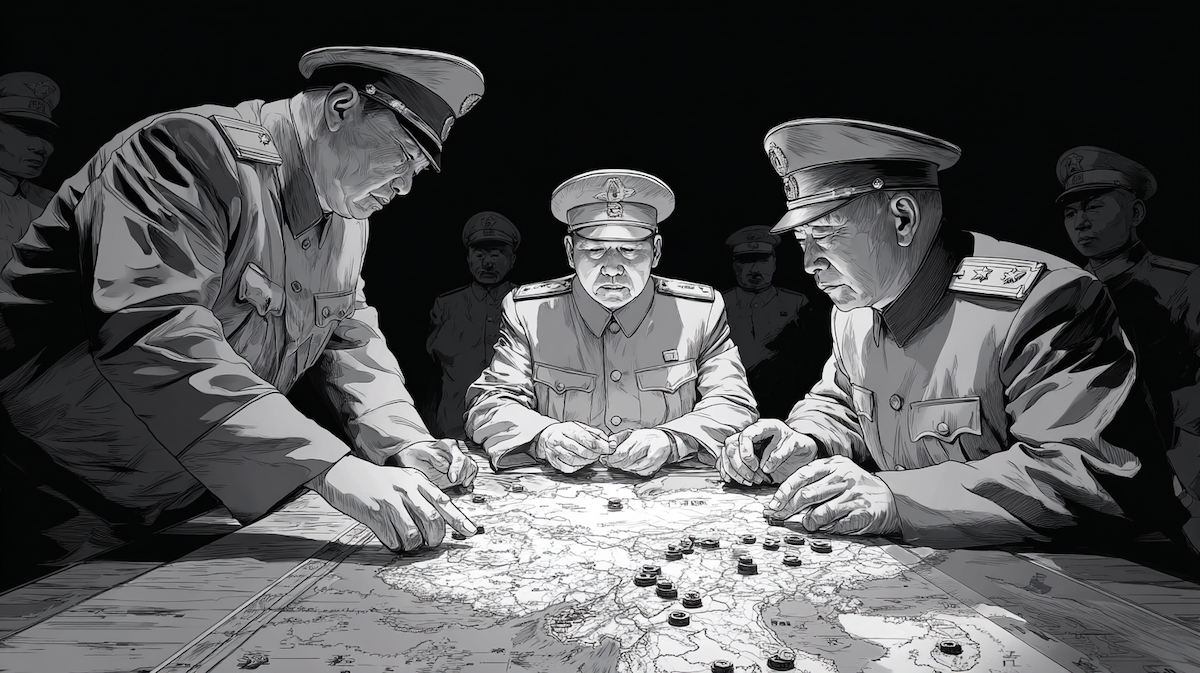
Decoding Beijing‘s Taiwan Strategy: why Understanding the Adversary is Crucial
The question of when, adn how, China might act regarding Taiwan dominates strategic discussions. Recent wargaming exercises, like one conducted in Syracuse, reveal a critical truth: Western assumptions about Beijing’s decision-making are often dangerously flawed. Understanding China’s internal debates, its perceptions of risk, and its evolving military doctrine is paramount to effective deterrence and preventing miscalculation.
The Spectrum of Chinese Thought on Taiwan
The Syracuse exercise highlighted a remarkable divergence of opinion within the simulated chinese strategic community. Participants didn’t converge on a single path forward. Rather, they debated a range of approaches, revealing a complex internal calculus.
* Graduated Pressure: Some favored a strategy of steadily increasing pressure – economic, military, and diplomatic – short of outright invasion. This approach is seen by some as a way to erode Taiwan’s resolve and force concessions.
* Trigger for Intervention: Others viewed a limited U.S. naval response to Chinese coercion as a potential trigger for broader intervention. This highlights the sensitivity surrounding any perceived challenge to China’s core interests.
* Possibility for Readiness: Conversely, some saw Chinese actions as a catalyst for Taiwan to enhance its defenses, possibly strengthening its resistance.
* Escalation Risk: A critically important concern was the potential for rapid escalation if any attempt is made to break through a blockade or or else directly challenge Chinese control.
The Timing Dilemma: Now or Later?
Perhaps the most revealing aspect of the exercise was the disagreement over when China might choose to act. This isn’t a simple calculation of military capability.
* decade of Opportunity: Some argued for action within the next decade, while China still enjoys a favorable military balance. Delaying could allow Taiwan to strengthen its defenses and the U.S. to bolster its presence in the region.
* Xi Jinping’s Legacy: Others speculated that President Xi Jinping, at 72, might prioritize achieving reunification during his tenure. This ties the decision to personal ambition and a desire for ancient importance.
* Time on Beijing’s Side: A counterargument suggests that time actually favors China. Taiwan’s economic dependence on the mainland is growing, younger generations are less ideologically opposed to unification, and the military balance is shifting in China’s favor.
The Danger of Assuming We know Best
These unresolved debates are not a weakness, but a reflection of genuine uncertainty within the Chinese leadership. American planners who believe they have a clear understanding of Beijing’s “red lines” or timelines are likely operating under perilous illusions.
Beyond Prediction: Expanding Our Strategic Creativity
The Syracuse exercise wasn’t about predicting the future. Its true value lies in expanding our strategic imagination. By forcing participants to adopt the perspective of Chinese planners, it revealed possibilities frequently enough overlooked in conventional U.S. planning.
* Dangerous Scenarios Aren’t always Dramatic: The most perilous outcomes may not be the most obvious or spectacular. Subtle shifts in strategy, or miscalculations based on flawed assumptions, could be far more dangerous.
* Deterrence Requires Deep Understanding: Effective deterrence isn’t just about demonstrating military strength. It requires understanding China’s images of future war, the doubts and concerns of its leaders, and the challenges its planners face in developing viable options.
The Path Forward: policy Implications
Translating these insights into policy requires a basic shift in how we approach Taiwan contingency planning.
* Wargame Political Scenarios: We must move beyond purely military wargames and incorporate political considerations. How will Beijing react to different levels of U.S. and allied support for Taiwan?
* Understand Chinese war Planning: We need to deeply understand Beijing’s conceptions of what a war over Taiwan would look like, including its objectives, strategies, and acceptable levels of risk.
* Test Alliance Cohesion: Assumptions about alliance cohesion and domestic resolve must be rigorously tested. Can we count on our allies to respond effectively? Will the american public support a prolonged conflict?
* Prepare for Diverse Conflict Types: we must prepare for the many types of warfare China is developing options for, not just the conventional scenarios we are most agreeable planning against. This includes gray zone tactics, cyber warfare, and economic coercion.
The stakes are immense. The future of Taiwan, regional stability, and the U.S.-led rules-based order in