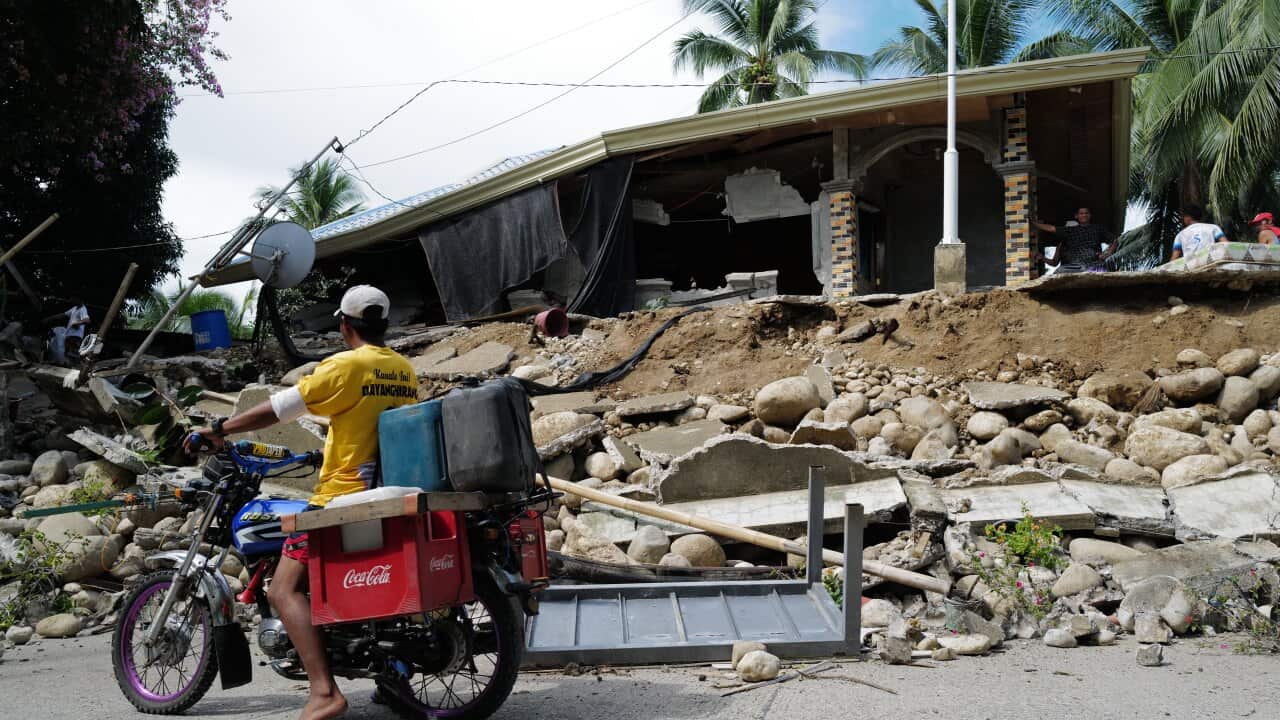
Devastation and Resilience Following Mindanao Earthquake in the philippines
A powerful earthquake has struck Mindanao in the Philippines, leaving a trail of damage and displacement. Patients are currently receiving treatment outdoors, as the Manay government hospital suffered significant structural compromise. Government engineers ordered the evacuation of patients on Friday, prioritizing their safety amidst the instability.
The 6.8 magnitude quake, followed by over 800 aftershocks, has deeply impacted communities across the region. These aftershocks are expected to continue for weeks, according to the Philippine seismology office, as Mindanao lies within a zone riddled with major geological faults.
Immediate Impacts and Challenges
Here’s a look at the immediate challenges facing those affected:
* Healthcare Access: The compromised state of the Manay hospital has forced medical personnel to treat patients in the open air, creating logistical and sanitary concerns.
* Structural Damage: Many homes and businesses have collapsed or sustained significant damage, leaving residents scrambling to salvage belongings. Shopkeepers are working to clear debris and reopen their stores.
* Economic Hardship: Rebuilding efforts are hampered by financial constraints, as residents like Vilma Lagnayo struggle to find the resources to reconstruct their homes.
* Emotional Toll: Even amidst the physical devastation, communities are grappling with loss and uncertainty. Families are navigating ongoing anxieties, compounded by recent tsunami warnings.
Residents in Manay are facing immense hardship. vilma Lagnayo is desperately trying to save what remains of her family’s possessions from their collapsed home. “Reconstructing our home is difficult now… money is a problem,” she shared, echoing the concerns of many.
Adapting to Ongoing Risks
The situation remains fluid, with communities adapting to the ongoing risks. In mati, a wake was held for a woman who passed away from illness, even as neighbors remained cautious following the tsunami alerts. Margarita Mulle, the deceased’s relative, explained that family members prepared to transport the body using a traditional “tora-tora” - a hand tractor-drawn cart – should further events necessitate it.
You might be wondering why the Philippines experiences so many earthquakes. The nation is located on the Pacific “Ring of Fire,” a highly seismically active zone.This arc stretches from Japan through Southeast Asia and across the Pacific basin, making earthquakes a near-daily occurrence.
What you Need to Know
* Earthquake Frequency: the Philippines is situated in a region prone to seismic activity.
* Aftershock potential: Expect continued aftershocks for weeks following the initial quake.
* Community resilience: Despite the challenges, communities are demonstrating remarkable resilience and resourcefulness.
* Ongoing Monitoring: The Philippine seismology office is closely monitoring the situation and providing updates.
The situation in Mindanao is a stark reminder of the power of nature and the importance of preparedness.As communities begin the long process of recovery,their strength and determination will be crucial in rebuilding their lives and livelihoods.
Worth a look