Madagascar on the Brink: A Nation Grapples with Political instability and a rising Generation’s Demands
Antananarivo, Madagascar – Madagascar is currently navigating a period of intense political turmoil, marked by escalating protests, military involvement, and a growing challenge to the authority of President Andry Rajoelina. The unfolding crisis, rooted in widespread public discontent and fueled by a digitally-savvy youth movement, echoes a long history of political instability in the island nation. This analysis will delve into the complexities of the situation, examining the historical context, the key players, the immediate triggers, and the potential ramifications for Madagascar’s future.
A History of coups and Constitutional Challenges
Madagascar, a nation of 31 million people strategically located off the east coast of Africa, has experienced a turbulent post-independence history as gaining freedom from France in 1960. The country has been plagued by a recurring pattern of political crises, often culminating in the forceful removal of leaders. This pattern underscores a fragility in its democratic institutions and a persistent struggle to establish a stable,legitimate government. The current unrest is not an isolated incident,but rather a continuation of this deeply ingrained political instability.
President Rajoelina himself first rose to power in 2009, leading a military-backed coup that ousted then-President Marc Ravalomanana. He subsequently headed a transitional government before being elected president in 2018, a victory marred by an opposition boycott. his recent re-election in 2023 faced similar criticisms,further fueling accusations of a lack of democratic legitimacy. This history is crucial to understanding the current situation; it demonstrates a precedent for military intervention and a public distrust of established political processes.
The Spark: From Utility Outages to systemic Discontent
The immediate catalyst for the current unrest was a series of electricity and water outages that began last month. However, thes practical grievances quickly broadened into a wider expression of public dissatisfaction. The protests, spearheaded by a dynamic group identifying as “Gen Z Madagascar,” rapidly gained momentum, drawing support from a diverse cross-section of society, including civic groups and trade unions.
This isn’t simply a protest against infrastructure failures. The underlying issues are far more profound, encompassing widespread poverty, a soaring cost of living, limited access to higher education, and deeply rooted allegations of corruption and embezzlement within the government and among its associated networks. These concerns resonate deeply with a population struggling with economic hardship and a perceived lack of accountability from their leaders.
Gen Z’s Digital Revolution and the Echoes of Global Protests
What distinguishes this wave of protests is the central role played by Madagascar’s youth, particularly Gen Z. Leveraging the power of the internet and social media, they have effectively mobilized and organized demonstrations, drawing inspiration from successful protest movements in other nations, notably Nepal and Sri Lanka. This digital fluency allows for rapid dissemination of data, bypassing traditional media channels and fostering a sense of collective action.
The ability to connect and coordinate through online platforms has proven instrumental in sustaining the protests and amplifying their message, demonstrating the growing influence of digitally-native generations in shaping political landscapes.
The Military’s Intervention and the Role of CAPSAT
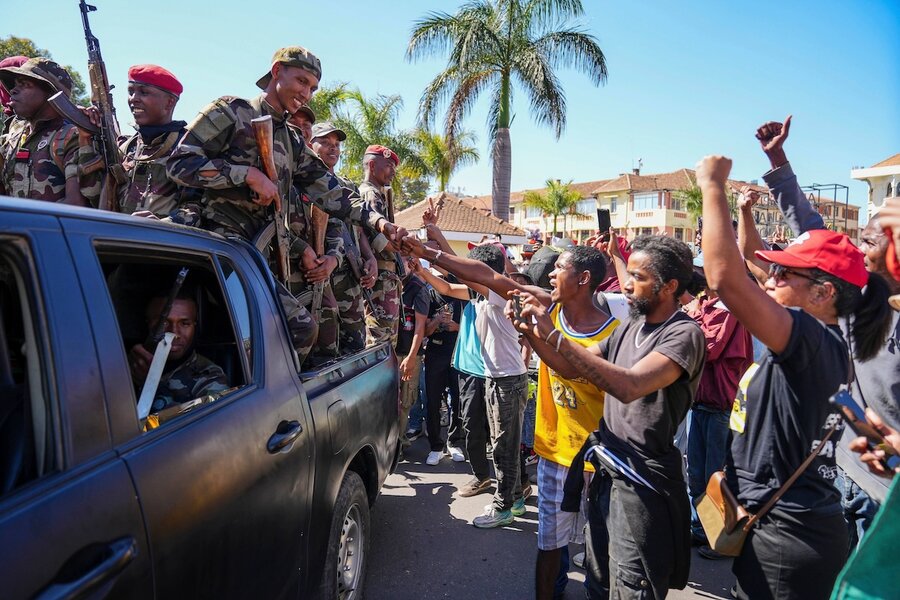
A critical turning point arrived on October 11th, when soldiers from the center d’Action Rapide des Forces Armées Malgaches (CAPSAT) – a specialized army unit – joined the anti-government demonstrations. Led by Colonel Richard randrianirina, these soldiers publicly called for President Rajoelina and key government officials to resign. Reports indicate clashes between CAPSAT troops and security forces attempting to suppress the protests, resulting in at least one soldier’s death.
CAPSAT’s involvement is particularly critically important given its historical role in the 2009 coup that brought Rajoelina to power. The unit’s current stance suggests a potential shift in the balance of power and raises serious questions about the loyalty of the military establishment.While Colonel Randrianirina has been cautious about labeling the situation a “coup,” his actions and the visible authority assumed by CAPSAT units indicate a clear challenge to the president’s authority.
As of October 12th, President Rajoelina’s whereabouts were unknown, though his office released a statement condemning what it described as an “attempt to seize power illegally and by force” and calling for national unity in defense of constitutional order. However, the statement does little to quell the growing uncertainty.
international Response and the Path Forward
The unfolding crisis has drawn concern from the international community. The U.S.Embassy in Madagascar has advised American
Keep reading