Beyond Insights: Why the Future of Health IT Demands Actionable Intelligence
For years, health information technology has excelled at identifying trends, flagging anomalies, predicting risks, and pinpointing opportunities for intervention. We’ve become remarkably adept at seeing the problems. But frankly, that’s where most solutions stop. A dashboard, an alert, a report – it’s all data dumped onto a clinician’s plate, leaving you to decipher the “so what” and figure out the next steps. It feels a bit like being presented with a bowl of spaghetti.
The good news is the maturity of health IT means we can now aggregate, normalize, and analyze data with unprecedented robustness. We no longer need a patchwork of point solutions.modern platforms integrate everything beautifully. Though, this progress, while notable, isn’t enough.
A beautifully designed analytics report remains fundamentally passive. It reveals the truth, but it doesn’t do anything about it. it doesn’t translate knowledge into improved patient outcomes.
The missing Piece: Actuation
The real power lies in action. It’s about transforming insights into tangible interventions. What should happen next – or, equally critically important, shouldn’t?
Consider this: what value is knowing a patient is at high risk for readmission if that knowledge doesn’t automatically trigger a specific follow-up protocol, a social work consultation, or a revised discharge plan? What’s the point of identifying a problematic prescribing pattern if the system doesn’t facilitate a change in practice, provide real-time feedback to clinicians, or suggest adjusted order sets?
Currently, we rely heavily on manual intervention. A clinician spots a trend and then initiates a change – one patient at a time. This is slow, prone to error, and frankly, unsustainable.
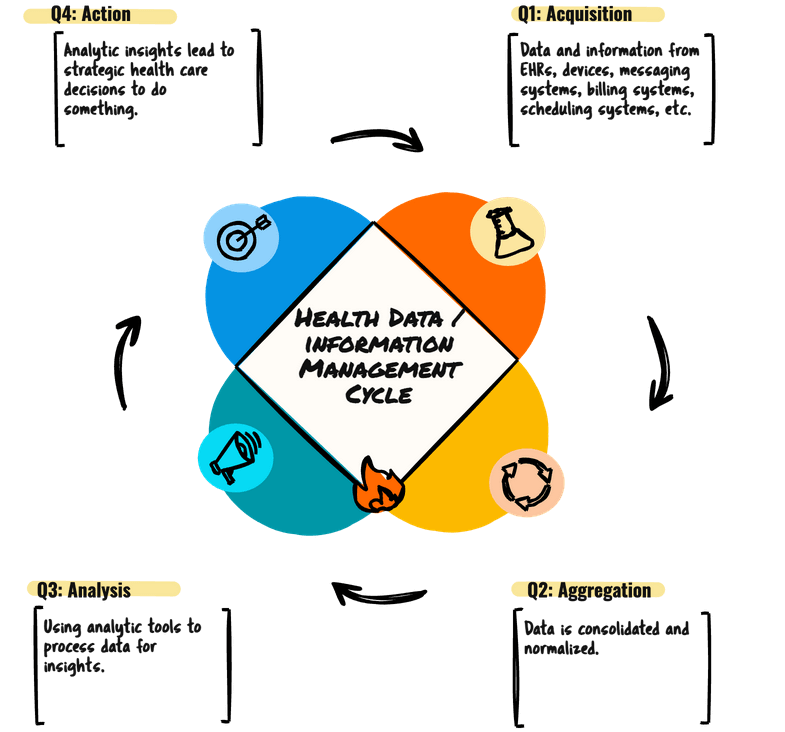
we need to close the loop. We need systems that don’t just acquire, aggregate, and analyze data, but actively facilitate the next best action. This means prioritizing what’s best for the individual patient and ensuring the right person receives the right guidance.
Imagine a Health IT System That…
Imagine a system that, upon identifying a potential issue, automatically:
* Generates a personalized patient education document. Empowering patients with the information they need.
* Suggests an updated medication order (or a set of orders) with a single click. Streamlining workflows and reducing errors.
* Schedules a follow-up appointment with the appropriate specialist. Ensuring timely access to specialized care.
* Pushes a notification to a care coordinator to intervene. Proactively addressing potential challenges.
This isn’t about replacing human judgment. It’s about augmenting it. It’s about making the right course of action the easiest course of action for your team.
The Power of the Iterative Cycle
This approach isn’t a one-time fix; it’s a continuous cycle. The actions taken generate new data, feeding back into the initial “Acquire” phase. This allows us to continuously refine our understanding and improve our interventions. The faster we cycle through thes steps – Acquire, Analyze, Act, and repeat – the more responsive, efficient, and patient-centric our healthcare teams become.
Here’s a breakdown of the cycle:
- Acquire: Collect thorough patient data from various sources.
- Analyze: Identify patterns, risks, and opportunities within the data.
- Act: Automatically trigger appropriate interventions based on the analysis.
- Repeat: Use the results of the interventions to refine future analysis and actions.
A Critical Question for Health IT Evaluation
Next time you’re evaluating a new Health IT solution, don’t just ask about its analytical capabilities. Ask the crucial question: how does this system help us Act?
Don’t settle for insights alone. Demand a system that empowers you to translate those insights into meaningful, impactful change for your patients and your practice. The future of health IT isn’t about knowing more; it’s about doing more, and doing it better.
*Jacob Reider MD is a family physician who previously served as Deputy National coordinator at ASTP/ONC, CMIO at Allscripts and Albany Medical Center, CEO of Alliance for Better Health and currently doing angel investing, advising and pickle
Keep reading