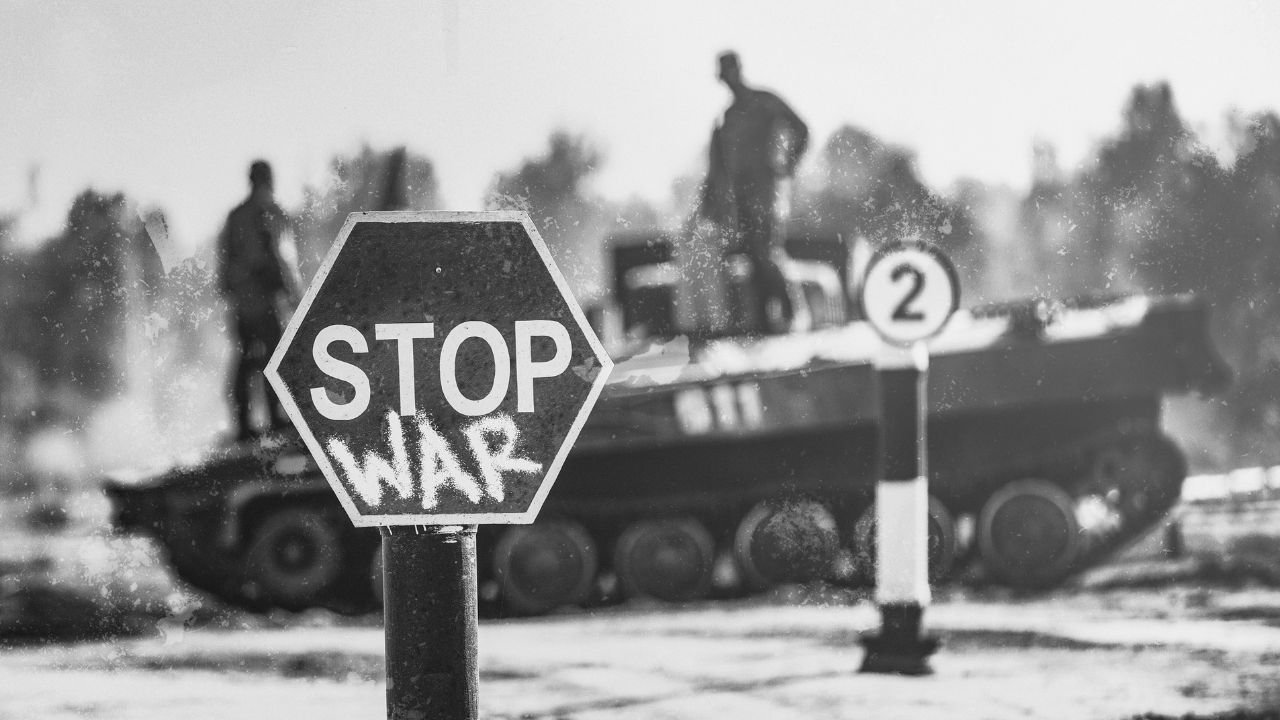
Beyond Stalemate: Building a Rules-Based International Order to Prevent World War III
The war in Ukraine has exposed a risky reality: the international system,despite decades of effort,remains tragically reliant on military force to resolve disputes. While NATO‘s measured response – providing weapons and support without direct military intervention - has thus far avoided a wider conflict with nuclear-armed Russia, it has also resulted in a protracted and increasingly precarious stalemate. The specter of escalation, and the potential for this conflict to ignite a third World War, looms large.
Simply continuing the current strategy of arms and sanctions, while understandable, is unlikely to fundamentally alter the situation. It may eventually pressure Putin to the negotiating table, but it doesn’t address the underlying systemic flaws that allow such conflicts to arise in the first place. We need to move beyond managing crises and begin building a world where disputes are settled by law, not by the threat of force.
For decades, I’ve dedicated my life to this pursuit, stemming from my early commitment to peace as a conscientious objector during the Vietnam War, through my work in psychology, and culminating in co-authoring “One World Democracy: A Progressive Vision for Enforceable global Law.” My experience, alongside years of activism with organizations like Citizens for Global Solutions and the Democratic World Federalist, has solidified my conviction: a robust, rules-based international order is not just desirable, it’s essential for our survival.
The Failure of voluntary Cooperation
The current international system, largely embodied by the United Nations, operates on the principle of treaty law – a system of voluntary agreements. While well-intentioned, this approach lacks the critical component of enforcement. Nations are free to disregard agreements without facing meaningful consequences, rendering the system ultimately ineffective when confronted with a persistent aggressor.
This contrasts sharply with the success of regional integration projects like the European Union.The EU’s remarkable transformation of historically warring nations - france and Germany being prime examples – demonstrates the power of replacing military competition with legal frameworks. Disputes are now resolved through democratic processes: voting in the European Parliament and adjudication in EU courts. This isn’t simply about economic integration; it’s about a fundamental shift in how nations interact, prioritizing law over force.
The key difference? The EU possesses a genuine legal authority, capable of enforcing it’s rulings. The UN, lacking this crucial element, remains largely reliant on the goodwill – and self-interest – of its member states.
Reforming the United Nations: A Path Forward
the solution isn’t to abandon the UN, but to fundamentally reform it. Article 109 of the UN Charter provides the mechanism for convening a global conference to revise the Charter itself. This is the pathway to creating a more powerful, democratic, and – crucially – enforceable system of international law.
Imagine a United Nations empowered to act as a true global court, with the authority to mediate disputes, impose sanctions, and even deploy peacekeeping forces with a clear legal mandate. This wouldn’t necessitate the creation of a world government in the customary sense. Individual nations would retain sovereignty over their internal affairs, but in the realm of international relations, they would be bound by a common set of laws.
This requires a measured exchange: a limited relinquishing of absolute sovereignty in exchange for a dramatically increased level of global security and stability. It’s a trade-off that has proven triumphant within the EU, and one that is increasingly vital for the entire world.
Addressing the Ukraine Conflict and Beyond
Would this reformed system instantly resolve the Russia-Ukraine war? Not directly. Though, it would provide a legitimate and effective institution capable of mediating a lasting peace and holding aggressors accountable. More importantly,it would create a framework to prevent future conflicts from escalating to the point of global catastrophe.
The current trajectory of international relations is unsustainable. Continued reliance on military power and a fragmented, lawless international system will inevitably lead to a darker future. the option – a world governed by rules, enforced by a legitimate international authority – is not radical. It’s a logical extension of the principles that underpin civilized societies.
The time to act is now. We must invoke Article 109 of the UN Charter and initiate a global conference to craft a new, more effective United Nations. The details will be complex, the negotiations challenging, but the cost of inaction – more war, more destruction, and the potential for global annihilation – is simply unacceptable.
About the author:
Jerry Tetalman has been a dedicated peace activist since his conscientious objection to the Vietnam War draft. Holding a Bachelor of Science in Nursing and a Master’s degree in Psychology,his career has spanned healthcare,real estate,and political engagement. He is the co-author of “One World democracy: A Progressive