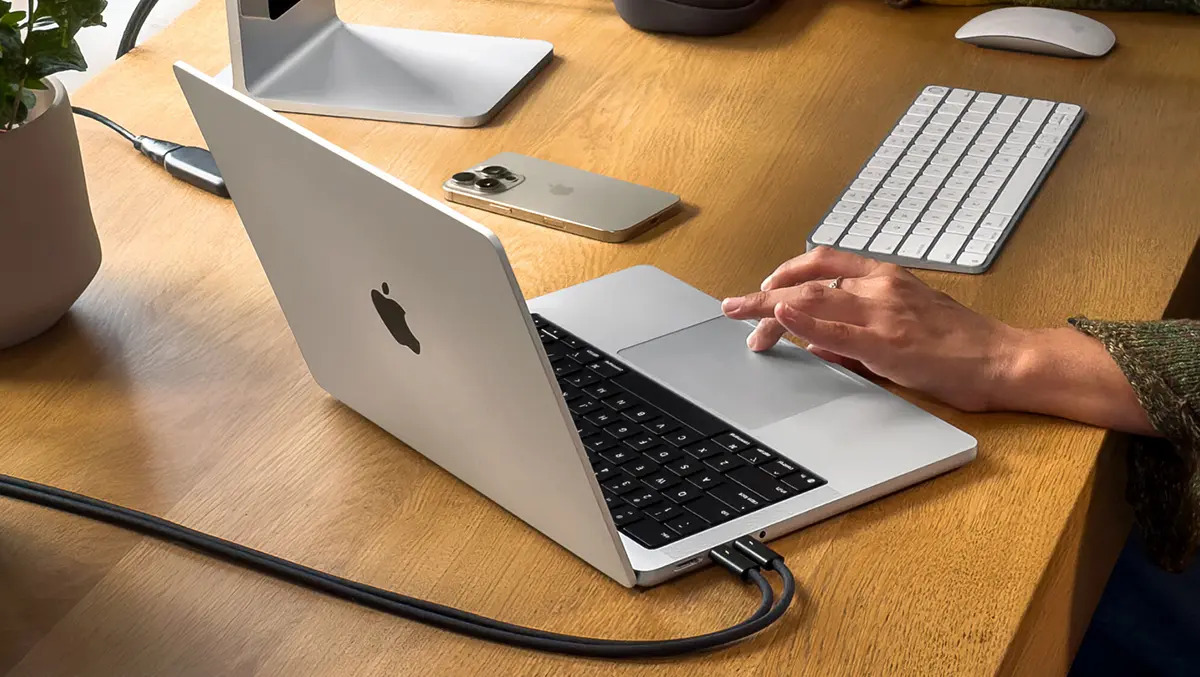
Apple’s M5 macbook Pro: A Deep Dive into Performance, AI Capabilities, and the Future of Creative Workflows
Apple has onc again raised the bar for professional laptops with the unveiling of the 14-inch MacBook Pro powered by the revolutionary M5 chip. This isn’t just an incremental upgrade; it’s a meaningful leap forward in performance, efficiency, and AI integration, designed to empower creative professionals, developers, and power users. As someone who’s closely followed the evolution of Apple silicon and its impact on the creative landscape, I’m here to break down exactly what makes this machine a game-changer.
the M5 Chip: A New Era of On-Device Intelligence
At the heart of the new MacBook Pro lies the M5 chip, and it’s a marvel of engineering. Building on the success of the M-series, the M5 delivers significant gains across the board. What truly sets it apart is the enhanced Neural Engine - now 16-core - which is specifically optimized for on-device generative tasks. This is crucial. We’re entering an era where AI isn’t just a cloud-based service; it’s becoming an integral part of our workflows, and the M5 allows for incredibly responsive and private AI experiences.
This isn’t just marketing speak. The faster Neural Engine directly fuels Apple Intelligence features, enabling capabilities like live translation in Messages and FaceTime, and advanced automations within the Shortcuts app. But the benefits extend far beyond Apple’s own software. Developers now have access to foundational Apple Intelligence frameworks, meaning we can expect a wave of innovative AI-powered applications tailored specifically for the Mac.
Performance That Redefines “Pro”
The M5 isn’t just about AI. It’s about raw power. Apple’s internal benchmarks demonstrate dramatic improvements across a range of professional applications:
* AI Video enhancement (topaz Video): Up to 7.7x faster than the M1 MacBook Pro and a remarkable 1.8x faster than the M4. This translates to significantly reduced render times for demanding video projects.
* 3D Rendering (Blender): Up to 6.8x faster than M1 and 1.7x faster than M4. For 3D artists, this means smoother viewport performance and faster final renders.
* Gaming: Up to 3.2x higher frame rates compared to M1 and 1.6x higher than M4. While the Mac isn’t traditionally known as a gaming powerhouse, the M5 is making serious strides in this area.
* Code Compilation (Xcode): Up to 2.1x faster than M1 and 1.2x faster than M4. Developers will appreciate the quicker build times and improved responsiveness.
Beyond these specific benchmarks, the M5 MacBook Pro boasts up to 4TB of storage and an notable 150GB/s of memory bandwidth. This is critical for professionals working with massive datasets, complex 3D scenes, or large local AI models. it’s about eliminating bottlenecks and allowing you to focus on your creative vision, not waiting for your machine.
A seamless Upgrade Experience: Leaving Intel and M1 Behind
For those upgrading from Intel-based Macs or even earlier Apple silicon models (like the M1), the difference is staggering. Apple claims:
* Up to 86x faster AI performance compared to intel Macs.
* Up to 30x improved GPU performance with ray tracing.
* up to 5.5x greater CPU output.
These aren’t just numbers; they represent a basic shift in what’s possible. And the benefits don’t stop at performance. Apple has also significantly improved battery life,offering up to 14 additional hours for Intel upgraders and 4 more hours for M1 users. Crucially, the MacBook Pro delivers consistent performance whether plugged in or running on battery - a feature many PC laptops struggle to match.A quick 30-minute charge with a 96W or higher USB-C adapter provides up to 50% battery life, ensuring you stay productive on the go.
Beyond the Chip: Display, Audio, and macOS Tahoe
Apple hasn’t just focused on internal power. The new MacBook pro features a stunning 14-inch Liquid Retina XDR display,now available with a nano-texture finish to minimize glare. It also supports driving up to two high-resolution external displays, expanding your workspace. The six-speaker
Related reading