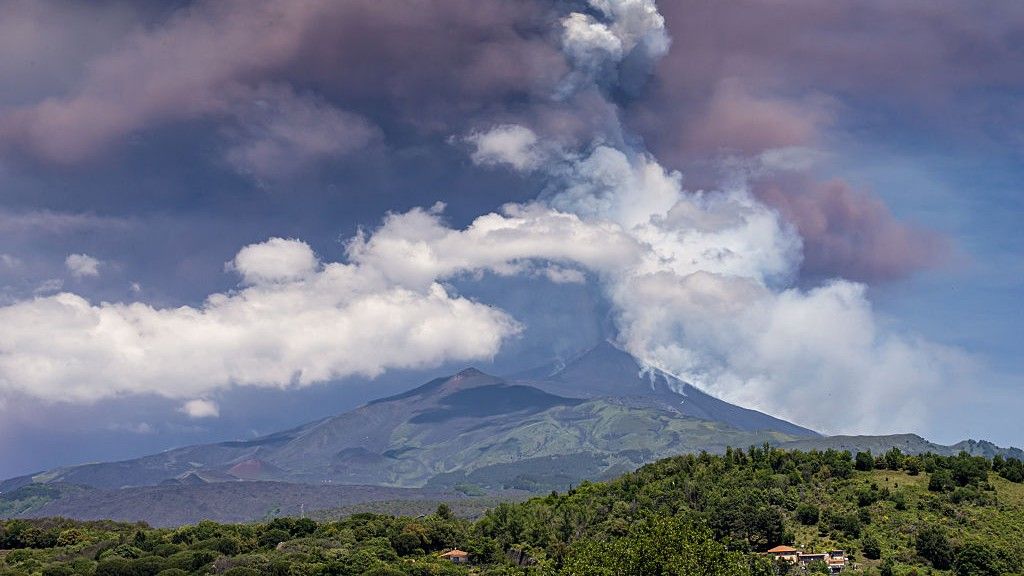
Decoding Mount Etna‘s Secrets: How Seismic ‘B Values’ Could Predict Eruptions
Mount Etna,Europe’s most active volcano,holds a wealth of clues to understanding volcanic processes. Recent research has unveiled a engaging connection between subtle shifts in earthquake patterns – specifically, a metric called the ‘b value‘ – adn the movement of magma deep beneath the surface. This breakthrough offers a potentially powerful new tool for forecasting eruptions, not just at Etna, but at volcanoes worldwide.
Understanding Etna’s Complex Plumbing System
For years, scientists have known that magma doesn’t simply accumulate in a single chamber beneath a volcano.Rather, it utilizes a complex network of storage zones at varying depths. Etna is a prime example, with magma rising through up to 19 miles of crust, pausing in interconnected reservoirs before erupting.
* The deepest storage zone lies approximately 7 miles below sea level.
* An intermediate system exists between 2-4 miles deep.
* magma collects in a shallow zone directly within the volcano itself.
This layered system presents a challenge for eruption prediction.However, the new research offers a way to monitor the movement between these zones.
The Power of ‘B Values’: A Seismic Fingerprint of Magma
The key lies in analyzing the frequency of different earthquake sizes. Scientists examined seismic data from 2005 to 2024, focusing on a metric called the ‘b value’. This value represents the ratio of small to large earthquakes in a given region.
Here’s the crucial insight:
* Active magma zones tend to have higher b values. Magma weakens surrounding rock, creating fractures that easily slip, generating numerous small earthquakes.
* Stable crustal regions exhibit lower b values. These areas require more force to break, resulting in fewer, but larger, earthquakes.
Think of it like this: a stressed, unbroken rock will eventually snap with a large quake.A fractured, magma-influenced rock will release energy through many smaller tremors.
Tracking Magma’s Journey in Real-Time
By meticulously tracking changes in the b value over time, researchers believe they can follow magma’s ascent through Etna’s intricate plumbing system.
* An increasing b value in a deep region could signal magma rising from the deepest storage zone.
* Subsequent changes in intermediate and shallow zones would indicate continued upward movement.
This real-time monitoring could provide crucial lead time for eruption forecasting. As Firetto Carlino, a researcher involved in the study, explains, “Monitoring the b value offers a powerful way to track magma movement within the crust and assess the volcano’s evolving state before eruptions.”
Why Etna? And What Does This Mean for Other Volcanoes?
Mount Etna’s frequent activity and extensive seismic catalog made it an ideal testing ground for this technique. The sheer volume of data allowed for a detailed analysis of b value variations across different crustal regions.
However, the implications extend far beyond Etna. The principle of using b values to track magma movement could be applied to other volcanic areas, provided sufficient earthquake data is available and well-constrained by geological studies.
Looking Ahead: A New Era in Volcanic Monitoring
This research represents a notable step forward in our ability to understand and predict volcanic eruptions. While not a foolproof solution,the b value method offers a valuable new tool for volcanologists,potentially saving lives and minimizing disruption. Continued monitoring and refinement of this technique will be crucial as we strive to unravel the mysteries hidden beneath the Earth’s surface.
Sources:
* https://www.livescience.com/planet-earth/earthquakes (for background on earthquakes)
Worth a look