Revolutionary Light-Based Cancer Therapy Shows Promise with LEDs and Tin Nanoflakes
Cancer remains a global health crisis, consistently ranking as a leading cause of death worldwide. While advancements in treatment continue, many existing modalities are hampered by debilitating side effects and significant financial burdens. Now, a groundbreaking collaboration between The University of Texas at Austin and the University of Porto in Portugal is offering a beacon of hope: a possibly low-cost, highly targeted cancer therapy utilizing LED light and innovative tin-based nanoflakes. This research, fueled by the UT Austin Portugal Program, represents a significant step towards more accessible and effective cancer care.
Addressing the Limitations of Current photothermal Therapies
Existing light-based cancer treatments, specifically near-infrared photothermal therapy (NIPT), hold immense promise. NIPT leverages light to generate heat, selectively destroying cancer cells without the need for invasive surgery or harsh chemotherapy drugs. Though, widespread adoption has been limited by several key challenges: the high cost of necessary materials, the requirement for complex laboratory infrastructure, and the potential for collateral damage to healthy tissue caused by powerful lasers.
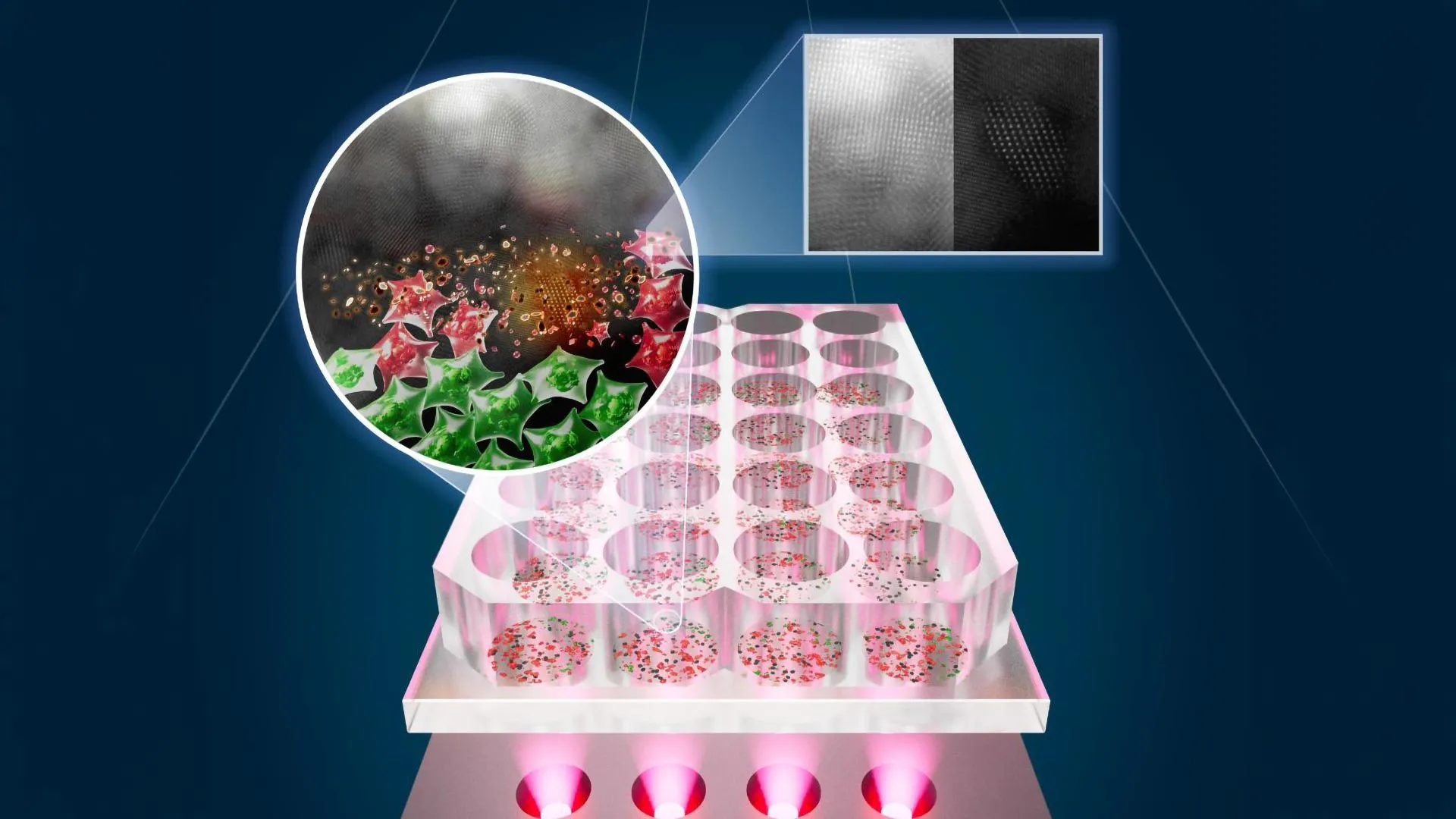
The UT Austin-Portugal team, led by Professor Jean Anne Incorvia of UT Austin and researcher Artur Pinto of the University of Porto, has directly addressed these limitations. Their innovative approach replaces expensive lasers with readily available and affordable LEDs, and introduces a novel component: tin-based “SnOx” nanoflakes. These nanoflakes act as highly efficient light absorbers, converting LED light into localized heat specifically within cancer cells.
Exceptional Efficacy and Precision Demonstrated in Preclinical Studies
Published recently in the prestigious journal ACS Nano, the team’s research details compelling results. In laboratory studies, the LED-SnOx nanoflake therapy demonstrated remarkable efficacy against both colorectal and skin cancer cells. After just 30 minutes of exposure, the treatment eradicated up to 92% of skin cancer cells and 50% of colorectal cancer cells – crucially, without harming healthy human skin cells. this level of precision is a critical advantage, minimizing the systemic side effects often associated with conventional cancer treatments.
“Our goal was to create a treatment that is not only effective but also safe and accessible,” explains Professor Incorvia. “With the combination of LED light and SnOx nanoflakes,we’ve developed a method to precisely target cancer cells while leaving healthy cells untouched.”
A Vision for Accessible, Personalized Cancer Care
The implications of this research extend far beyond the laboratory. The team envisions a future where this technology can be deployed in resource-limited settings, dramatically increasing access to advanced cancer care.
“Our ultimate goal is to make this technology available to patients everywhere, especially places where access to specialized equipment is limited, with fewer side effects and lower cost,” states Artur Pinto. “For skin cancers in particular, we envision that one day, treatment could move from the hospital to the patient’s home.A portable device could be placed on the skin after surgery to irradiate and destroy any remaining cancer cells, reducing the risk of recurrence.”
Expanding the Therapeutic Horizon: From Skin Cancer to Breast Cancer and Beyond
The initial success has spurred further investigation. The researchers are currently focused on optimizing the interaction between light and heat within the cancer cells, and exploring choice materials to further enhance therapeutic outcomes. building on this momentum, the team has secured additional funding through the UT Austin Portugal Program to develop an implantable device utilizing the same LED-nanoflake technology for the treatment of breast cancer.
This ongoing research highlights the power of international collaboration and the potential for 2D materials to revolutionize cancer therapy.the UT Austin Portugal Program, a long-standing partnership with the portuguese Foundation of Science and Technology (FCT), has been instrumental in fostering this innovation.Renewed for another five years, this collaboration promises continued breakthroughs in science and technology.
The Research Team:
The success of this project is a testament to the dedication and expertise of a multidisciplinary team, including:
* Jean Anne Incorvia (UT Austin): Professor, Chandra Family Department of Electrical and Computer Engineering
* Artur Pinto (University of Porto): Lead Researcher, Faculty of Engineering
* Hui-Ping Chang (UT austin): Ph.D. Student, nanoflake Advancement
* Eva Nance (UT Austin): Undergraduate Student
* Filipa A.L.S. Silva (University of Porto): Biological Characterization
* susana G. Santos (University of Porto): Supervision
* Fernão Magalhães (University of Porto): Funding Acquisition
* José R. Fernandes (University of Trás-os-Montes and Alto Douro): LED System Development
This innovative approach represents a significant advancement in the fight against cancer, offering a pathway towards more effective, affordable, and accessible treatments for patients worldwide. The continued development and refinement