Russia Escalates Restrictions on Telegram and WhatsApp, Signaling Potential Full Blockade
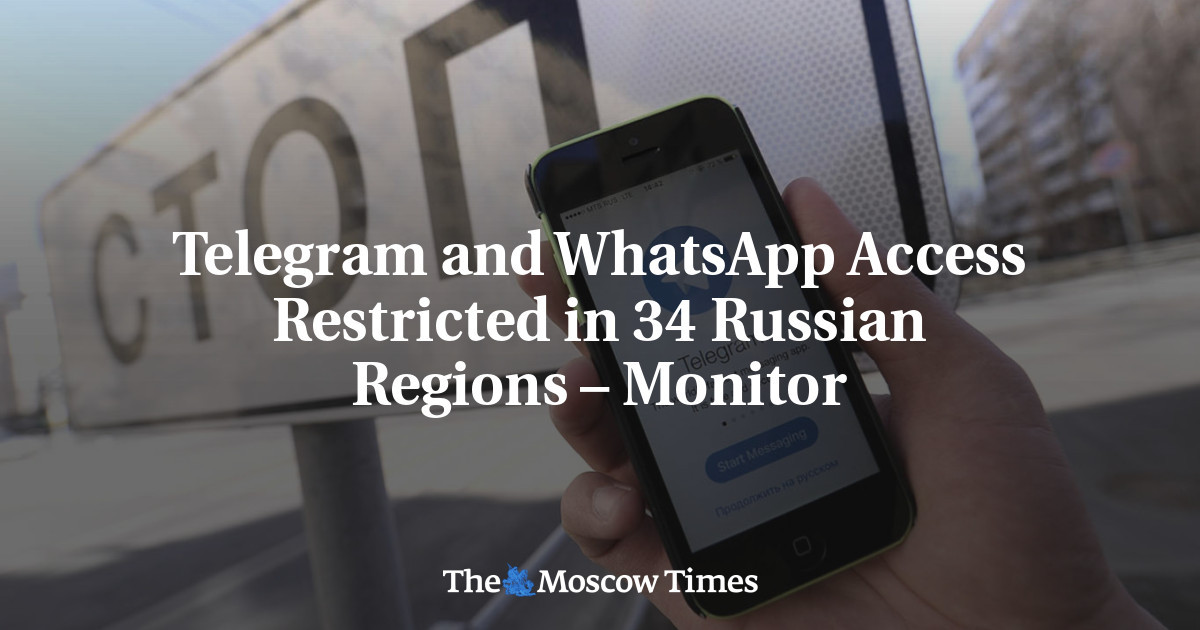
Russia is significantly increasing its control over online communication, with access to popular messaging apps Telegram and WhatsApp now restricted in approximately 40% of the country’s regions. These escalating measures, implemented by the state communications watchdog Roskomnadzor, raise concerns about freedom of data and digital connectivity for Russian citizens.
Recent Developments & Expanding Restrictions
Initially, disruptions began on Monday, primarily impacting southern regions. Reports quickly surfaced from users in Vologda, Kirov, and Chelyabinsk experiencing issues, though on a smaller scale. A second wave of restrictions followed later that evening, extending to areas like Bashkortostan and the Irkutsk region.
Tuesday witnessed a further expansion, bringing the total number of affected regions to 21, including major metropolitan areas like Moscow and St. Petersburg, and also Tatarstan, Yaroslavl, kaliningrad, and Yakutia, and extending into the Russian Far East. Currently, WhatsApp is effectively blocked in several parts of Russia, according to Mikhail Klimarev, head of the Internet protection Society.
Official Justification & Accusations
Roskomnadzor claims these limitations are a response to “criminal activity” occurring on both platforms. Specifically, the agency accuses WhatsApp and Telegram of facilitating “fraud and extortion,” and even being used for recruiting individuals for “sabotage and terrorist activities.” Moreover, roskomnadzor alleges that both companies have refused to cooperate with Russian authorities in addressing these concerns.
A Pattern of Control: Echoes of YouTube
This situation mirrors previous actions taken by the Russian government against other platforms. Notably,YouTube faced increasing access restrictions starting in mid-2024 and was ultimately fully blocked nationwide by the end of the year. Now, access to YouTube in Russia is largely limited to users employing Virtual Private Networks (VPNs).
Experts predict a similar trajectory for Telegram and WhatsApp. Klimarev suggests the current actions indicate “the process of fully blocking Telegram and WhatsApp in Russia is underway,” perhaps concluding by December or January.
What This Means for You
If you rely on Telegram or WhatsApp to communicate with contacts in Russia, you may experience:
* Intermittent connectivity: Messages may not send or receive reliably.
* call failures: Voice and video calls may be unavailable.
* Potential complete blockage: Access could be entirely cut off in your region.
Understanding the Broader Context
Russia has 84 federal regions, excluding the annexed Crimea and the four partially occupied Ukrainian regions. The ongoing restrictions represent a significant escalation in the government’s efforts to control the digital landscape. This trend raises questions about the future of online communication within Russia and the potential for further limitations on access to information.
Staying Informed
The situation is rapidly evolving.For the latest updates, consider following independent monitoring projects like Na Svyazi. It’s also crucial to understand your options for maintaining communication, including exploring vpns and option messaging platforms.
Related reading