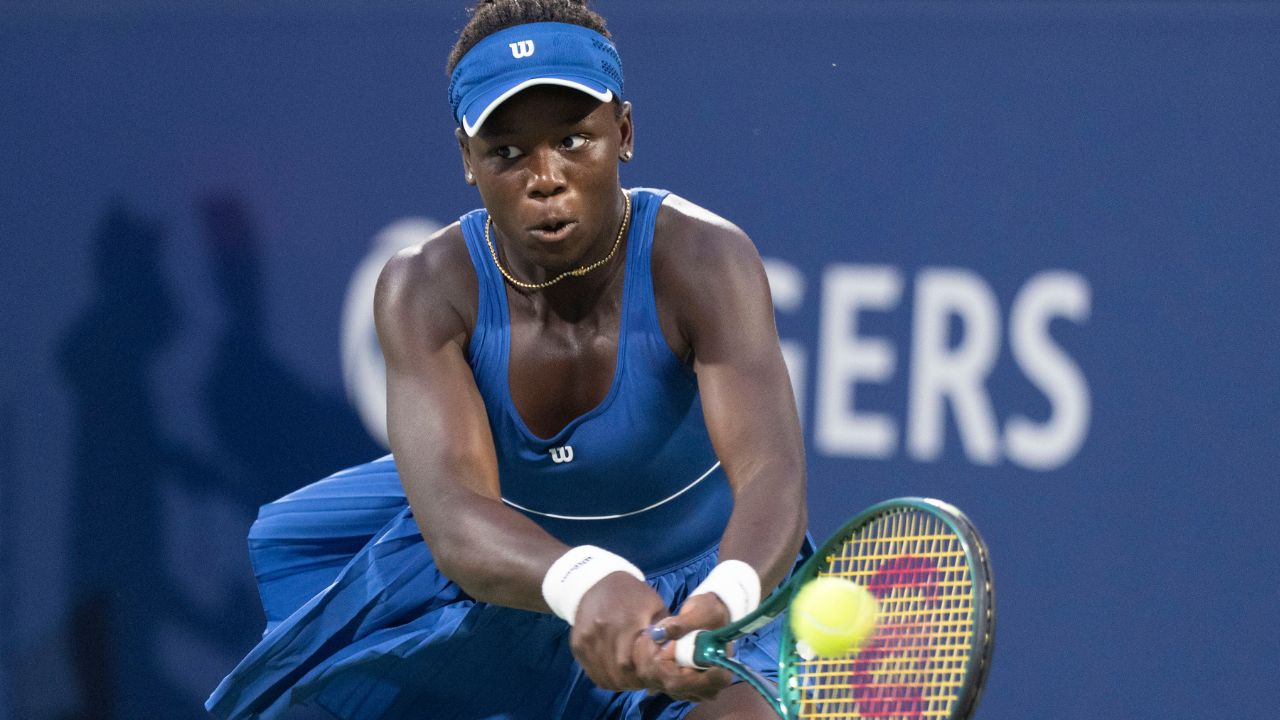
Victoria Mboko‘s Toray Pan Pacific Open Run Ends in Quarterfinal Battle with Elena Rybakina
the world of women’s tennis witnessed a compelling quarterfinal clash at the 2025 Toray Pan Pacific Open, where rising Canadian star Victoria Mboko faced off against seasoned competitor Elena Rybakina of Kazakhstan. While Mboko fought valiantly, ultimately falling 6-3, 7-6(4), her performance underscored her growing prowess on the WTA tour and solidified her position as a player to watch. This match, a rematch of their recent encounter at the National Bank Open in Montreal, provided a engaging study in contrasting styles and strategic adjustments. Understanding the nuances of this contest, and Mboko’s overall trajectory, requires a deeper dive into her game, Rybakina’s strengths, and the broader context of competitive tennis.
A Rematch with High Stakes
The quarterfinal showdown wasn’t just another match; it was a direct replay of the semifinal at the national Bank Open in Montreal earlier this year, a match Mboko stunningly won as a wildcard entry, eventually claiming the tournament title. This prior victory undoubtedly added a layer of psychological complexity to the encounter. Rybakina, the No. 2 seed in Tokyo, was eager to avenge that loss and demonstrate her dominance on the hard courts.
Statistical Breakdown: Mboko’s Performance Under Pressure
Despite the loss,Mboko’s statistics reveal a player performing at a high level even against a formidable opponent. She secured an extraordinary 83.3% of points on her first serve throughout the one-hour, 31-minute match. This strong serving performance highlights a key area of her game. Though, conceding one out of three break points proved crucial, ultimately tilting the match in Rybakina’s favor.
Rybakina, known for her powerful serve, reinforced this advantage by firing five aces, showcasing her aggressive style and ability to dictate play. This difference in ace production underscored a key tactical battle: Mboko’s consistency versus Rybakina’s raw power.
Rybakina’s Path to the Semifinals & Canadian Representation
Rybakina’s journey to the semifinals wasn’t without its challenges. She also eliminated another Canadian, Leylah Fernandez, in a convincing 6-4, 6-3 second-round victory. This demonstrates Rybakina’s strong form and her ability to overcome different playing styles. The elimination of both Mboko and fernandez highlights the growing strength of Canadian women’s tennis, but also the challenges they face against established stars like Rybakina.
The Evolving Landscape of Women’s Tennis: A Canadian Perspective
The recent successes of Canadian players like Mboko and Fernandez are indicative of a broader trend: the rise of a new generation of talented athletes. Canada has invested significantly in developing its tennis infrastructure, and the results are becoming increasingly apparent. However, competing at the highest level requires not only technical skill but also mental fortitude and strategic adaptability.
This match serves as a valuable learning experience for Mboko. analyzing her performance, identifying areas for improvement, and refining her game plan will be crucial for her continued development. The ability to consistently convert break points, and to neutralize an opponent’s powerful serve, are key areas to focus on.
| Player | Aces | First Serve Points
Related reading |
|---|