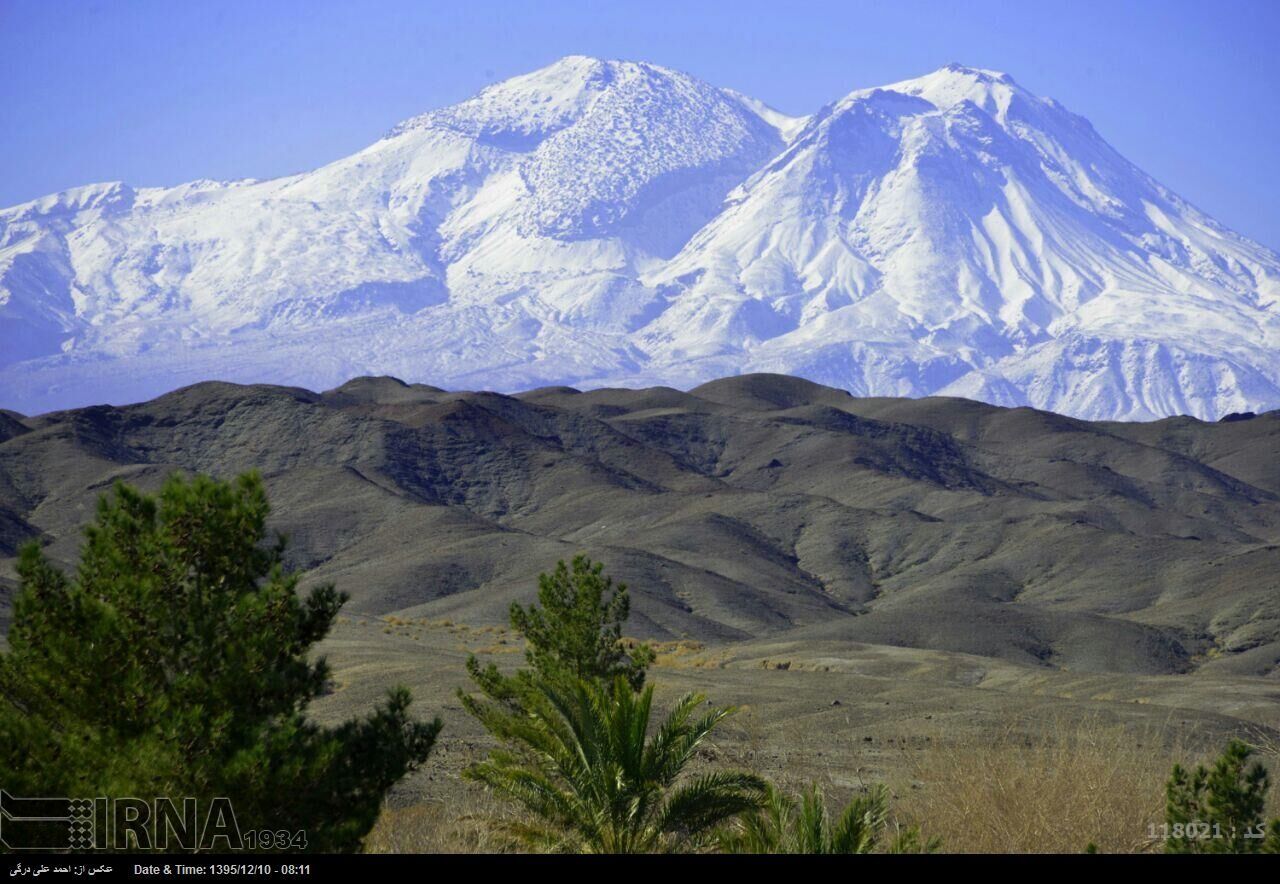
Mount Taftan: Awakening of a ‘Extinct’ Iranian Volcano – A Thorough Analysis
The geological landscape of southeastern Iran is undergoing a subtle but significant shift. Mount Taftan,a volcano long believed to be extinct for over 710,000 years,is exhibiting renewed signs of activity. Between July 2023 and May 2024, the volcano rose by nine centimeters, prompting scientists to re-evaluate its classification and intensify monitoring efforts. This article delves into the details of this geological event, exploring the scientific basis for the observed changes, potential implications, and the ongoing research aimed at understanding this potentially significant development. We will examine the nuances of volcanic dormancy, the role of gas pressure, and the importance of continuous seismic monitoring.
Understanding Volcanic Dormancy and Extinction
The terms “extinct” and “dormant” are often used interchangeably when discussing volcanoes, but they represent distinct geological states. A volcano is generally considered extinct when it is highly unlikely to erupt again, typically due to a depleted magma supply or significant geological changes that preclude future eruptions. However, geological timescales are vast, and what appears extinct can, in rare cases, reawaken.
Dormancy, on the other hand, signifies a period of inactivity, but with the potential for future eruptions. A dormant volcano retains a magma supply and the geological structures necessary for eruption, even if it hasn’t erupted for centuries or millennia. The recent activity at Mount Taftan strongly suggests a shift from the former classification to the latter. related terms like volcanic quiescence and potential volcanic unrest are also used by geologists to describe similar states.
The Resurgence of Mount Taftan: Evidence and Analysis
The initial indication of renewed activity came from precise geodetic measurements revealing the nine-centimeter uplift of Mount Taftan between July 2023 and May 2024. This vertical movement isn’t random; it’s directly linked to increased pressure beneath the surface. According to reports from Iran’s IRNA news agency, and corroborated by volcanologist Pablo Gonzalez, the leading author of the research, this pressure is likely due to accumulating gases within the magma chamber.
Gonzalez advocates for reclassifying Taftan as “dormant,” emphasizing that the built-up gas pressure will be released, either through a significant eruption or a gradual, prolonged period of degassing. This isn’t necessarily an immediate cause for alarm, but it necessitates vigilant monitoring. the type of gases released – such as sulfur dioxide (SO2), carbon dioxide (CO2), and hydrogen sulfide (H2S) – can provide further clues about the magma’s composition and the potential for an eruption. LSI keywords like magmatic activity, geodetic monitoring, and volcanic deformation are central to understanding this process.
Seismic Monitoring and Risk Assessment
The Iranian Geophysical Society is currently validating the findings and has initiated enhanced seismic observation and modelling. Continuous seismic monitoring is paramount. An increase in the frequency or intensity of earthquakes around Mount Taftan could signal magma movement and an escalating risk of eruption.
| Volcanic State | Characteristics | Risk Level |
|---|---|---|
| Extinct | no recent activity; depleted magma supply. | Very Low |
| Dormant | Long period of inactivity, but potential for future eruptions. | Moderate |
| Active | Recent eruptions; ongoing volcanic activity. |