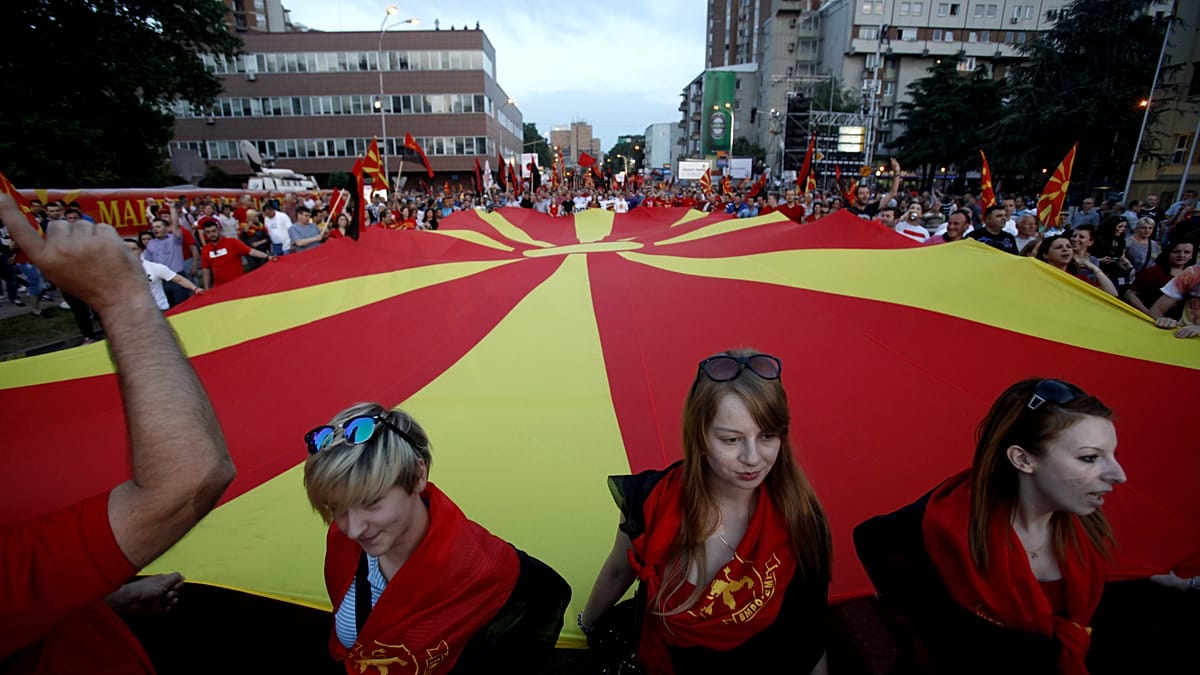
north Macedonia’s EU Accession Stalled: A Complex Web of History, Identity, and Political Obstacles
For nearly two decades, North Macedonia’s path to European Union membership has been fraught with challenges, primarily stemming from a complex and often acrimonious relationship with its neighbor, Bulgaria. While the resolution of a long-standing naming dispute with Greece in 2018 – achieved through the landmark Prespa Agreement - appeared to clear a major hurdle, Bulgaria’s subsequent demands have repeatedly stalled Skopje‘s progress, highlighting the delicate interplay of history, national identity, and geopolitical maneuvering in the Western Balkans.
A History of Dispute: Beyond the Name
The core of the current impasse lies not in territorial claims, but in differing interpretations of history and the status of national identities. Bulgaria’s concerns, initially framed as a desire to protect the rights of the Bulgarian minority within North Macedonia, quickly evolved into demands for constitutional amendments recognizing a “Bulgarian community” - a phrasing Skopje resisted, viewing it as a denial of the distinct Macedonian identity. This resistance stems from a historical narrative where Macedonians see themselves as a separate ethnicity with a unique language and cultural heritage, despite periods of Bulgarian ecclesiastical and cultural influence.
Athens initially held similar reservations, believing that any claims to a “Macedonian” identity implicitly challenged its own claims to the region of Macedonia within greece. Though, the Prespa Agreement successfully navigated this issue by recognizing the country’s official name as “North Macedonia,” effectively decoupling the nation’s identity from the broader historical region.
The bulgarian Veto and the French Proposal
Despite signing a friendship treaty in 2017 that acknowledged the “Macedonian language, according to the constitution of the Republic of Macedonia,” Bulgaria maintained its veto on North Macedonia’s EU accession talks. This obstruction prompted a French proposal in 2022, designed to break the deadlock. The proposal outlined a pathway for North macedonia to begin EU negotiations in exchange for constitutional changes recognizing the Bulgarian minority, guaranteeing their rights, and actively combating “anti-Bulgarian rhetoric.”
The macedonian government, under pressure from the EU and facing potential indefinite postponement of its EU aspirations, reluctantly accepted the French proposal in 2023, and negotiations officially commenced. However, this fragile compromise is now under threat.
Renewed Obstacles and Shifting Demands
The current government led by Hristijan Mickoski has expressed doubts about the legitimacy of the constitutional changes, demanding ”clear fulfillment of the obligations of the ‘eastern neighbour'” – a clear reference to Bulgaria – and concrete guarantees from the EU. In a reciprocal move, North Macedonia is now seeking Bulgarian recognition of a Macedonian minority in western bulgaria, further complicating the situation.
According to MEP Andrey Kovatchev, a key figure in the Bulgarian parliament, skopje is failing to adhere to the agreed-upon negotiating framework and the 2018 neighborhood agreement. He emphasizes that Bulgaria has already demonstrated its willingness to support North Macedonia’s EU membership, contingent upon the constitutional recognition of the “Bulgarian community.”
Beyond Politics: The Human Cost of Tension
The political stalemate has fueled tensions on the ground, manifesting in a disturbing rise in incidents of violence and vandalism. Bulgarian cultural clubs in Skopje and a Macedonian club in Bulgaria have been targeted, and a brutal attack on the secretary of a bulgarian cultural Club in Ohrid in 2023 underscored the fragility of progress. While the motivations behind these acts remain unclear – whether rooted in genuine resentment or politically orchestrated provocations – they highlight the potential for escalation.
Interestingly, anecdotal evidence suggests a different narrative among ordinary citizens. Many Bulgarians and Macedonians still view each other as “brothers,” demonstrating a level of cultural affinity that transcends the political disputes. However,years of stalled progress and perceived unfair treatment are breeding disillusionment among Macedonians regarding their EU future.
A Future in Doubt?
Prime Minister Mickoski has voiced the growing frustration within North Macedonia, stating that citizens are “fed up with this type of politics” and questioning whether the EU’s promises will ever be fulfilled.This sentiment reflects a broader concern within the Western Balkans about the sincerity of the EU’s enlargement process.
The situation remains precarious. North Macedonia’s EU accession hinges on Bulgaria’s willingness to compromise and the EU’s ability to provide credible guarantees. The upcoming EU Enlargement summit in Brussels will be a critical juncture, offering a platform to address these challenges and perhaps chart a path forward. However, without a genuine commitment to mutual understanding and a willingness to move beyond historical grievances, North Macedonia’s long-awaited journey to the EU may remain indefinitely delayed.
**Expertise, Experience, Authority, and Trustworthiness (E
Keep reading