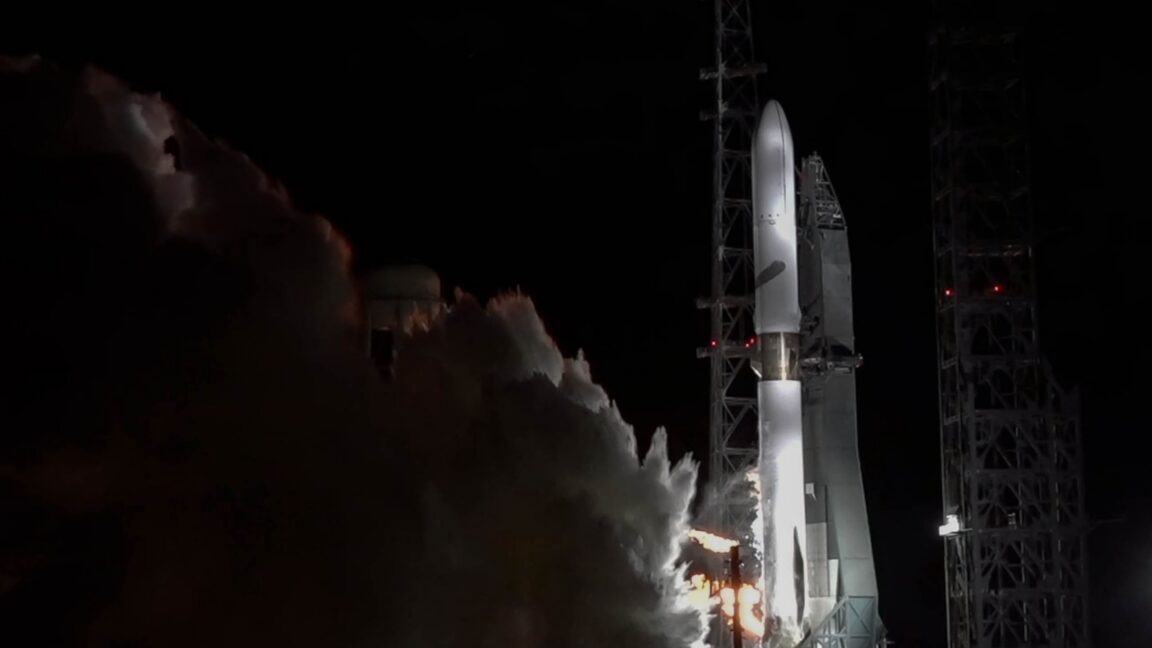
Blue Origin‘s new Glenn Rocket Achieves Key Test Milestone Ahead of Potential November Launch
Blue Origin, the space company founded by Jeff Bezos, is one step closer to its second launch of the New Glenn rocket. A full-duration hotfire test of all seven of the rocket’s BE-4 engines occurred Thursday night at cape Canaveral Space Force Station in Florida. This accomplished test signals a important advancement in the program and potentially clears the path for liftoff as early as November 9th.
What Happened During the test?
The New Glenn rocket ignited its seven BE-4 main engines at 9:59 pm EDT (01:59 UTC Friday).
* The engines burned for 38 seconds while the 320-foot-tall rocket remained anchored to the launch pad.
* During the test, the engines operated at full power for 22 seconds, generating nearly 3.9 million pounds of thrust.
* Engineers intentionally shut down some engines to simulate the booster’s landing burn sequence.this is a crucial step toward achieving controlled landings on a barge in the Atlantic Ocean.
This hold-down firing was the final major test before launch. Blue Origin previously completed testing of the rocket’s second-stage engines.
why is This Test Crucial?
This test is critical for several reasons, particularly regarding Blue Origin’s ambition to reuse its rockets.Reusability is key to lowering the cost of space access.
* Landing Practice: Simulating the landing burn allows engineers to analyze fluid interactions between active and inactive engine feedlines.This data is vital for refining the landing process.
* First Launch Recovery: Blue Origin aims to recover the New Glenn first stage on this flight, after the booster failed to land during its inaugural mission in January.
* Future Missions: Successful recovery and reuse of this booster are essential for the third New Glenn launch, planned for early next year. This mission will carry Blue Origin’s Blue Moon lander toward the Moon.
Failure to land this rocket could delay future missions, potentially pushing the launch of a new first-stage booster into late 2026.
What’s Next for New Glenn?
Following the successful test firing, the Blue Origin team will carefully inspect the rocket.
* The rocket will be lowered and rolled back to a nearby hangar.
* Technicians will replace the current payload fairing with a new one.
* The new fairing will house two NASA-owned spacecraft destined for Mars.
Blue Origin CEO Dave Limp expressed his excitement on X (formerly Twitter), stating, “Love seeing New Glenn’s seven BE-4 engines come alive! Congratulations to Team Blue on today’s hotfire.”
This latest milestone demonstrates Blue Origin’s progress toward reliable and reusable space transportation.You can stay updated on the New Glenn program through Blue Origin’s official channels and Ars Technica’s ongoing coverage.
Worth a look