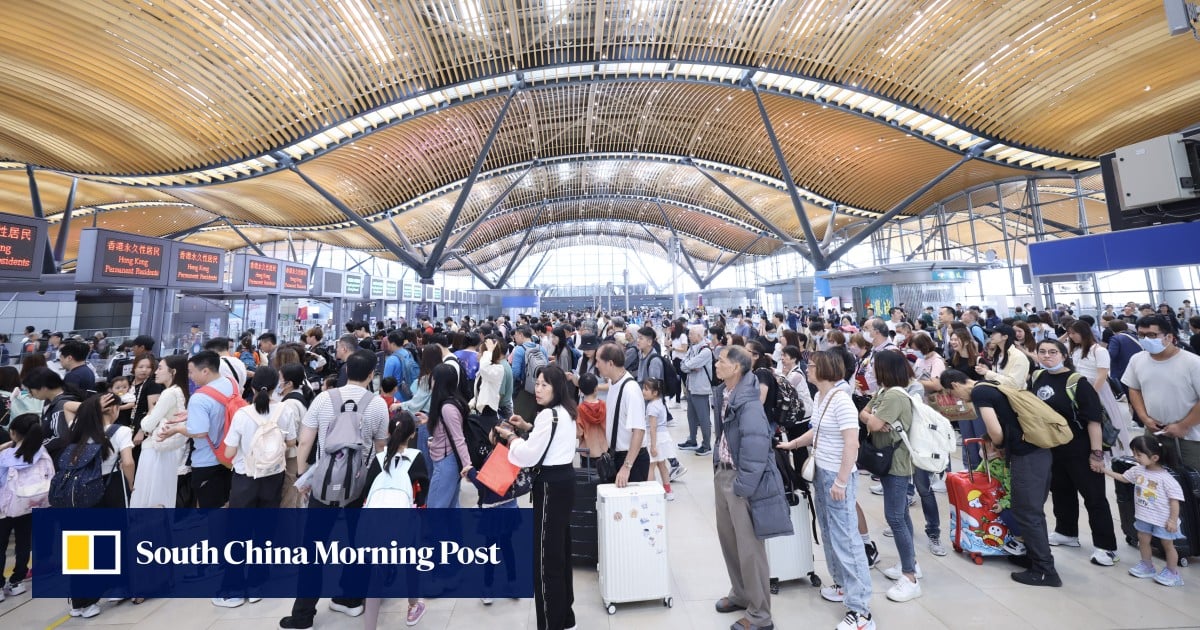
Streamlined Mainland Travel for Hong Kong Residents: Facial Recognition & Visa Updates
Are you a Hong Kong resident planning a trip to mainland China? Or perhaps a professional seeking extended stay options? Recent policy changes announced by the National Immigration Management (NIA) promise a smoother, faster, and more convenient travel experiance. This article details the expanded use of facial recognition technology at key checkpoints and broadened visa schemes for professionals, offering a extensive guide to navigating these updates.
Expanding Facial Recognition for Seamless Border Crossings
From November 6th, 2024, hong Kong residents holding mainland travel permits will gain access to “clever” fast lanes utilizing facial recognition at several major ports. This includes Shanghai, Xiamen, Guangzhou, Shenzhen, and Zhuhai, considerably expanding beyond the initial implementation at Shenzhen Bay Port and Gongbei Port in Zhuhai. The goal? to drastically reduce wait times and streamline the border crossing process.
Eligible residents - those aged 14 and above who consent to biometric data collection – can opt for these fast lanes.This applies not only to Hong Kong ID holders but also to residents of Macau and Taiwan with valid mainland travel permits. New checkpoints incorporating this technology include Huanggang,Luohu,Liantang,Futian,and Wenjindu in Shenzhen,the Hong Kong-Zhuhai-Macau Bridge,and Shanghai Hongqiao International Airport.
Here’s what you need to know:
* Eligibility: Must be 14 years or older and possess a valid mainland travel permit.
* consent: You must agree to have your facial and fingerprint information collected and verified.
* Availability: The service is available at designated ports in major cities.
* Speed: Expect significantly faster processing times compared to traditional immigration procedures.
Recent data from the Hong Kong Tourism Board shows a 25% increase in mainland visits in Q3 2024, highlighting the growing demand for easier cross-border travel. https://www.hktb.com/ This initiative directly addresses that demand.
Enhanced Visa Schemes for Mainland Professionals
beyond faster border crossings, the NIA is also expanding its multi-entry visa scheme. This benefits mainland professionals traveling to Hong Kong for work. These new measures,part of a broader set of ten updates,aim to foster greater economic collaboration and talent exchange between mainland China and Hong Kong.
Specifically, the expanded scheme allows for longer stays and more frequent visits for professionals in designated fields. While the specific professions haven’t been fully detailed, initial reports suggest a focus on technology, finance, and legal sectors.This aligns with Hong Kong’s ongoing efforts to attract and retain skilled workers.
key benefits of the expanded visa scheme:
* Longer permissible stay durations.
* Increased frequency of entries.
* Simplified submission process (details forthcoming).
* Support for key industries driving Hong Kong’s economy.
Addressing Common Concerns & Practical Tips
Many travelers are understandably curious about data privacy. The NIA has assured residents that all collected biometric data will be securely stored and used solely for identity verification purposes, adhering to strict data protection regulations.
Here are some practical tips for a smooth transition:
- Check Port Availability: Confirm if your chosen port offers facial recognition lanes before your travel date.
- Prepare Documentation: Have your mainland travel permit readily accessible.
- Understand the Process: Familiarize yourself with the facial recognition procedure to avoid delays.
- Stay Updated: Monitor the NIA website for the latest announcements and guidelines. http://www.nia.gov.cn/
Evergreen Insights: The Future of cross-Border Travel
The integration of facial recognition and streamlined visa processes represents a notable shift towards a more interconnected and efficient travel landscape between Hong Kong and mainland China. This trend isn’t isolated; globally, we’re seeing increased adoption of biometric technologies at borders to enhance security and expedite passenger flow.The success of this initiative will likely pave the way for further technological advancements and policy adjustments, ultimately shaping the future of cross-border travel in the region.
Frequently Asked Questions about Facial recognition & Mainland Travel
Q: Can anyone use the facial recognition lanes?
A: No, you must be 14 or older, a Hong Kong (or Macau/Taiwan) resident with a valid mainland