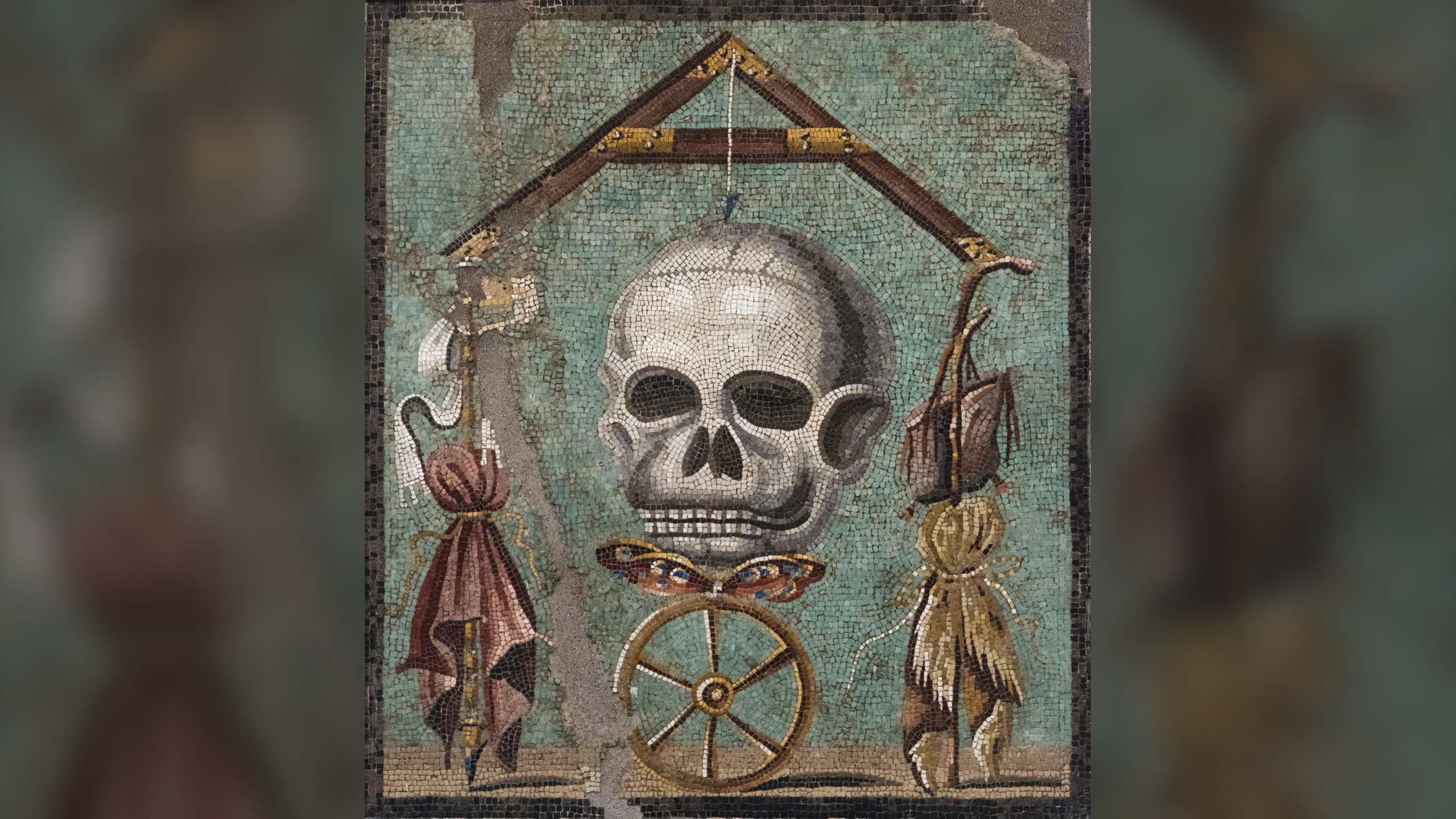
The Pompeii Tanner Who Contemplated Mortality: A Glimpse into Roman Life and the Enduring Power of Memento mori
The ancient city of Pompeii continues to yield remarkable insights into the daily lives – and even the philosophies – of its inhabitants. Among the most compelling discoveries is the House of Vesonius Primus, a remarkably preserved residence that belonged to a successful businessman. He wasn’t just any entrepreneur; Vesonius owned Pompeii’s sole tannery, alongside a fullery dedicated to cleaning and dyeing fabrics.
This reveals a man of considerable means and involvement in the local economy. But what truly sets Vesonius Primus apart is a striking mosaic found within his home, a powerful depiction of a human skull. This wasn’t merely decorative; it was a purposeful memento mori – a reminder of the inevitability of death.
The Enduring Appeal of Memento Mori
The concept of memento mori wasn’t unique to Vesonius or even ancient Rome. Throughout history, cultures have grappled with mortality, and artistic representations of skulls and skeletons served as potent reminders to live fully in the present. You might be surprised to learn this practice spanned centuries and continents.
Consider these examples:
* Tudor england: Archaeologists unearthed a gold memento mori ring dating back to this period.
* Renaissance Germany: A beautifully crafted memento mori ring from Germany offers another testament to the enduring appeal of this theme.
* Medieval Europe: Similar artifacts frequently appear in archaeological finds, demonstrating a widespread preoccupation with the fleeting nature of life.
These objects weren’t morbid fascinations, but rather tools for contemplation, encouraging individuals to prioritize what truly mattered. they served as a visual prompt to reflect on your own mortality and live a virtuous life.
A Pompeii Family’s Fate
While Vesonius likely escaped the catastrophic eruption of Mount Vesuvius in A.D. 79,tragedy still touched his household.Sadly, the remains of his guard dog were discovered amidst the rubble. The animal was found contorted, desperately attempting to break free from its collar and chain – a heartbreaking image of loyalty and futile struggle.
This poignant revelation underscores the human cost of the disaster. It reminds us that the eruption wasn’t just a geological event, but a devastating loss of life, impacting families and their beloved companions.
What vesonius’s Home Reveals About Roman society
the House of Vesonius Primus offers a unique window into the complexities of Roman life. It suggests a society where even successful businessmen contemplated existential questions. The presence of the memento mori mosaic indicates a philosophical inclination, a willingness to confront the uncomfortable truth of mortality.
Moreover,the house’s layout and the presence of both a tannery and a fullery demonstrate the interconnectedness of Roman commerce. Vesonius wasn’t simply a businessman; he was a vital part of the local economic fabric.
Ultimately, the story of Vesonius Primus and his home is a powerful reminder that even across millennia, human experiences – our ambitions, our fears, and our reflections on life and death – remain remarkably consistent. the artifacts unearthed in Pompeii aren’t just relics of the past; they are mirrors reflecting our own humanity.
Related reading