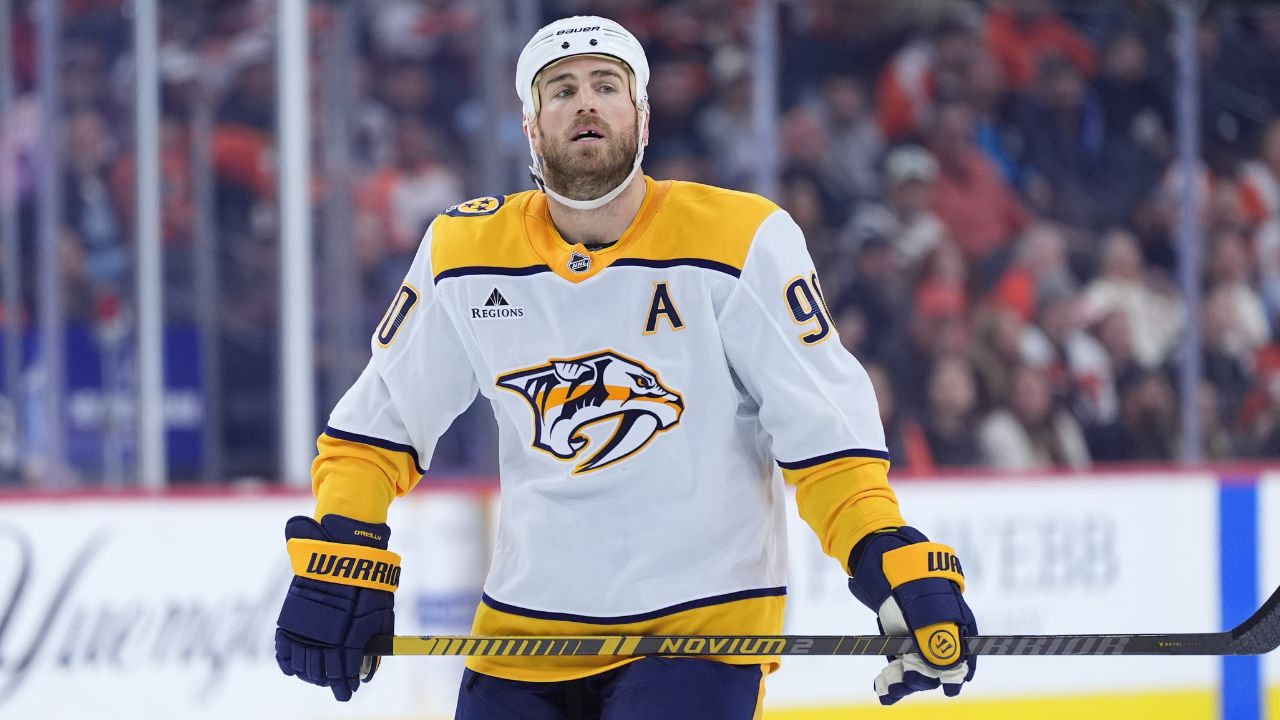
Ryan O’Reilly‘s Self-Critique: Decoding a Veteran’s Frustration and the Pressure to Perform
Ryan O’Reilly is known for holding himself to a high standard. Following a recent Nashville Predators loss, the veteran center delivered a remarkably candid - and critical – self-assessment, sparking discussion about performance expectations and the realities of a struggling NHL season. But what’s behind this unusually harsh self-evaluation, and what does it reveal about the pressures faced by seasoned NHL players?
A Brutal Honesty
After the Predators’ 3-1 defeat to the Philadelphia flyers, O’Reilly didn’t mince words. He openly lamented turnovers,inaccurate passes,and his overall impact on the game.”For myself, No. 1 center, turn the puck over everywhere, can’t make a six-foot pass to save my life,” he stated bluntly.
This level of self-criticism is rare, especially from a player with O’Reilly’s extensive experience and accolades. It signals a deep frustration, not just with the team’s performance, but with his own inability to elevate their game. He acknowledged the situation, stating, “We’re not going to have much success if I’m playing pathetic like that.”
Contextualizing O’Reilly’s Performance
While O’Reilly’s self-assessment is stark, a closer look at his statistics reveals a more nuanced picture. Through 16 games this season, he’s recorded six goals and four assists – respectable numbers for a veteran center. However, individual stats often take a backseat when a team is underperforming.
The Predators currently hold a 6-7 record, sitting sixth in the Central Division. This downturn is likely fueling O’Reilly’s heightened self-scrutiny. He’s under contract for $18 million over four years, and with that comes the expectation of being a consistent, impactful force.
Reflecting on Past Successes
O’Reilly referenced having “one good year” in his career, likely referring to the 2018-19 season with the St. Louis blues. That year, he achieved a career-high 77 points and earned the Conn Smythe Trophy as playoff MVP, leading the Blues to their frist Stanley Cup championship.
It’s vital to remember that O’Reilly’s career extends far beyond that single season. He’s amassed 834 points in 1,168 career games across multiple franchises – the Colorado Avalanche, Buffalo Sabres, St. Louis Blues, Toronto Maple Leafs, and now the Nashville Predators. He’s also a three-time NHL All-Star. This extensive track record demonstrates a consistent level of skill and dedication.
The Weight of Leadership & Expectations
O’Reilly’s frustration likely stems from the obligation he feels as a team leader. As a No. 1 center, he’s expected to drive play, create scoring opportunities, and contribute defensively. When he feels he’s falling short of those expectations, it understandably leads to self-doubt and harsh self-evaluation.
The pressure to perform in the NHL is immense. Players are constantly scrutinized by coaches, management, fans, and the media. For a veteran like O’Reilly, the internal pressure to maintain a high level of play is even greater. He’s not just playing for himself; he’s playing for his team, his career legacy, and his financial security.
What This Means for the Predators
O’Reilly’s candidness could be a catalyst for positive change within the Predators institution. His willingness to publicly acknowledge his shortcomings might encourage teammates to do the same, fostering a culture of accountability.
However, it also highlights the need for the team to address its broader issues. Individual performance is crucial, but a team’s success relies on collective effort, strategic coaching, and a cohesive system. The Predators need to find a way to support O’Reilly and unlock his full potential while simultaneously addressing the team’s overall struggles.
Timeless insights: The Psychology of Peak Performance
The situation with Ryan O’Reilly offers a valuable lesson applicable beyond the realm of professional sports. It underscores the internal battles athletes face,the weight of expectation,and the importance of self-awareness. Here are some key takeaways:
* **The Inner Critic
Worth a look