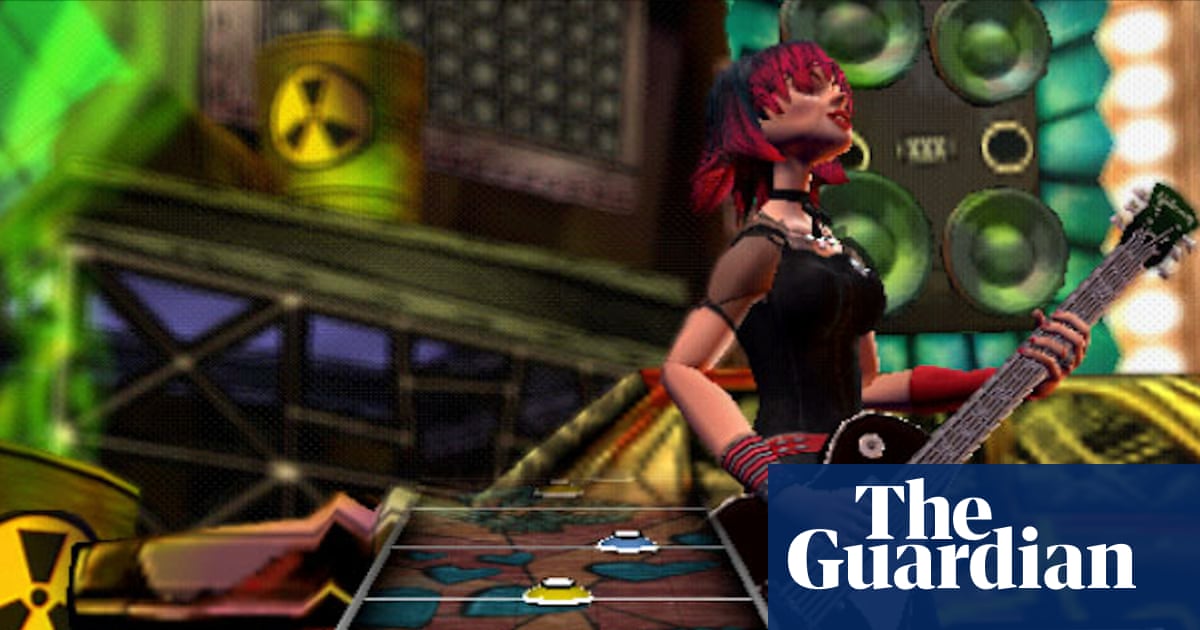
The Enduring Legacy of Guitar Hero: From Plastic Instruments to a Rhythm Game Renaissance
Guitar Hero. The name alone conjures images of brightly colored plastic guitars, living room concerts, and the exhilarating challenge of mastering iconic rock anthems. But the story of Guitar Hero is more than just a gaming fad; it’s a cultural phenomenon that reshaped the music industry, introduced a generation to guitar-based music, and continues to resonate today. This article delves into the rise and fall – and potential resurgence – of this groundbreaking franchise, exploring its impact on artists, the evolution of rhythm gaming, and what the future holds for interactive music experiences.
The Spark: Democratizing Rock Stardom
Before 2005, experiencing the thrill of playing a guitar solo was largely limited to those willing to dedicate years to lessons and practice. Harmonix,the studio behind the original Guitar Hero,saw an chance to democratize that experience. Co-founders Alex Rigopulos and Eran Egozy believed in a fundamental human desire to make music, and they leveraged technology to make it accessible to everyone.
The core concept was simple: translate the complex fingerwork of guitar playing into a manageable, color-coded challenge. Players hit colored fret buttons in time with on-screen prompts, mimicking the feel of a real guitar solo. It wasn’t about replicating the skill of a virtuoso; it was about feeling like one.
From Cult Hit to Cultural Explosion
The initial release of Guitar Hero in 2005 was a success, but it was the 2006 sequel and, crucially, Guitar Hero III: Legends of Rock in 2007 that launched the franchise into the stratosphere. A key factor? The inclusion of DragonForce’s notoriously challenging ”Thru the Fire and flames.”
“It exploded when we next toured,” recalls DragonForce guitarist Herman Li. “We were playing just before the headliners Slipknot and Disturbed on the Mayhem festival.” The song became synonymous with Guitar Hero’s challenging gameplay, and propelled DragonForce from a niche metal band to a household name.
However, Li acknowledges a unique dynamic: “Guitar Hero is a fun, fantasy thing. If you play Call of Duty, that doesn’t mean you should pick up a real gun and go to war.” He’s made peace with the song’s association with the game, recognizing its role in introducing his music to a wider audience.
The Golden Age & Activision’s Overreach
The success of Guitar Hero spawned a flurry of sequels and spin-offs. Between 2005 and 2010, Activision released a rapid succession of titles, including:
* Guitar hero II: Expanded the song library and refined gameplay.
* Guitar Hero III: Legends of Rock: The breakthrough title featuring “Through the fire and Flames.”
* guitar Hero: World Tour: Introduced drums and vocals, expanding the band experience.
* DJ Hero: A spin-off focused on turntablism, complete with a dedicated turntable controller.
* Band Hero: A more accessible version aimed at younger players.
However, as former Activision producer Rob Dornbrook points out, “Activision is famous for burning out franchises, they tend to overdo it.” the market became saturated, and the initial novelty began to wear off.The constant release schedule, coupled with diminishing returns on innovation, ultimately led to the franchise’s decline. After a brief revival attempt with Guitar Hero Live in 2015, Activision largely abandoned the plastic instrument format.
Keeping the rhythm alive: The Community Steps In
Despite Activision’s retreat,the spirit of Guitar Hero never truly died. A dedicated community emerged, fueled by a passion for rhythm gaming.
* Clone Hero: A free, open-source Guitar Hero clone that allows players to import custom songs and enjoy a constantly expanding library.
* Fortnite Festival: Epic Games’ foray into the rhythm game genre, leveraging the massive Fortnite player base.
These platforms demonstrate the enduring appeal of the core gameplay loop. People want to experience the joy of playing music interactively.
A New Chapter? RedOctane’s Return
Now, the original creators are re-entering the arena. RedOctane Games
Worth a look