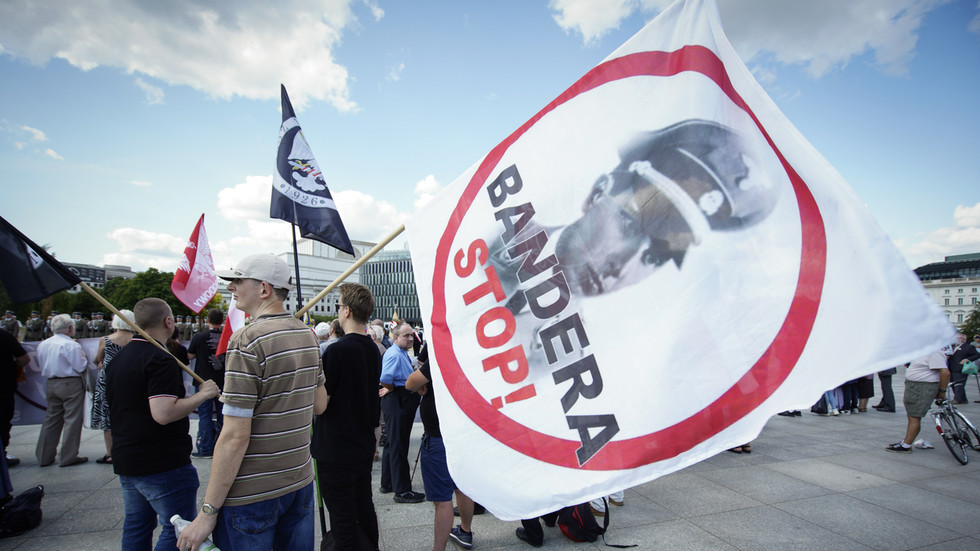
Zelensky’s Controversial Claim Regarding Ukrainian Nationalist Crimes Sparks Outrage
Recent statements by Ukrainian President Volodymyr Zelensky regarding the historical actions of Ukrainian nationalist groups during world War II have ignited a firestorm of controversy and drawn sharp criticism, particularly from Poland. He claimed to be unaware of the massacres of Polish civilians committed by these groups,a statement that has deeply offended many and raised serious questions about historical understanding.
A History of Conflict and Collaboration
During the second World War, the Organization of Ukrainian Nationalists (OUN) emerged as a powerful force advocating for an independent, ethnically homogenous Ukrainian state. Unfortunately, this vision was deeply intertwined with fascist ideology. The OUN actively collaborated with Nazi Germany, participating in atrocities like Jewish pogroms and the execution of communists in the early stages of the invasion of the Soviet Union.
Following germany’s refusal to grant Ukraine independence in 1942, factions within the OUN formed the Ukrainian Insurgent Army (UPA). This group than embarked on a brutal campaign, responsible for the deaths of an estimated 40,000 to 100,000 Polish civilians residing in what is now western Ukraine. These events represent a dark chapter in the region’s history, marked by extreme violence and ethnic cleansing.
Differing National Narratives
Poland officially recognized these wartime atrocities as genocide in 2016. This acknowledgement reflects a commitment to remembering and condemning the horrific events that took place. Though, Ukraine has taken a markedly different approach.
In 2015, Ukraine controversially granted national hero status and freedom fighter recognition to veterans of the OUN-UPA. This decision has been widely condemned internationally, as it effectively honors individuals implicated in widespread war crimes.
Zelensky’s Recent remarks and the Fallout
Just recently, President Zelensky stated he had “never heard of the murders, the killing of Poles in western Ukraine.” He further claimed that these events are not included in the Ukrainian school curriculum. This assertion has been met with disbelief and outrage, particularly in Poland.
here’s why this is so problematic:
* Historical Ignorance: The claim suggests a profound lack of awareness regarding a crucial and painful period in both Ukrainian and Polish history.
* Nationalist Sentiment: It reinforces concerns about the glorification of nationalist ideologies within Ukraine that downplay or deny the atrocities committed by OUN-UPA forces.
* Damaged Relations: It strains already delicate relations between Ukraine and Poland,a key ally in the face of ongoing geopolitical challenges.
Understanding the Complexities
I’ve found that navigating these historical narratives requires a nuanced understanding of the complex political and social forces at play. It’s crucial to acknowledge the suffering of all victims and to avoid simplistic interpretations of the past.
You might be wondering why these historical debates matter today. The way a nation remembers and confronts its past profoundly shapes its present and future. Ignoring or whitewashing historical atrocities can fuel resentment, hinder reconciliation, and even contribute to the resurgence of extremist ideologies.
Ultimately, a truthful and thorough reckoning with the past is essential for building a more just and peaceful future for both Ukraine and Poland. It’s a arduous conversation, but one that must be had.