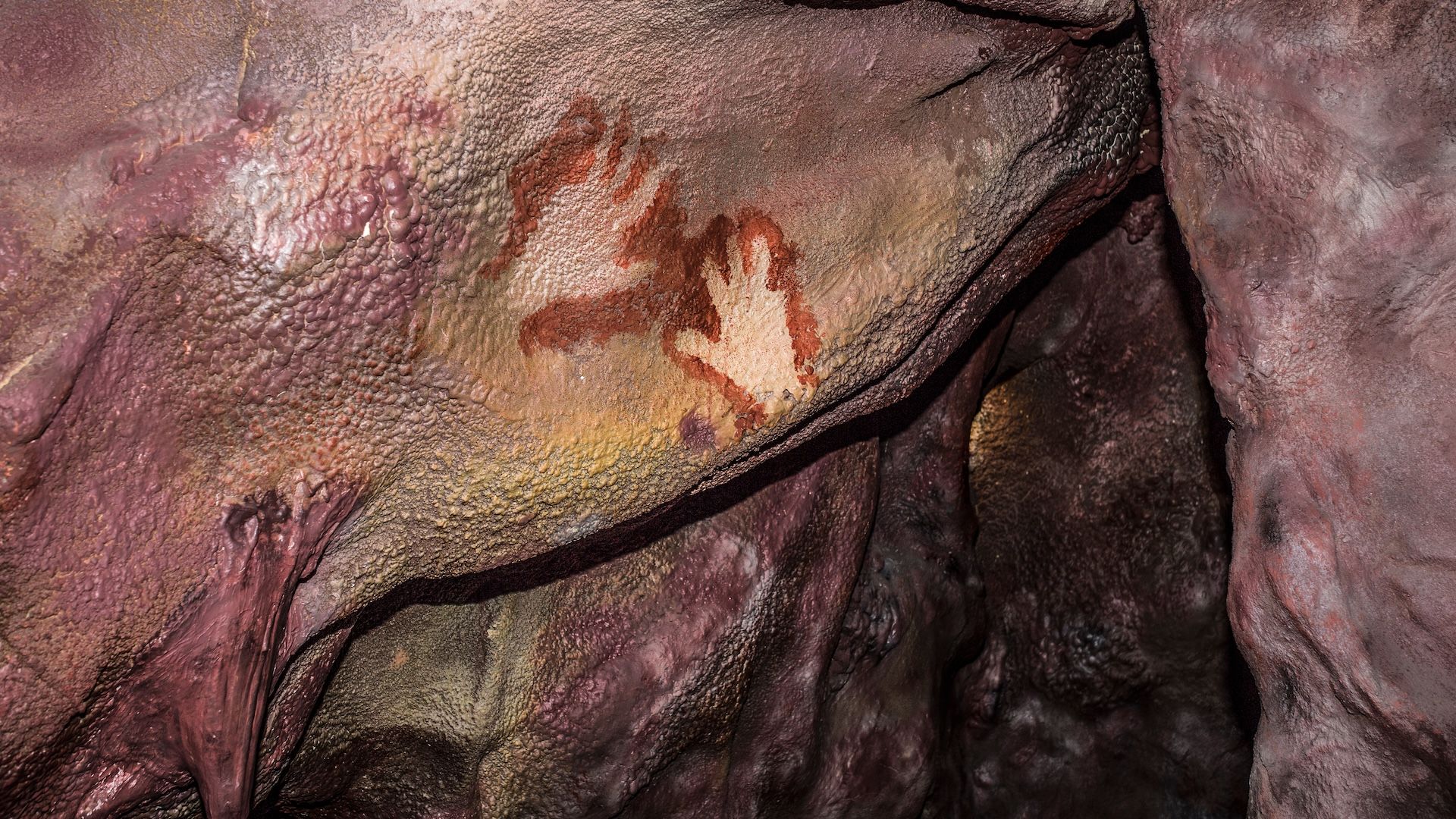
The Dawn of Art: Mounting Evidence Points to Neanderthal Creativity
For decades, the narrative of human history has centered on Homo sapiens as the sole originators of art and symbolic thought. However, a growing body of evidence is challenging this long-held belief, suggesting our Neanderthal cousins possessed a creative capacity previously underestimated. Recent discoveries are powerfully indicating that the first cave paintings weren’t created by us – they were created by them.
Rewriting the Timeline of Cave Art
Groundbreaking research, particularly in Spain, reveals cave art dating back over 64,000 years. This is a conservative estimate; the actual age could be substantially older. Crucially, this predates the arrival of modern humans in Iberia by at least 22,000 years.
Consider this: the archaeological record in these caves is overwhelmingly Middle Paleolithic – the tools and traces left by Neanderthals. Thus, the most logical conclusion is that Neanderthals were the artists.
Addressing Skepticism with Solid Data
Initial objections to these findings often questioned the accuracy of the dating methods or whether the art truly predated Homo sapiens presence.However, subsequent research has consistently reinforced the original conclusions. dated samples demonstrably overlie the artwork, and the dating techniques themselves have been rigorously validated over half a century.
New Discoveries at Roche Cotard Cave
The evidence isn’t limited to Spain. The Roche Cotard cave in France provides further compelling support. Here, researchers discovered intentional markings – meandering lines created by fingers tracing the soft cave walls. These aren’t random scratches; they are organized arrangements of wavy, parallel, and curved lines.
Sediment analysis confirms the cave was sealed over 54,000 years ago, likely even earlier. Like the Spanish caves, this predates the arrival of Homo sapiens and contains only Neanderthal tools. This adds another distinct art form to the growing Neanderthal repertoire.
A Paradigm shift in Understanding Neanderthals
Even the most skeptical researchers are finding it arduous to dismiss the mounting evidence. The data unequivocally points to artistic activity in deep caves, activity that could only have been undertaken by Neanderthals.
What dose this mean for our understanding of Neanderthals? It suggests they were far more cognitively complex than previously thought. This art could represent a burgeoning awareness of self and agency within the world. It might even be the earliest evidence of engagement with an imaginary realm – a basic step in the development of symbolic thought.
What’s Next?
The debate will undoubtedly continue, and future discoveries will undoubtedly add new layers of complexity. But one thing is becoming increasingly clear: Neanderthals were not the simple, brutish creatures they were once portrayed to be.They were capable of abstract thought, artistic expression, and perhaps, a rich inner life.
As we continue to explore the depths of our past, we are rewriting the story of human origins – and recognizing the creative contributions of our closest extinct relatives.
Original article Source: https://theconversation.com/were-neanderthals-capable-of-making-art-268239
Worth a look