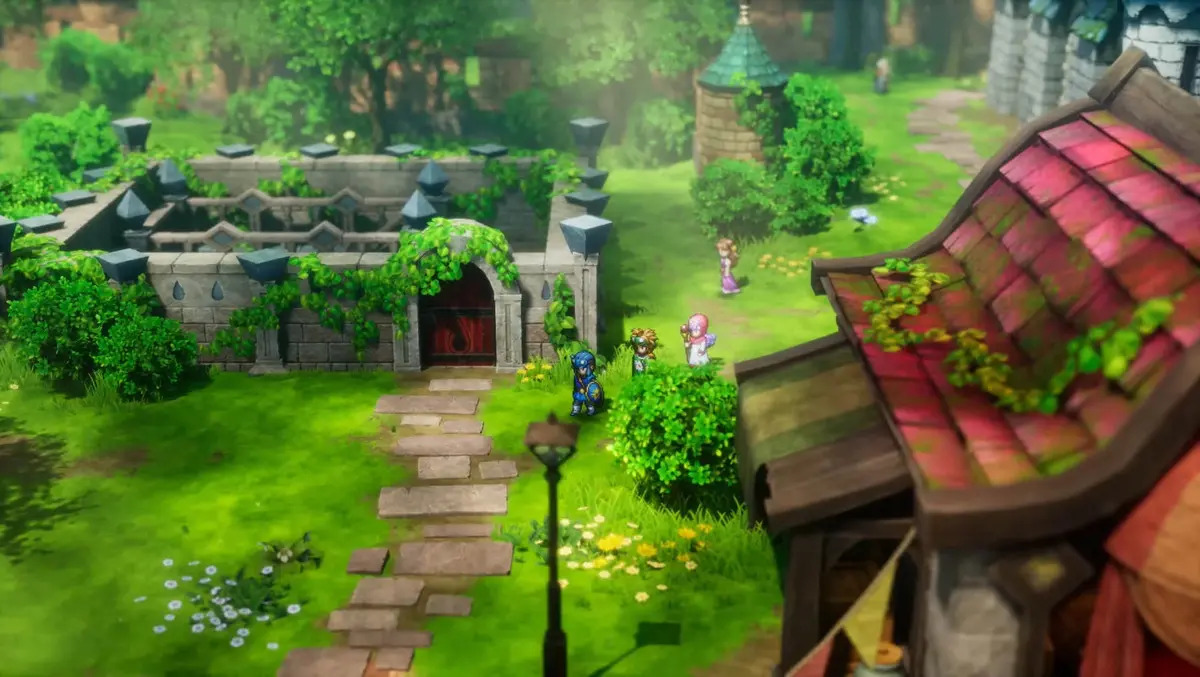
Dragon Quest I & II HD-2D Remake: A Nostalgic Journey Reimagined for a Modern Audience
For RPG enthusiasts, the name Dragon Quest carries a weight of history. These are the games that helped define the genre, laying the foundation for countless adventures to come. Now, Square Enix has lovingly resurrected the first two chapters in this legendary saga with Dragon Quest I & II HD-2D Remake, offering both a nostalgic trip for veterans and an accessible entry point for newcomers. This isn’t simply a graphical upgrade; it’s a thoughtful reimagining that respects the source material while addressing some of its inherent limitations. As a long-time RPG player and someone deeply familiar with the evolution of the genre,I’ve spent considerable time exploring this remake,and here’s a thorough look at what it offers.
A Legacy Reborn: The Stories of Alefgard and Midenhall
The package presents two distinct, yet interconnected, narratives. Dragon Quest I casts you as the descendant of the legendary hero Erdrick, tasked with restoring the Ball of Light stolen by the nefarious Dragonlord. alefgard, once protected by this beacon, is now overrun with monsters, and the fate of Princess Gwaelin rests on your shoulders. It’s a classic hero’s journey, steeped in fantasy tropes but delivered with a charming simplicity.
Dragon Quest II expands the world and the stakes, taking place a century later. Here, you embody the Prince of Midenhall, embarking on a quest to find your two cousins – also Erdrick’s descendants – and confront the malevolent sorcerer Hargon and the formidable Demon Lord Malroth. This sequel introduces a party-based system and a more complex storyline, building upon the foundations laid by its predecessor. The initial events of Dragon Quest II are notably darker and more impactful than the first game, reflecting a shift in tone and narrative ambition.
Old-School Charm Meets Modern convenience
Let’s address the elephant in the room: these are old games. Originally released in the late 1980s, they bear the hallmarks of that era. The core gameplay revolves around turn-based combat,a system where strategic patience is key. Unlike modern action RPGs, there’s no dodging, counterattacking, or real-time finesse. You select your action – typically a physical attack or a spell – and wait for your turn, bracing for the enemy’s response.
This can feel restrictive to players accustomed to more dynamic combat systems. Moreover, the infamous random encounters are frequent and unavoidable. Unlike titles like Bravely Default, which offer control over encounter rates, Dragon Quest I & II throws monsters at you constantly, demanding preparedness and a willingness to grind.
However, Square Enix has wisely implemented several quality-of-life features to mitigate these challenges. A welcome addition is an Easy Mode that grants complete invincibility, allowing players to experience the story without the frustration of constant defeat.
Beyond that, the remake boasts:
* Quest Markers & Hidden Chests: A clear quest marker guides you to your next objective, and an option to reveal hidden chests eliminates frustrating pixel hunting.
* Fast-Forward Mode: This is a game-changer.Dialog can be skipped, and battles can be accelerated to a maximum speed, drastically reducing the tedium of repetitive grinding. I personally found this essential for navigating the frequent random encounters.
* Voice Acting: For the first time, key cutscenes are brought to life with voice acting, adding emotional depth and enhancing the narrative experience. While not pervasive, it’s a significant advancement.
A Visual Masterpiece: The HD-2D Aesthetic
The most striking aspect of this remake is undoubtedly its visual presentation. The “HD-2D” aesthetic – a blend of retro pixel art and modern lighting effects – is simply stunning. Environments are richly detailed, characters are expressive, and the overall effect is a stunning homage to the 16-bit era while simultaneously feeling fresh and contemporary. The art direction is a triumph, breathing new life into these classic worlds.
Tho, the battle system’s visual presentation remains a point of contention. Battles are still fought from a first-person perspective, and you only see a simple slash animation when you hit an enemy. It’s a relic of the original games,and while it maintains a certain nostalgic charm,it lacks the visual impact of more modern RPGs.
The Grind is Real, But Worth It?
Worth a look