Russia‘s New Nuclear Arsenal and the Uncertain Future of Arms Control
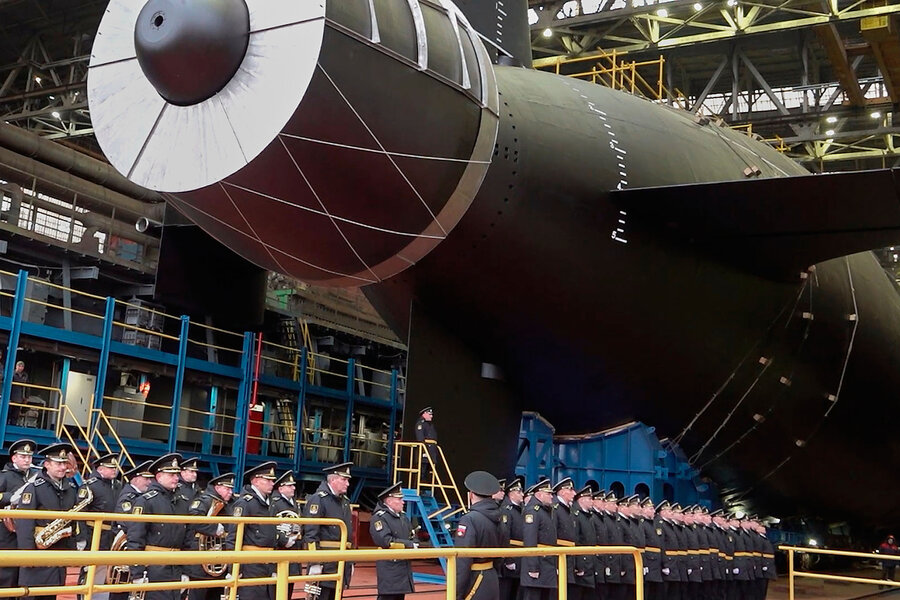
The unveiling of Russia’s advanced weapons systems – the nuclear-powered Burevestnik cruise missile and the Poseidon underwater drone – has sparked debate among security experts. While visually reminiscent of a James Bond film, the true strategic impact of these weapons remains a point of contention. do they genuinely alter the global power balance, or are they largely symbolic?
This article delves into the implications of Russia’s new arsenal, the confusing signals emanating from the Trump administration, and the increasingly fragile state of international arms control agreements.We’ll explore what these developments mean for global stability and what you, as an informed citizen, should understand about this evolving landscape.
Assessing Russia’s New Capabilities
Russian President Vladimir Putin recently honored the developers of Burevestnik and Poseidon, highlighting their importance. Though, Dr. Mark Galeotti, a leading expert on Russian security affairs, expresses skepticism. “I seriously question whether these weapons, however worthy of a Bond movie, really give russia any new strategic capability,” he states. “The Russians already had an ample second-strike capability.”
Essentially, Russia already possessed the means to retaliate in the event of a nuclear attack. The question is whether these new systems offer a qualitative advantage, such as increased invulnerability or the ability to circumvent existing defense systems.
* Burevestnik: A nuclear-powered, long-range cruise missile, theoretically capable of flying indefinitely and maneuvering to avoid detection.
* Poseidon: A nuclear-powered underwater drone designed to deliver a warhead to coastal targets, potentially bypassing traditional defenses.
A Troubling Response from Washington
Russia’s test of the Burevestnik missile elicited a peculiar response from former President Trump. He suggested that the U.S. might need to conduct its own nuclear tests. “With others doing testing, I think its appropriate that we do also,” Trump said.
This statement triggered confusion in Moscow, prompting requests for clarification that went unanswered. Pavel Devyatkin, a Moscow-based expert with the Quincy Institute for Responsible Statecraft, points out the gravity of the situation. “The only country that’s tested a nuclear weapon in the 21st century is North Korea,” he explains. “Nobody else has or needs to, as there are perfectly adequate ways to check the reliability of warheads without detonating one.”
You might wonder if this was a intentional tactic by Trump – a form of escalation intended to de-escalate. However, Devyatkin argues that it’s “not good for strategic stability” nonetheless of the intent.
Arms Control at a Crossroads
the current surroundings casts a shadow over several crucial arms control agreements. Two are particularly vulnerable:
- The Comprehensive Test Ban Treaty (CTBT): Signed by 187 nations in 1996,this treaty prohibits all nuclear weapon test explosions.
- The New START Treaty: Originally signed in 2010, this agreement limits the number of strategic nuclear warheads and delivery systems deployed by the U.S. and Russia. It was extended for one year, but its long-term future remains uncertain.
With Russia introducing these novel weapons and the U.S. administration sending mixed signals, the prospects for achieving lasting stability thru negotiation appear increasingly dim.
Concerns from Moscow
Many observers in Moscow are concerned about what they perceive as a lack of clarity and competence in Trump’s statements regarding nuclear issues. Nikolai Litovkin, an autonomous Russian security expert, expresses this sentiment. “Trump says he wants to make America grate again, but at what cost?” he asks.
Russia, he emphasizes, will not except being marginalized. “If you want security, it can only happen in a world that’s secure for everyone.” This underscores a fundamental principle of arms control: mutual security is paramount.
What Does This Mean for You?
The developments outlined above have critically important implications for global security. A breakdown in arms control could lead to a new arms race, increasing the risk of miscalculation and escalation.
Here’s what you should keep in mind:
* Stay informed: Follow developments in arms control and international security from reputable sources.
* Demand accountability: Encourage your elected officials to prioritize arms control and diplomacy.
* Understand the risks:
Related reading