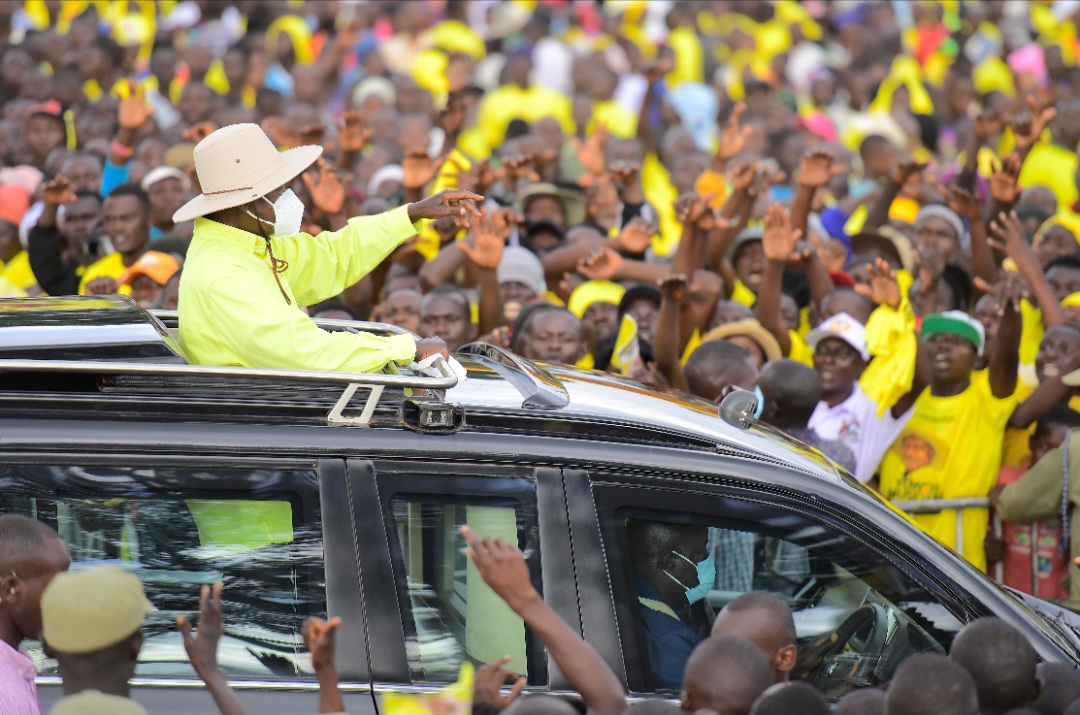
Uganda‘s Path to Progress: Balancing Development with Individual Wealth – A Deep Dive into President Museveni’s Vision
President Yoweri Museveni recently outlined a thorough plan for Uganda’s continued development, focusing on bolstering access to essential services and empowering citizens to build lasting wealth. this isn’t simply about government investment; it’s a strategic approach designed to unlock Uganda’s potential from the ground up. Let’s break down the key elements of this vision and what it means for you.
Investing in Foundational Services: Education & Healthcare
The core of the President’s strategy centers on ensuring equitable access to essential services. This means:
* Universal Education Access: Every parish will have a primary school, and every sub-county a secondary school. The goal is simple: no child left behind.
* Strengthened Healthcare Network: Efforts are underway to guarantee a government health facility in every sub-county.
* targeted Upgrades: In Kibuku district alone,facilities like Nabiswa,Kituti,and Nakodo Health Centres are being upgraded from HCII to HCIII status,alongside improvements to Dodoi,Kenkebu,Nandere,Kalampete,Nankodo,and Moru. This builds upon the existing infrastructure – one Health Center IV with doctors and thirteen HCIIIs already in place.
These investments aren’t just about building structures.They’re about creating a foundation for a healthier, more educated, and ultimately, more productive population.
Beyond Infrastructure: The Crucial Link to Wealth Creation
President Museveni consistently emphasizes that development alone isn’t enough.True progress requires individual wealth creation. “Development is good, but wealth is crucial as it is indeed individual,” he stated, highlighting the risk of development occurring without tangible improvements in people’s lives.
this is where the four-acre model comes into play – a long-standing initiative designed to diversify income streams:
* One Acre for Coffee: A cash crop with important export potential.
* One Acre for Fruits: Providing both income and nutritional benefits.
* One Acre for Pasture: Supporting livestock farming.
* One Acre for Food: Ensuring household food security.
* Backyard Poultry/Pigs & fish farming: Leveraging available space for additional income.
This model isn’t prescriptive, but a framework for empowering you to take control of your economic future.
The Parish Development Model & The Money Economy
the Parish Development Model (PDM) is a critical component of this strategy. It’s designed to move households from subsistence farming to participation in the money economy. The president urged local leaders to actively track progress, asking, “How manny people in your parish are still working for the stomach only?”
The message is clear: poverty isn’t eradicated through handouts, but through production and enterprise. This shift requires a mindset change and a commitment to building sustainable businesses.
Jobs Aren’t Just created by Government
A common misconception is that government employment is the primary driver of job creation. President Museveni challenged this notion, pointing to the success of the private sector. “As I speak today,factories have employed 1.3 million people,” he noted.
he emphasized that jobs arise from:
* Individual Wealth
* Family Wealth
* Company Growth
* Service Industries (hotels, transport)
* Manufacturing
This underscores the importance of fostering a thriving private sector and supporting entrepreneurship.
Addressing Challenges: Free Education & Skills Development
Despite the introduction of free education in 1996, challenges remain. Illegal school fees continue to hinder access for many. The President acknowledged this, promising a review of free education policies after the elections to strengthen its implementation.
To address the skills gap, Presidential Skilling Hubs have been established nationwide. These hubs provide practical training, equipping young people with the skills needed to secure employment or start their own businesses. The impact is already being felt, with graduates producing goods previously imported from China. One young woman even shared how the hub gave her hope and steered her away from suicidal thoughts.
The NRM’s vision: A Holistic Approach
President Museveni summarized the NRM’s vision as a holistic approach encompassing:
* Peace
Keep reading
- KUD Idijoti Guitarist Sale Veruda Assaulted by Group in Pula City Center
- Chongqing Landslide: Rescue Efforts Underway as Death Toll Hits Eight with 34 Missing
- Museveni Urges Mali War College Officers to Champion Pan-Africanism, Economic Integration (archyworldys.com)
- Poland’s Food and Meat Export Boom: Growth, Records, and Challenges (archyde.com)