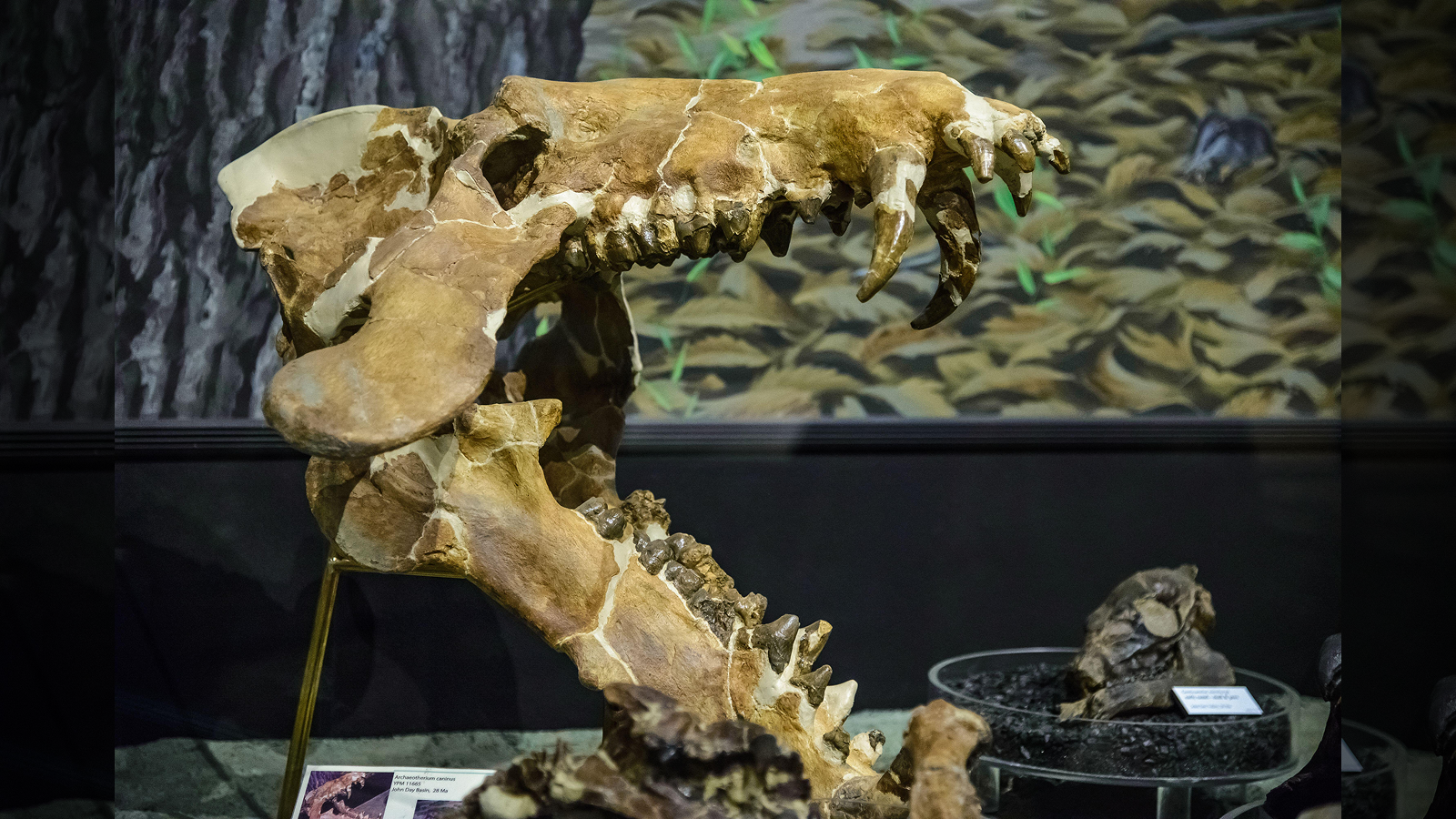
The Ancient “Beast” of North America: Unraveling the Diet of Archaeotherium
For decades, paleontologists have puzzled over Archaeotherium, a massive, pig-like mammal that roamed North America during the Oligocene epoch (roughly 34 to 23 million years ago). Recent research is shedding new light on what this “ancient beast” actually ate, revealing a surprising dietary adaptability linked to its size.
A Creature of Varied Sizes
Archaeotherium wasn’t a single, uniform animal. It exhibited important size variation, ranging from creatures comparable to modern peccaries to behemoths rivaling large bears. This variation has fueled debate about its ecological role and feeding habits. Was it a specialized herbivore, an opportunistic omnivore, or even a predator?
Dental Microwear Reveals Clues
Researchers have turned to dental microwear texture analysis to unlock Archaeotherium’s secrets. This refined technique involves creating high-resolution 3D scans of tooth surfaces using powerful microscopes. By analyzing the microscopic wear patterns, scientists can infer how an animal processed its food.
The study examined Archaeotherium teeth collected from several states, including Nebraska, South Dakota, Oregon, and Colorado. Interestingly, the results showed a clear correlation between body size and tooth wear. Smaller Archaeotherium individuals displayed wear patterns similar to peccaries, suggesting a diet focused on shearing plant matter.
A Bone-Crushing Capability?
However,the larger archaeotherium specimens presented a different picture. Their tooth wear was statistically indistinguishable from that of modern lions and hyenas – animals known for their ability to crush bones. This suggests that the larger Archaeotherium where capable of, and potentially regularly engaged in, consuming bone.
This bone-crushing ability could indicate several behaviors. Perhaps these larger animals were powerful scavengers,capable of displacing other predators from their kills. Alternatively, they might have supplemented their diet with tough, abrasive vegetation like tubers or woody plants.Smaller Archaeotherium likely stuck to softer fare, such as leaves and grasses.
What Does This Mean for Archaeotherium’s Role?
This dietary flexibility is a significant finding. It suggests Archaeotherium wasn’t confined to a single niche. Instead, it likely adapted its feeding strategy based on its size and the available resources. You can imagine a scenario where smaller individuals focused on readily available vegetation, while larger ones exploited a wider range of food sources, including scavenging opportunities.
the Next Steps in Unraveling the Mystery
While dental microwear provides valuable insights into Archaeotherium’s food texture, it doesn’t reveal the specific items on its menu. Researchers are now employing calcium isotope analysis. This technique examines the isotopic composition of tooth enamel to determine whether bone was actually incorporated into the animal’s diet.
Ultimately, understanding Archaeotherium’s feeding habits will help us reconstruct the ancient ecosystems of North America and appreciate the remarkable adaptability of this fascinating prehistoric mammal. It’s a testament to how even seemingly simple clues,like the microscopic wear on a tooth,can unlock profound insights into the lives of creatures that lived millions of years ago.