Sudan’s Escalating Crisis: Displacement, Urban Warfare, and a Looming Threat of Explosive Remnants
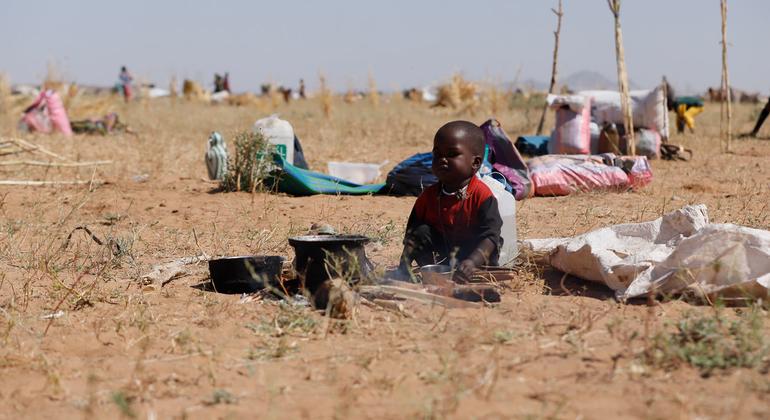
The situation in Sudan has spiraled into a humanitarian catastrophe of immense scale.More than 12 million people have been displaced, both within Sudan and as refugees in neighboring countries, making it the world’s largest displacement crisis. But beyond the sheer numbers lies a deeply complex and increasingly dangerous reality, particularly for those unable to flee the conflict zones.
The most vulnerable – the elderly, individuals with disabilities, and the wounded – are frequently enough trapped, lacking the resources or physical capacity to escape the fighting. as highlighted by UN officials, thousands remain in areas actively contested by warring factions, facing immediate peril.
A Unique Challenge: Urban Warfare and Explosive Hazards
What sets Sudan apart from other conflict zones is the nature of the fighting.Unlike many conflicts concentrated in rural areas, the current war is largely unfolding within cities, most notably in the capital, Khartoum, and recently in El Fasher, North Darfur. This presents a unique and terrifying challenge: a widespread contamination of urban landscapes with explosive remnants of war.
“Sudan is very different,” explains Sediq Rashid, Chief of the UN Mine Action Service (UNMAS) Sudan. “War is mainly happening in urban areas.” This means a proliferation of unexploded ordnance – abandoned ammunition, anti-vehicle and anti-personnel mines – scattered throughout residential neighborhoods, schools, and vital infrastructure.
The scale of the contamination is staggering. UNMAS estimates that 13 million square kilometers of land across South Kordofan,West Kordofan,and Blue Nile States are affected. Displaced families,often moving into unfamiliar areas,are particularly at risk,unaware of the hidden dangers beneath their feet.
And the reported casualties – from mines and unexploded ordnance – are likely just the tip of the iceberg. Authorities acknowledge that the documented cases represent only a fraction of the true extent of the harm being inflicted on civilians.
International Scrutiny and the Pursuit of Accountability
The gravity of the situation has prompted urgent international attention. The UN Human Rights Council recently convened a Special Session, triggered by the dire circumstances in El Fasher, where the capture of the city by paramilitary Rapid support Forces (RSF) has been linked to credible reports of widespread atrocities.
These alleged crimes include summary executions, ethnically motivated killings, sexual violence, abductions, and deliberate attacks targeting civilians. the Council’s response underscores its commitment to protecting essential human rights when they are under attack.
The Human Rights Council has the power to refer investigations to the International Criminal Court (ICC), potentially paving the way for accountability for those responsible for the most serious crimes committed in Sudan. (You can learn more about the ICC here: https://news.un.org/en/story/2024/05/1149981).
During the Special Session, UN high Commissioner for Human Rights, volker Türk, delivered a stark assessment of the situation, followed by independent experts and concerned Member States.The Council ultimately adopted a resolution requesting independent rights investigators to urgently probe the allegations surrounding the events in el Fasher and report their findings.
A Crisis Demanding Sustained Attention
The UN Human Rights Council has been closely monitoring the Sudan crisis since it erupted in April 2023, following the collapse of the transition to civilian rule after the ousting of Omar al-Bashir. However, the situation continues to deteriorate, demanding sustained international attention, increased humanitarian assistance, and a renewed commitment to finding a peaceful resolution.
The challenges are immense, but addressing the immediate needs of the displaced, mitigating the threat of explosive remnants of war, and ensuring accountability for human rights violations are critical steps towards preventing further suffering and building a more stable future for Sudan.
Resources:
* UN Mine Action Service (UNMAS): https://www.unmas.org/en
* 38th Special Session of the Human Rights Council | UN Web TV: https://webtv.un.org/en/asset/k1i/k1i5v5642t
* **UN Geneva – Multimedia Newsroom : 38th