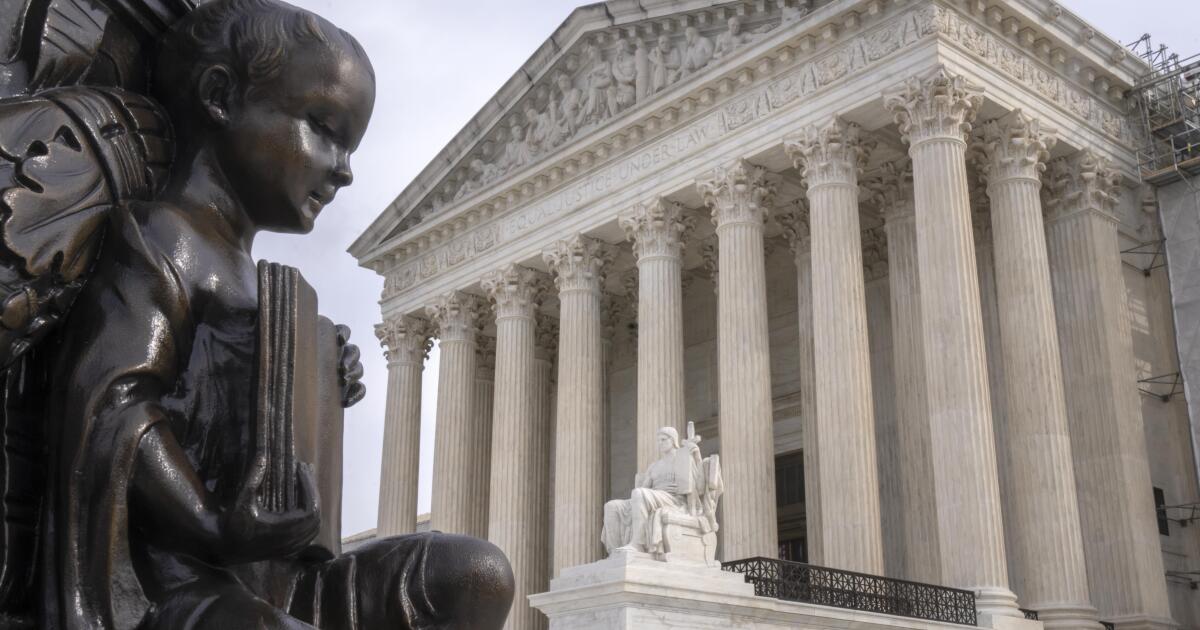
Landmark Climate Disclosure Laws Face supreme Court Challenge: A First Amendment Battle with National Implications
Washington D.C. & Los Angeles, CA – A coalition of businesses, led by the Chamber of Commerce and ExxonMobil, has escalated its fight against California’s groundbreaking climate disclosure laws, filing an emergency appeal directly too the Supreme Court. The appeal argues the laws, requiring companies to publicly detail their greenhouse gas emissions and climate-related financial risks, violate the First Amendment by compelling speech and represent an overreach of state authority into national climate policy. This case has the potential to reshape corporate accountability regarding climate change and could significantly impact similar regulations nationwide.
The Core of the Dispute: Disclosure as Compelled Speech
California’s Senate Bill 253 (SB 253) and Assembly Bill 854, enacted in 2023, mandate that companies doing business in California publicly report scope 1, 2, and 3 emissions – encompassing direct emissions, emissions from purchased energy, and those stemming from a company’s value chain. Proponents argue this transparency is crucial for investors,consumers,and policymakers to accurately assess climate risk and incentivize emissions reductions.
However, the plaintiffs contend these laws force companies to articulate a viewpoint on climate change – specifically, to acknowledge and quantify their contribution to a problem many dispute – thereby violating their first amendment rights. They assert that the mandated disclosures constitute “compelled speech,” a legal concept subject to heightened scrutiny, particularly when dealing with politically charged issues.The argument echoes a broader trend of businesses leveraging First Amendment protections against regulations perceived as ideologically driven.
“No state may dictate national climate policy through compelled speech,” the appeal states. “Especially on a controversial subject like climate change, laws dictating a ‘value-laden script’ are presumptively unconstitutional.”
A Pattern of Legal Challenges & Shifting Federal Policy
This supreme Court appeal isn’t an isolated incident. Similar climate disclosure rules proposed by the Securities and Exchange Commission (SEC) under the Biden management faced immediate legal challenges from the Chamber of Commerce, ultimately resulting in a lower court ruling blocking their implementation. Following a change in administration, the SEC, under Trump appointees, announced it would not defend the rules, citing their perceived cost and intrusiveness.
This pattern highlights a significant political and legal tug-of-war surrounding corporate climate accountability. The legal arguments employed – framing disclosure requirements as violations of free speech – are increasingly common, mirroring tactics used in cases like Citizens United, wich affirmed businesses’ rights to unlimited campaign spending based on First Amendment grounds.
ExxonMobil previously attempted a similar legal strategy in 2022, unsuccessfully challenging a Massachusetts Attorney General investigation into alleged misleading statements about climate risk. The Massachusetts courts rejected Exxon’s first Amendment claim.
Lower Courts Uphold California’s Laws – For Now
Despite the ongoing appeals, lower courts have consistently sided with California. U.S. District Judge Otis Wright II in Los Angeles, in August, refused to block the laws, reasoning that they regulate “commercial speech” – a category receiving less First Amendment protection than purely political expression. Judge Wright emphasized that businesses are routinely required to disclose financial and operational data,and that climate-related disclosures fall within this established framework.
The plaintiffs afterward appealed to the U.S. 9th Circuit Court of Appeals, seeking an injunction, but the court has yet to rule.
Broadening Support & National Implications
The case has garnered attention beyond California, with attorneys general from 25 Republican-leaning states filing a brief in support of the businesses, denouncing California’s laws as a “radical green speech mandate.” This broad coalition underscores the national stakes of the dispute.
Expert analysis: Weaponizing the First Amendment
Legal experts are closely watching the case. Michael Gerrard, a climate-change legal expert at Columbia University, describes the appeal as “the latest example of businesses and conservatives weaponizing the 1st Amendment.” He notes a concerning trend of using free speech arguments to obstruct climate action.
“This case is part of a larger effort to undermine regulations designed to address climate change by framing them as infringements on constitutional rights,” Gerrard explains. “The argument is disingenuous, as disclosure of factual information, even if its unfavorable to a company, is generally considered protected commercial speech, not compelled ideological expression.”
What’s Next?
The Supreme Court has requested a response from California’s state attorneys, signaling the court is seriously considering the appeal. The justices’ decision could have far-reaching consequences:
* If the Court sides with California: It would affirm the state’s right to require
Related reading