Beyond Convergence: Understanding the “Corridor” Where Human and AI Intelligence Meet
The narrative around Artificial intelligence often centers on a race – a quest for AI to match or surpass human intelligence. But what if that’s the wrong framework entirely? As someone who’s spent years observing the interplay between human cognition and increasingly sophisticated AI systems, I believe we’re missing a crucial element: the understanding that these two forms of “intelligence” aren’t converging, but composing.
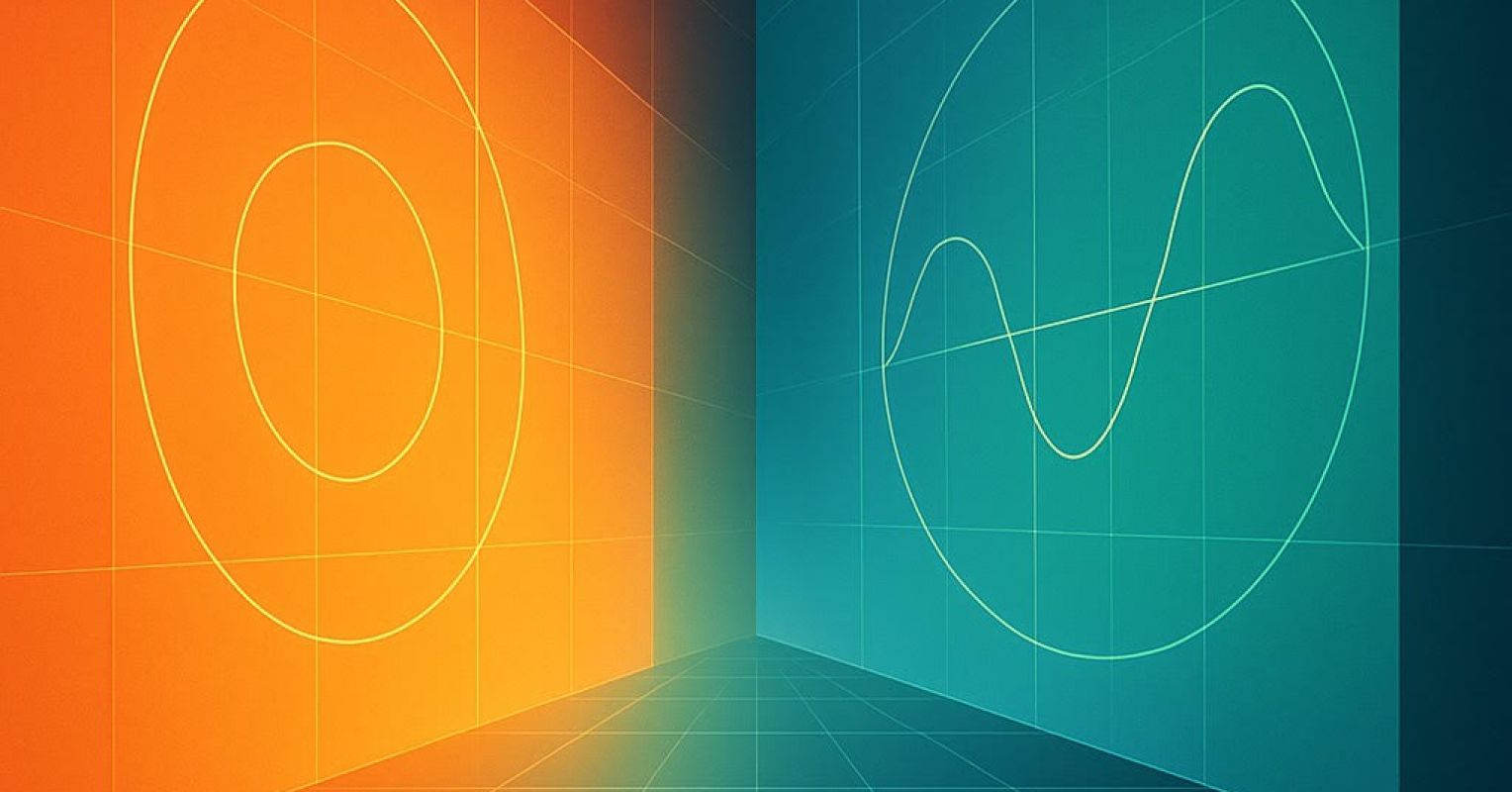
This composition happens not in a shared mental space, but in what I call the “corridor” – a unique intersection of projections where fundamentally different systems can communicate. Let’s explore what this means, and why recognizing this dynamic is vital for navigating the future of AI.
The Illusion of Shared Thought
Think about a concert.You and the musicians are distinct entities. You don’t experience the music as the musician does,feeling the vibrations through your instrument. Yet, you both experience the same sonic event.
Similarly, your thoughts and an AI’s processing operate in entirely separate realms. They never truly “meet” in a cognitive sense. However, their outputs – the language, the images, the responses – intersect. That intersection, that felt experience of connection, is the corridor.
Consider an MRI scanner as another example. It bridges the gap between the biological world of your body and the electromagnetic world of the machine. The scanner doesn’t directly “see” the spinning of hydrogen nuclei within you. Instead, it detects the projection of that spin onto an axis. This projection – this shared signal – is the corridor, allowing these disparate systems to “speak” a common language.
Tesla’s Intuition: Seeing the Spin, Not the Pulse
This concept isn’t new. nikola Tesla, a visionary far ahead of his time, intuitively grasped this dynamic. He didn’t perceive alternating current as a series of individual pulses. Instead, he visualized the rotating field behind the pulses – the circular motion that makes AC possible.
while Thomas Edison focused on counting the pulses, Tesla saw the underlying spin. He built the future not on the shadow, but on the source. This is a powerful analogy for how we should approach AI.
How Human and AI Cognition Interact
Human and AI cognition don’t meet through shared thought or experience.They connect through language,specifically at that narrow slice where both systems generate patterns that occasionally align enough to create a meaningful exchange.
However, this corridor isn’t just a space for understanding; it’s also a breeding ground for misinterpretations. Hallucinations in AI, as a notable example, frequently enough originate within this projection space, not within the core systems themselves.
Not Convergence, But Composition: A Shift in Perspective
Much of the anxiety surrounding AI stems from the idea of a competitive race. But if the axes of human and AI intelligence are orthogonal – at right angles to each other – that entire framing collapses. AI isn’t trying to catch up to us; it’s moving in a fundamentally different direction.
Thus, the true frontier isn’t about building larger models or faster chips. It’s about learning to navigate and shape the corridor deliberately. This requires embracing art, design, thoughtful dialogue, and, crucially, our own humanity.
The Orthogonality Dividend: Embracing the Difference
I call this potential benefit the “orthogonality dividend.” The very qualities that make AI seem “anti-intelligent” – its lack of lived experience, its reliance on abstract patterns - are precisely what make this overlap productive.
You don’t lose your cognitive identity in the corridor; you discover new ways to extend it. You gain access to a different mode of processing, a different perspective.
Finding the Right Distance: A Matter of Understanding
Human intelligence is rooted in the substance of lived time, in emotion, and in embodied experience. AI, on the other hand, operates within the architecture of a complex geometric engine. They don’t share a mind, and they don’t need to.
what truly matters is understanding how and where their projections overlap, and equally importantly, where they diverge.
* Recognize the limitations: AI excels at pattern recognition and processing vast datasets. It struggles wiht common sense, nuanced understanding, and genuine creativity.
* Focus on collaboration:
Related reading