The Erosion of Due Process: How a Federal law is Weaponizing Immigration Enforcement
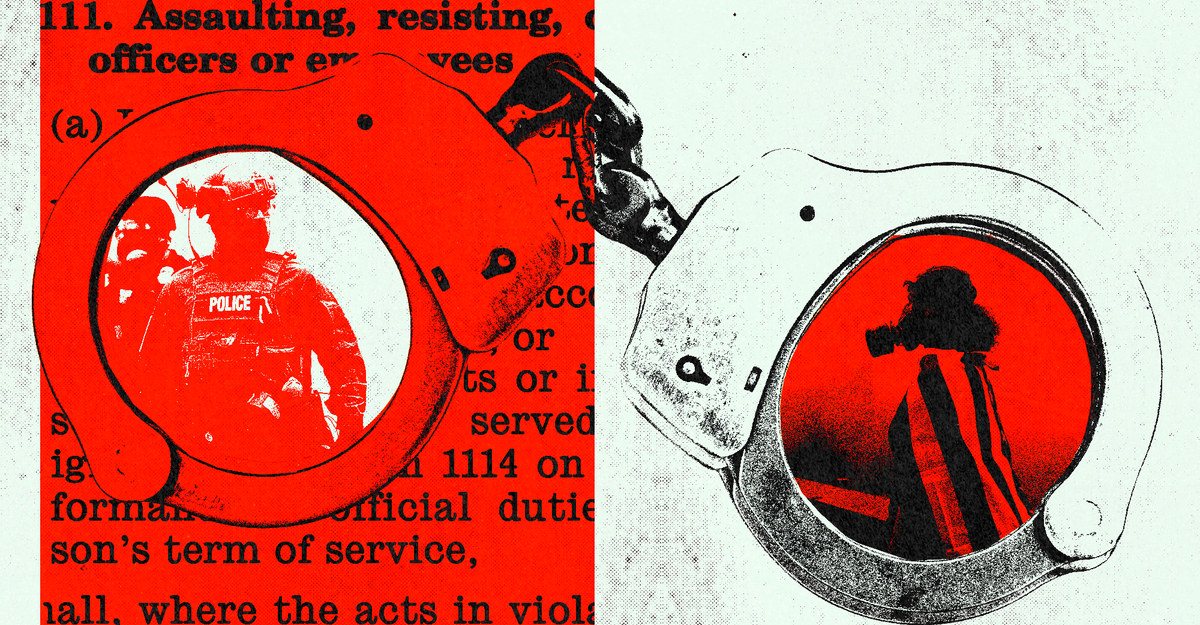
A troubling trend is emerging in federal immigration enforcement. Section 111, a law originally intended to protect federal officers, is increasingly being used to aggressively prosecute individuals who encounter – and sometiems resist – Immigration and customs enforcement (ICE) agents. What began as a protective measure is rapidly becoming a tool for chilling dissent and circumventing established legal norms.
Recent cases reveal a pattern of questionable indictments. Several prosecutions under Section 111 have ended in acquittal, with petit juries refusing to convict on lesser charges. In Los Angeles, at least two such cases have seen similar outcomes. Moreover,the Justice Department has dismissed over 30 cases before reaching a jury,frequently enough due to a failure to even secure an indictment - a historically rare occurrence in federal court.
This surge in unsuccessful prosecutions isn’t going unnoticed by the judiciary. Judges are beginning to express serious concerns about the validity of these charges. Judge Xavier Rodriguez of the U.S.District Court for the Western District of Texas, for example, dismissed a felony Section 111 case against a Honduran man. He found the indictment “shocking to the global sense of justice,” given that the charges stemmed from scrapes on an ICE agent’s hand after the agent used excessive force – punching a hole in the man’s car window.
The issue extends beyond individual cases.In Chicago,Judge April Perry cited a series of failed indictments as evidence that claims of violence against protesters,used to justify deploying the National Guard,were unreliable.This raises fundamental questions about the motivations behind these prosecutions and the evidence supporting them.
The administration’s narrative often presents a stark contradiction. Immigration officers are concurrently portrayed as vulnerable public servants and as capable of handling confrontations with “terrorists.” This duality is notably evident in the debate surrounding ICE officers wearing masks – ostensibly for protection from doxxing, but also as a means of projecting power. Section 111 perfectly embodies this paradox, allowing officials to claim victimhood while simultaneously leveraging the full force of the state against perceived adversaries.
This dynamic echoes the observations of Umberto Eco, who described fascist movements as defining themselves through conflict with enemies who are simultaneously deemed both too strong and too weak. The law allows for the presentation of federal officials as victims, while enabling aggressive prosecution of those who challenge their authority.
The consequences extend beyond courtroom verdicts.Even failed prosecutions have a chilling effect on activism. As reported by Block Club Chicago, a community council in Little Village, Chicago, halted its practice of alerting residents to ICE presence after the shooting of Marimar Martinez. They feared being accused of violence by the Department of Homeland Security (DHS).
Section 111, intended to protect those enforcing immigration law, is increasingly being used to suppress dissent and intimidate communities. This erosion of due process demands careful scrutiny and a reevaluation of how this law is applied. The current trajectory threatens not only the rights of individuals but also the principles of justice and accountability that underpin our legal system.