Understanding the Recent Paso Robles Earthquake: what You Need to Know
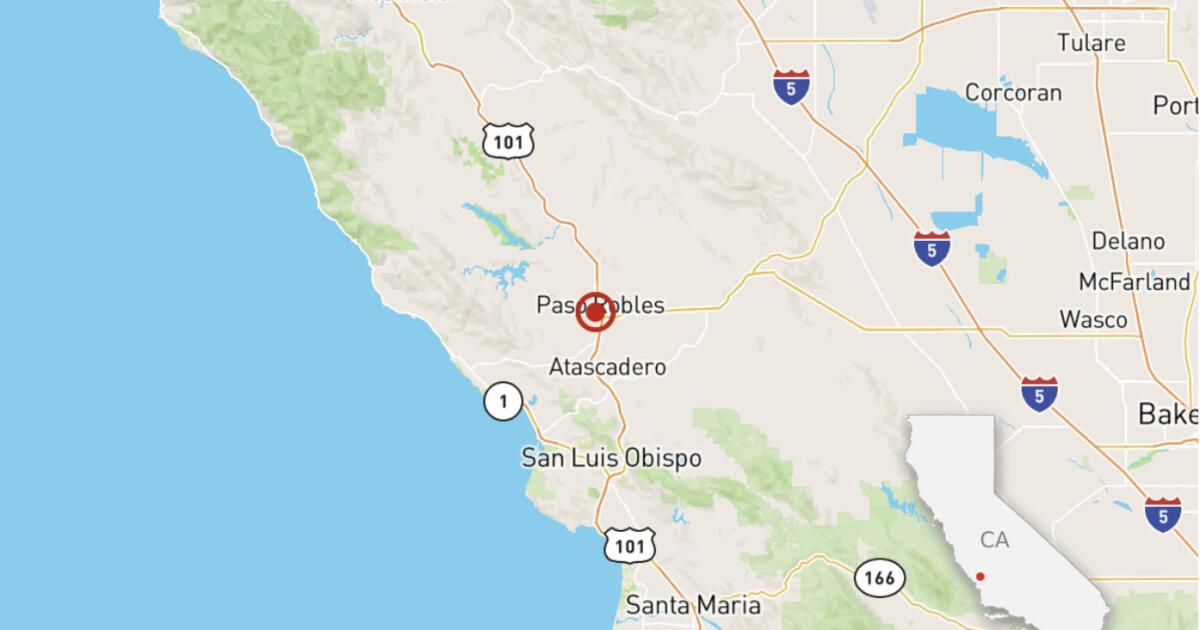
A magnitude 4.1 earthquake rattled the Paso Robles area of California at 9:54 a.m. on Tuesday, November 18, 2025. Located less than a mile from Paso Robles,the tremor was felt across several nearby communities. This event serves as a crucial reminder of California’s seismic activity and the importance of earthquake preparedness.
But what does a 4.1 magnitude quake really mean? And more importantly, are you prepared for the next one? Let’s delve into the details, understand the risks, and outline practical steps you can take to stay safe.
Earthquake Details & Regional Impact
The U.S. Geological Survey (USGS) pinpointed the epicenter near Paso Robles. Here’s a breakdown of the impact radius:
* Atascadero: 8 miles away
* Morro Bay: 19 miles away
* Los Osos: 22 miles away
* San Luis Obispo: 23 miles away
The quake occurred at a relatively shallow depth of 3.5 miles, which can sometimes amplify shaking intensity at the surface. Fortunately, in the 10 days preceding this event, there hadn’t been any earthquakes of magnitude 3.0 or greater in the immediate vicinity.
California Earthquake Statistics & Seismic Risk
California and Nevada experience an average of 25 earthquakes between magnitudes 4.0 and 5.0 each year. This data, based on a recent three-year sample (2022-2024), highlights the region’s inherent seismic risk. While a 4.1 magnitude quake isn’t considered major, it’s a noticeable event that can cause minor damage and, more importantly, serves as a wake-up call.
Understanding the difference between an earth tremor and a full-blown earthquake is vital. Tremors are generally smaller and less damaging, but they can still be unsettling.The San Andreas Fault, a major tectonic boundary, is a constant source of seismic activity in California. Recent research from the California Geological Survey indicates a heightened probability of a significant earthquake (magnitude 7.0 or greater) within the next 30 years. https://www.conservation.ca.gov/cgs
Preparing for Earthquakes: A Step-by-Step Guide
Don’t wait for the next quake to prepare. Proactive steps can significantly reduce your risk and improve your safety. Here’s a practical guide:
- Secure Your Space: Anchor furniture to walls, especially bookcases and televisions. Secure water heaters and appliances.
- create an Earthquake Kit: Include essentials like water (1 gallon per person per day for at least three days), non-perishable food, a first-aid kit, a flashlight, a whistle, a radio, and medications.
- develop a family Emergency Plan: Discuss evacuation routes, meeting points, and dialog strategies.
- Learn “Drop, Cover, and Hold On”: Practice this life-saving technique with your family.
- Consider Earthquake Insurance: Standard homeowner’s insurance typically doesn’t cover earthquake damage.
Beyond the Basics: Advanced Preparedness
* Strengthen Your Home: Retrofitting your home to withstand earthquake forces can significantly reduce damage.
* Know Your Local Hazards: Understand the specific risks in your area, such
Related reading