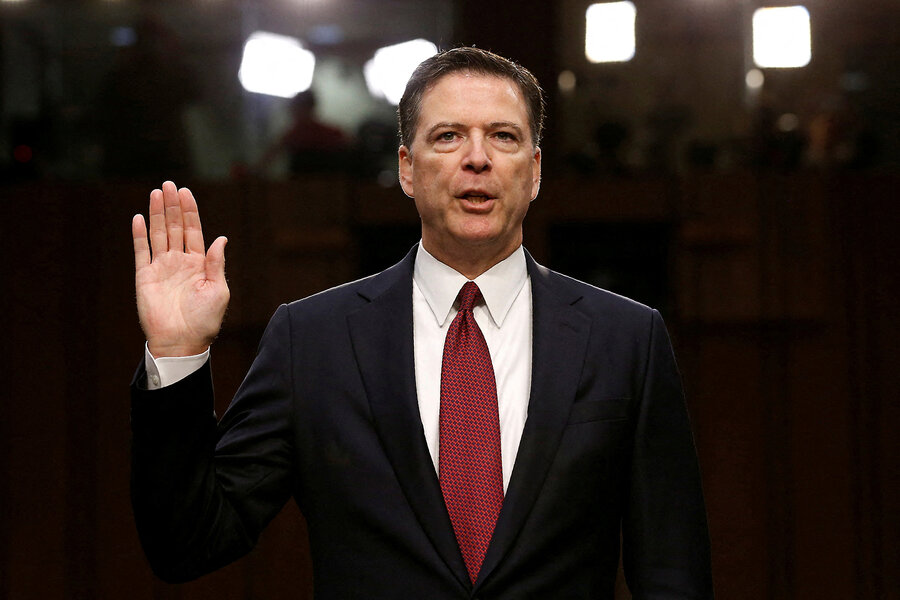
The Comey Case Hangs in the Balance: A Deep Dive into the Legal Challenges
The prosecution of former FBI Director James Comey is facing significant legal hurdles, raising questions about the validity of the charges and the appointments of the prosecutors involved. Recent developments suggest the Justice Department’s case is increasingly precarious, potentially jeopardizing the entire effort. Let’s break down the complexities and what this means for you, the informed observer.
A Succession of “Interim” Appointments Fuels Controversy
The current situation stems from a series of appointments to the U.S. Attorney’s office for the Eastern district of Virginia.Erik Siebert, initially serving as the interim U.S. attorney, resigned in September after declining to pursue charges against Comey. Subsequently, Ms. Halligan was sworn in as the next interim U.S. Attorney.
This rapid succession of “interim” appointments is at the heart of the legal challenge. Typically, U.S.Attorneys require Senate confirmation for a permanent role.The lack of this confirmation for both Siebert and Halligan is now being fiercely contested.
Why Dose “interim” Status Matter?
The “interim” designation bypasses the standard senate confirmation process. This means neither Ms. Halligan’s appointment nor Mr.Siebert’s needed approval from the Senate.
This raises a critical question: can you legally have two consecutive “interim” U.S. Attorneys? Comey’s legal team argues his prosecution should be dismissed as Ms.Halligan was unlawfully appointed. He isn’t alone in this argument.
A Growing Trend: Challenging “Acting” Prosecutor appointments
Across the nation, defendants are increasingly challenging prosecutions led by federal prosecutors appointed in an “acting” or interim capacity without Senate confirmation.
Judges in multiple states have already sided with the defense. Courts in Nevada, New Jersey, and California have ruled that top federal prosecutors were serving unlawfully. This precedent significantly strengthens Comey’s position.
Judge’s Skepticism Adds to the Uncertainty
A recent hearing offered further cause for concern for the Justice Department. U.S. District Judge Cameron McGowan Currie expressed skepticism regarding the lawfulness of Ms. Halligan’s appointment. She anticipates issuing a ruling before Thanksgiving, potentially invalidating the prosecution.
The timing is crucial. A ruling on the legality of Halligan’s appointment could come before a decision on issues related to the grand jury proceedings. Nonetheless, the Justice Department’s case against Comey is demonstrably fragile.
Statute of Limitations Complicates Matters Further
The situation is further intricate by the statute of limitations for the charges against Comey. It expired on September 30th, just eight days after Ms. Halligan’s appointment.
This means the Justice Department might potentially be unable to re-present the case to a grand jury, even if a judge allows it.Experts suggest this indicates a rushed and potentially flawed examination.
Expert Analysis: A rushed Process
“it just seems like this was a rushed job,” notes Professor Stansbury of Duke law School. “It doesn’t look like the government had the opportunity to be more intentional.”
This sentiment underscores the concerns surrounding the prosecution’s foundation. A deliberate and legally sound process is essential for a successful case, and that appears to be lacking here.
What Does This Mean for You?
This case highlights the importance of proper legal procedure and the potential consequences of circumventing established norms. It also demonstrates the power of legal challenges in holding the government accountable.
as the legal battles unfold, it’s clear the prosecution of James Comey faces an uphill battle.The outcome will not only determine his fate but also set a precedent for future appointments and prosecutions across the country.
Worth a look