Chart Reviews in Medicare Advantage: A Closer Look at Diagnosis Changes and Their Impact on Payments
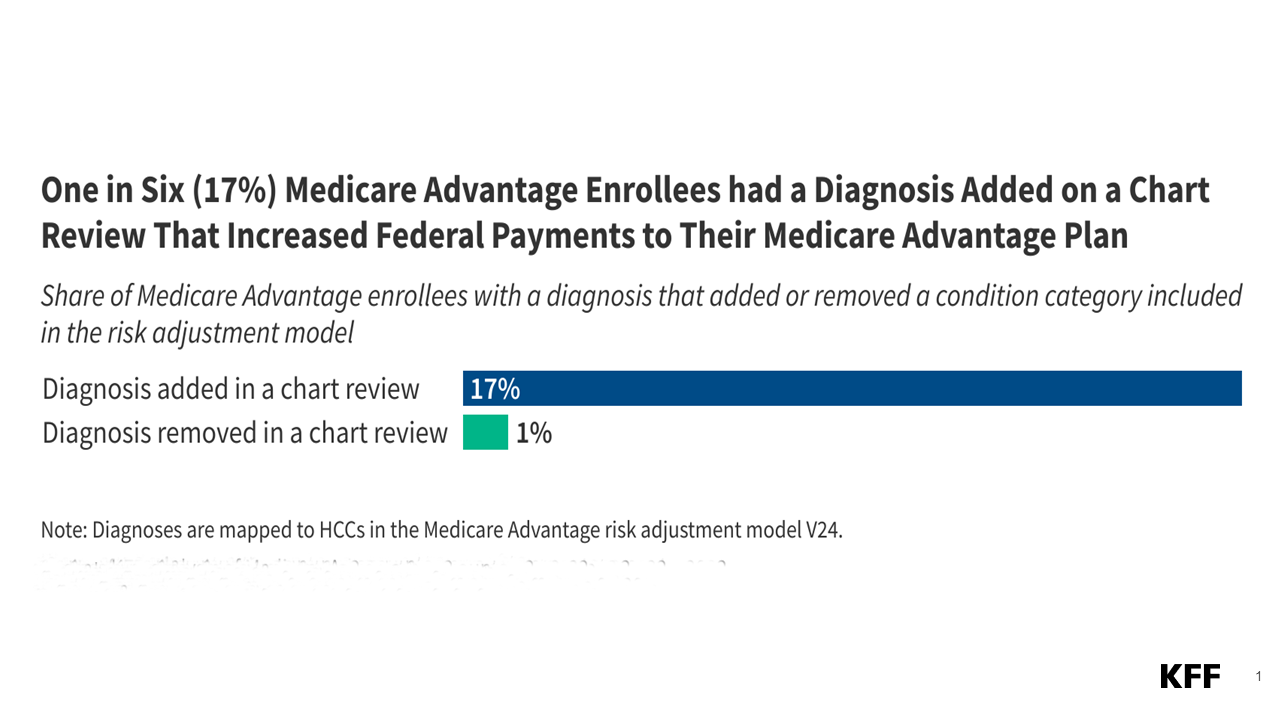
The Medicare Advantage program has seen explosive growth, and with it, increased scrutiny of how insurers manage risk adjustment – the process of accounting for the health status of their enrollees to determine appropriate payments from the Centers for Medicare & Medicaid Services (CMS). A key component of this risk adjustment process is the use of chart reviews, where insurers retrospectively review patient records to identify potentially missing diagnoses. Recent analysis of 2022 Medicare Advantage encounter data reveals a significant trend: diagnoses are far more often added than removed during these chart reviews, raising crucial questions about program integrity and potential overpayment.
The Prevalence of Diagnosis Additions
Our analysis, utilizing a 20% sample of 2022 Medicare Advantage encounter data, demonstrates that across major insurers, adding diagnoses through chart reviews is a common practice. This isn’t a fringe occurrence; it impacts a substantial portion of enrollees.
* Centene led the way, with 26% of their enrollees having at least one diagnosis added during a chart review.
* UnitedHealth Group followed closely at 23%.
* CVS Health Corporation and elevance Health Inc. both saw diagnosis additions for 19% of their enrollees.
* Humana and Kaiser Permanente had lower rates, at 9% and 4% respectively.
These added diagnoses increase the enrollee’s risk score, directly translating to higher payments from Medicare to the insurer. While identifying previously undocumented conditions is a legitimate function of chart reviews,the sheer volume of additions warrants careful consideration.
The Weight of UnitedHealth Group’s Enrollment
It’s crucial to understand the scale of these numbers. while UnitedHealth group isn’t the most likely to add diagnoses during chart reviews, thay enroll nearly 30% of all Medicare Advantage beneficiaries. This massive market share means they likely contribute disproportionately to the overall spending associated with chart review-driven risk score increases. Even a relatively modest addition rate,when applied to such a large population,can have a significant financial impact.
Diagnosis Removals: A Rarer Occurrence
In contrast to additions, removing diagnoses through chart reviews is remarkably uncommon. Across all insurers analyzed (with the notable exception of Kaiser Permanente), fewer than 1% of enrollees had a diagnosis deleted during a chart review. This suggests that the process is rarely used to correct inaccuracies or remove conditions no longer present.
The rates of diagnosis removal were consistently lower than the overall rate observed among all Medicare Advantage enrollees, hinting that smaller insurers might potentially be more likely to utilize chart reviews for removals – though even then, it remains a relatively infrequent event.Kaiser permanente stood out, with just under 4% of their enrollees experiencing a diagnosis removal.
Understanding the Methodology
To ensure the accuracy and reliability of these findings, it’s critically importent to understand the methodology employed:
* Data Source: We utilized the Medicare advantage encounter data 20% sample from 2022, encompassing inpatient, outpatient, carrier, home health, and skilled nursing facility encounters (excluding durable medical equipment).
* Chart Review Identification: Chart reviews were identified using the “Chart Review Switch” within the encounter data. Diagnosis removals were pinpointed using the ”Claim Medical Record Number.”
* Exclusions: Instances where insurers replaced entire encounter records through chart reviews were excluded from the analysis to focus specifically on diagnosis-level changes.
* diagnosis Mapping: Diagnoses were mapped to condition categories using the non-ESRD V24 risk score model, the standard for Medicare Advantage risk adjustment.
* Weighting: The 20% sample isn’t perfectly representative of overall Medicare advantage enrollment. Thus, we applied weights based on each insurer’s market share in March 2022 to provide more accurate estimates.
Implications and Future Considerations
These findings raise several critically important questions. Are chart reviews being used appropriately to accurately reflect patient health status,or are they becoming a mechanism for maximizing payments? The significant imbalance between diagnosis additions and removals suggests a potential for overpayment and highlights the need for increased CMS oversight.
Further inquiry is needed to understand the specific clinical justifications for these diagnosis additions. Are they supported by documented evidence in the patient’s medical record, or are they based on retrospective interpretations?
Clarity and accountability are paramount. CMS should consider strengthening audit procedures and increasing transparency around chart review practices to ensure the integrity of the medicare advantage
Keep reading