Strengthening India’s Skies: Deepening Franco-Indian Aerospace Collaboration wiht Rafale and Beyond
For decades, India has looked to France as a reliable partner in defense, and that relationship is now entering a new, more integrated phase. This isn’t just about acquiring advanced aircraft; it’s about building indigenous capabilities,fostering self-reliance,and solidifying India’s position as a major aerospace power. Let’s delve into the details of this evolving partnership, focusing on the Rafale fighter jet, indigenous engine advancement, and the broader implications for India’s national security.
The Imperative for Modernization
The Indian Air Force (IAF) currently operates 29 fighter squadrons, falling short of the required 42.5.this gap is driven by the urgent need to replace aging platforms like the MiG-21, coupled with escalating regional security challenges. While upgrades to the Mirage-2000 and MiG-29 fleets will provide a bridge, the future of India’s air power rests on a diversified fleet including the Su-30 MKI, Rafale, indigenous Light Combat Aircraft (LCA), and the aspiring Advanced Medium Combat Aircraft (AMCA) program.
This is where the strengthened partnership with France, and specifically Dassault Aviation, becomes crucial.
Make-In-India: The Rafale Production Leap
The cornerstone of this deepened collaboration is the move to manufacture Rafale fighter jet components within India. In June 2025, Dassault and Tata advanced systems Limited (TASL) will launch a dedicated facility in Hyderabad. This isn’t just assembly; it’s full-fledged fuselage production.
Here’s what you need to know:
* What’s being built? The hyderabad facility will produce the front, central, and rear fuselage sections, as well as the lateral rear shells.
* Timeline: Expect the first fuselage sections to be delivered by Fiscal Year 2028.
* Capacity: The facility aims for a production rate of up to two complete fuselages per month.
* Meaning: this marks the first time Rafale fuselages will be manufactured outside of France, a testament to the trust placed in India’s manufacturing prowess.
* Transfer of Technology: Four Production Transfer Agreements (PTAs) are already in place,ensuring a robust transfer of critical expertise.
this initiative isn’t just about cost reduction, though that’s a significant benefit. It’s about building a skilled workforce, establishing a high-precision aerostructure manufacturing hub, and reducing reliance on external supply chains. Ultimately, a potential order of 114 “Make-in-India” Rafales, combined with the existing 36, could bring India’s total Rafale fleet to 140 – establishing the nation as a global Rafale production centre.
Powering the Future: Indigenous Jet Engine Development
Beyond aircraft assembly, the collaboration extends to the very heart of aerospace technology: jet engine development. France’s Safran is partnering with India’s Defense Research and Development Organisation (DRDO) and Gas Turbine Research Establishment (GTRE) to create India’s first jet engine with fully indigenous intellectual property.
This is a game-changer. Here’s a breakdown:
* The Engine: A 120 Kilo Newton (kN) engine, designed for the twin-engine AMCA. Future upgrades will boost power to 140 kN within 12 years.
* Key Technology: The engine will feature single-crystal blades,crucial for withstanding the extreme temperatures and stresses of high-performance flight.
* Indian Industry Involvement: Tata, L&T, Adani defence, and other Indian firms will play a vital role in the development and production process.
* Global Impact: This project places India in an exclusive club alongside the US, Russia, the UK, and France – nations capable of independently designing and manufacturing fighter jet engines.
This isn’t just about the AMCA.The knowledge and expertise gained through this collaboration will have ripple effects across India’s aerospace sector, fostering innovation and self-sufficiency.
The Rafale: A Proven Combat Multiplier
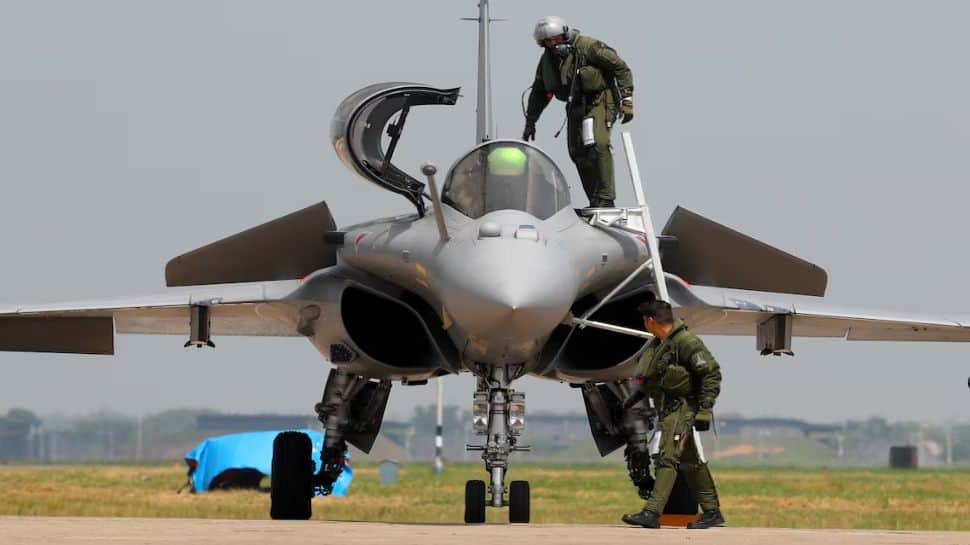
The Rafale isn’t just a symbol of Franco-Indian cooperation; it’s a highly capable, battle-proven fighter jet. This twin-engine, delta-wing aircraft is designed for
Worth a look