The Impact of Immigration Policies on Health and Healthcare Access in the U.S.
immigration is a complex issue with far-reaching consequences, and its impact on the U.S. healthcare system is a critical area of study. Recent policy shifts, particularly regarding “public charge” regulations, are creating significant anxieties within immigrant communities and influencing their healthcare-seeking behaviors. This analysis, based on data from the 2024 National health Interview survey (NHIS), explores how these changes are affecting access to care and overall health outcomes.
Immigrants: A Vital Part of the U.S. Economy & Healthcare Landscape
Immigrants contribute significantly to the U.S. economy, filling essential roles in key sectors. You’ll find them heavily represented in fields like STEM, agriculture, and construction. Beyond economic contributions, research indicates immigrants often demonstrate lower healthcare expenditures compared to their U.S.-born counterparts.
In fact, they may even help subsidize healthcare costs for others.However, evolving immigration policies are threatening these positive trends.
The Chilling Effect of Public Charge Regulations
The recent guidance, coupled with the proposed removal of 2022 public charge regulations, is creating a climate of fear and confusion. Public charge rules determine whether an immigrant might become primarily dependent on the government for support.
This uncertainty is leading many immigrant families to avoid healthcare and assistance programs, even when needed. Data from a 2025 KFF/New York Times survey confirms this trend, showing a rise in immigrant adults forgoing care due to concerns stemming from previous Trump administration policies.
Analyzing the Data: what the NHIS Reveals
Our findings are based on a thorough analysis of the 2024 NHIS,a continuous national survey conducted by the Centers for Disease Control and Prevention. The sample adult file includes data from 32,629 individuals aged 18 and older.
Here’s how we categorized respondents:
* Noncitizen immigrants: Individuals reporting “No, not a citizen of the United states” (n=2,089).
* U.S. citizens: Individuals reporting “Yes, a citizen of the United States” (n=29,279).
* Immigrant duration: Further divided into those in the U.S. for less than five years and those residing here for five or more years.
Health Conditions & Policy Implications
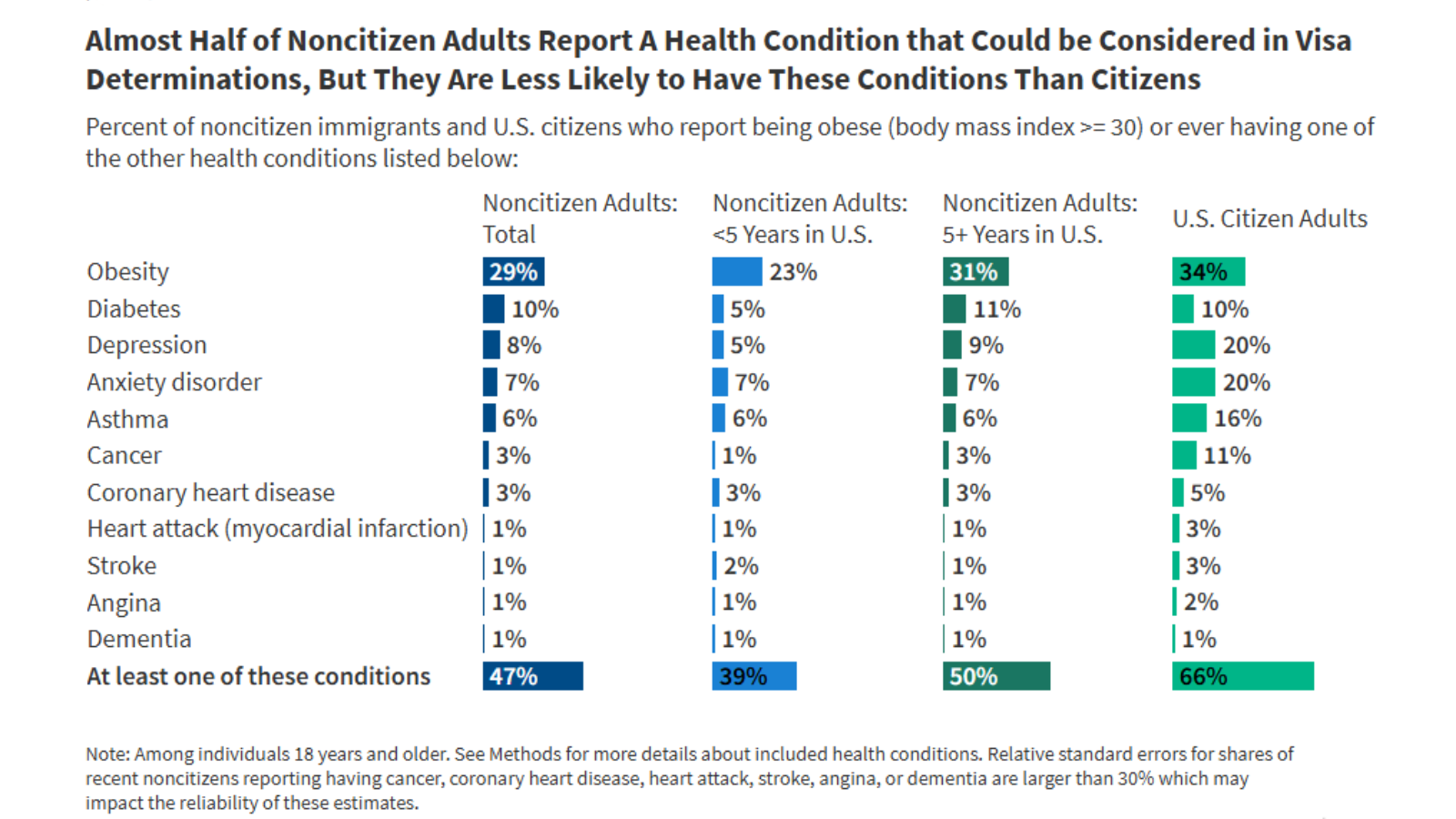
We focused on specific health conditions outlined in recent visa guidance, including:
* Angina
* Anxiety disorder
* Asthma
* Any cancer
* Coronary heart disease
* Dementia
* Depression
* Diabetes
* Heart attack (myocardial infarction)
* Stroke
* Body mass index of 30 or higher (obesity)
Analyzing the prevalence of these conditions among immigrant populations provides valuable insight into the potential health consequences of restricted access to care.
Crucial Note: Relative standard errors where higher than 30% for shares of recent noncitizens reporting cancer, coronary heart disease, heart attack, stroke, angina, or dementia. This means the reliability of estimates for these specific conditions may be limited.
What This Means for You and the Future of Healthcare
These findings underscore the critical need for policies that promote, rather than hinder, healthcare access for immigrant communities. When individuals fear seeking necessary medical attention, it not only impacts their personal health but also poses a risk to public health.
As a healthcare professional or concerned citizen, you can advocate for:
* Clear and accessible details about public charge rules.
* Policies that prioritize healthcare access for all residents, regardless of immigration status.
* Continued research to monitor the evolving impact of immigration policies on health outcomes.
Ultimately, ensuring equitable access to healthcare for immigrants is not just a matter of social justice, but a vital investment in the health and well-being of our nation.
data Source: KFF analysis of the 2024 National Health Interview Survey (NHIS) sample adult file.
Disclaimer: This analysis provides insights based on available data and is subject to the limitations inherent in survey research.
Worth a look
- Legionnaires’ Disease Outbreak in New York: Museum Traces Spark US Health Alert
- Managing Asthma and Allergic Rhinitis During Rainy Season: Tips to Prevent Mold and Dust Mites
- Trump Administration Says 250K Non-Citizens Registered to Vote in 4 States (time.news)
- The Surprisingly Strict Rules for Naming a Wildfire (daybreakwire.com)