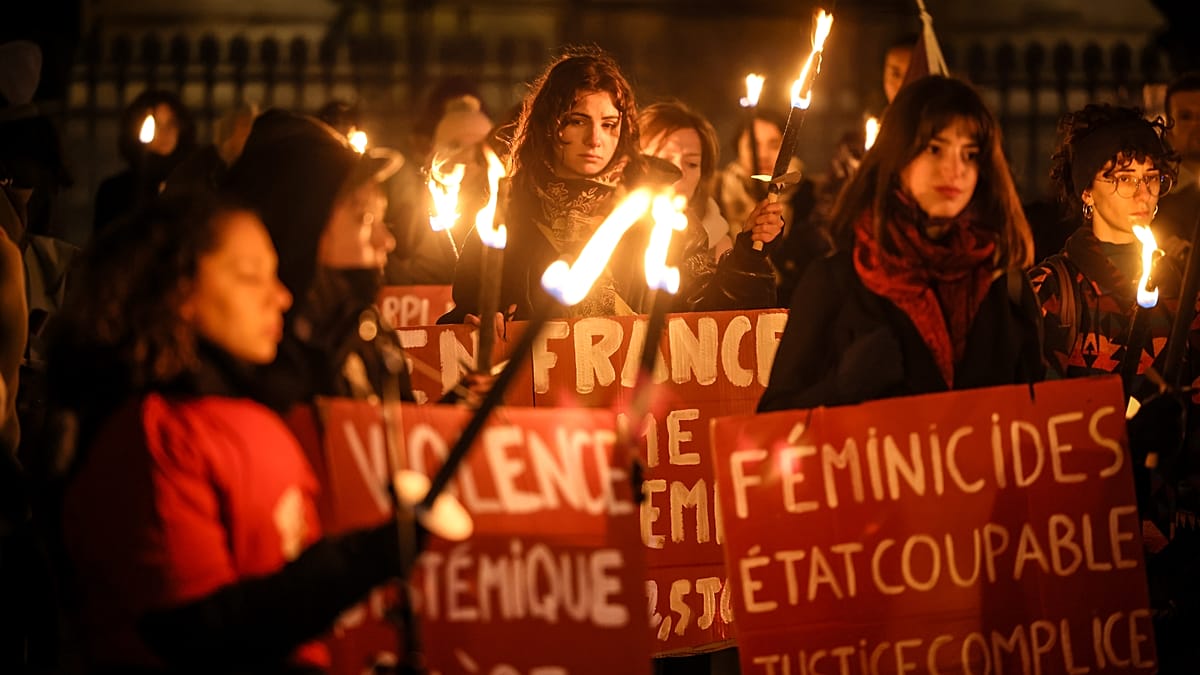
France Confronts Rising femicide rates: A NationS Protest and the Path Forward
As of November 26, 2025, France is grappling with a deeply concerning surge in femicides – the intentional killing of women because of their gender. This escalating violence has ignited public outrage and prompted renewed calls for systemic change. Recent demonstrations, notably a powerful torchlit protest orchestrated by the feminist collective #NousToutes outside the iconic Panthéon in Paris, underscore the urgency of the situation and the growing frustration with governmental responses. This article delves into the current state of femicide in France, examines the demands of activists, and explores potential solutions to combat this pervasive issue.
The Stark Reality of Femicide in France
The protest on November 25th, 2025, saw dozens of activists from #NousToutes illuminate the issue of femicide. Demonstrators unfurled a poignant 20-meter banner bearing the names of over 1,180 women who have lost their lives to gender-based violence as 2017
, a chilling visual portrayal of the scale of the problem. Chants of “Not one more” echoed through the Parisian night, reflecting a collective determination to end this cycle of violence.
Recent data released by the French Ministry of the Interior in October 2025 reveals a disturbing trend: a 12% increase in femicides compared to the same period last year. This translates to approximately 140 women killed by their current or former partners in the first nine months of 2025 alone. While statistics vary slightly depending on the reporting agency – with organizations like Féministes Solidaires reporting even higher numbers – the consensus is clear: femicide is on the rise. This increase is particularly alarming given the existing high rates of domestic violence, with one in four women in France experiencing physical or sexual violence at least once in their lifetime (according to a 2023 study by the National Institute of Statistics and Economic Studies – INSEE).
Activist Demands: Beyond Awareness to Action
The #NousToutes protest wasn’t merely a display of grief and anger; it was a direct appeal for concrete action. Protesters projected messages onto the Panthéon, a monument symbolizing France’s national identity, directly criticizing the government’s perceived inadequacy in addressing gender-based violence.Their demands center around three key areas:
* Legal Clarity: Activists are pushing for the formal legal recognition of femicide
as a distinct crime, arguing that this would allow for more accurate tracking of cases, specialized training for law enforcement and judicial personnel, and perhaps harsher sentencing. Currently,femicides are prosecuted under existing laws related to murder or manslaughter,often without acknowledging the gender-based motivation.
* Increased Funding: #NousToutes and other organizations are calling for a critically important increase in funding for support services for victims of domestic violence, including shelters, counseling, and legal aid. A recent report by the European Network on Violence against Women and Children highlights that France’s spending on these services remains below the EU average.
* Strengthened Measures: Protesters advocate for stronger preventative measures,such as mandatory training for professionals who interact with potential victims (healthcare workers,teachers,social workers),and stricter enforcement of existing laws related to domestic violence. This includes addressing issues like the delayed implementation of electronic monitoring for perpetrators and the lack of resources for victim protection.
The role of Societal Norms and Systemic Issues
The rise in femicides isn’t simply a matter of individual perpetrators; it’s a symptom of deeply ingrained societal norms and systemic failures