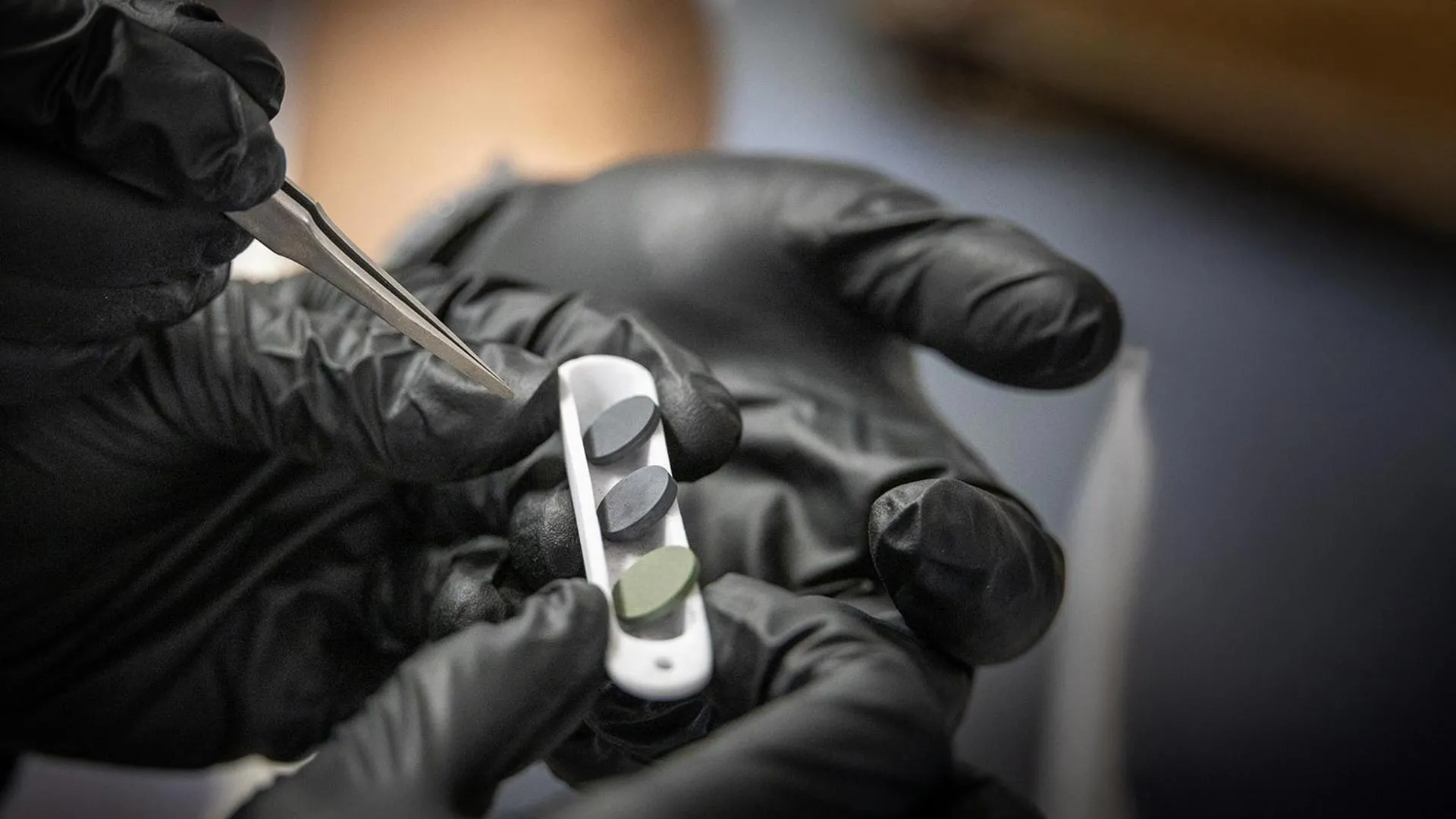
Breaking the Barrier: Stabilizing Seven Novel High-Entropy Oxide Ceramics Through Oxygen Control
For decades, the synthesis of stable, chemically disordered high-entropy oxides (heos) has presented a meaningful challenge to materials scientists.Now, a team led by Penn State researchers has achieved a breakthrough, successfully stabilizing seven previously unattainable HEO compositions. This achievement, detailed in recent publications and presentations, not only expands the landscape of potential advanced materials but also offers a simplified, thermodynamically-driven approach applicable to a wider range of complex oxide synthesis.
The Challenge of High-Entropy Oxide Stability
High-entropy oxides, characterized by thier multiple principal elements in random arrangements, hold immense promise for applications ranging from catalysis and energy storage to advanced sensors and structural materials. Their unique properties stem from the high configurational entropy that stabilizes these complex structures. Tho, achieving stable HEOs requires overcoming inherent thermodynamic hurdles. Specifically, maintaining the desired oxidation states of constituent elements – particularly transition metals like manganese and iron - is crucial.
“The core issue has been controlling the oxidation states of the metal cations,” explains Dr. almishal, lead researcher on the project. “Customary synthesis methods, conducted in oxygen-rich environments, inevitably lead to higher oxidation states, disrupting the desired rock salt structure and preventing stable HEO formation.”
A simple Solution Rooted in Thermodynamic Principles
The Penn State team’s innovation lies in a deceptively simple solution: precise control of oxygen levels during the ceramic synthesis process. By utilizing a tube furnace to create a reducing atmosphere – limiting the availability of oxygen – they were able to prevent manganese and iron from oxidizing beyond the +2 state. This allowed the formation of the desired rock salt structure, where each atom bonds with only two oxygen atoms, a prerequisite for stability in these heos.
“We realized that a deep understanding of materials and ceramic synthesis science, particularly the principles of thermodynamics, held the key,” Dr.Almishal states. “instead of tackling this as a complex materials problem, we focused on the fundamental role oxygen plays in stabilizing these structures.”
Rigorous Verification and Confirmation of Structure
The team didn’t simply assume success. They collaborated with researchers at Virginia Tech, employing advanced X-ray absorption spectroscopy to definitively confirm that manganese and iron remained in the intended +2 oxidation state within the newly synthesized HEOs. this technique provides a detailed fingerprint of elemental composition and oxidation states, providing robust evidence of structural stability.
“Confirming the oxidation states was paramount,” emphasizes Dr. Almishal.”It validated our approach and demonstrated that we had truly achieved stable HEO formation.”
implications and future Directions
This breakthrough has already garnered significant attention within the materials science community, evidenced by the thousands of online accesses to the published research. The implications extend beyond the seven newly stabilized HEOs. The team’s methodology provides a broadly adaptable framework for synthesizing other challenging complex oxides.
Future research will focus on characterizing the magnetic properties of these novel HEOs, possibly unlocking new functionalities for these materials. Moreover, the researchers aim to apply the same oxygen control principles to stabilize other material systems currently limited by oxidation state issues.
Empowering the Next Generation of Materials Scientists
The project also highlights the importance of undergraduate research. Matthew Furst, a materials science and engineering major at Penn State, played a crucial role in the research and was invited to present the findings as an invited talk at the prestigious American Ceramic Society’s (ACerS) Annual Meeting with Materials Science and Technology 2025 – a rare honor typically reserved for faculty and senior graduate students.
“This experience has been incredibly valuable,” says Furst. “Being involved in every stage of the research, from synthesis to publication and presentation, has provided me with invaluable skills and solidified my passion for materials science.”
Research Team and Support
The success of this project is a testament to the collaborative spirit and expertise of a diverse team:
* Penn State: Dr. Almishal, Maria, Joseph Petruska, Dhiya Srikanth, Yueze Tan, Sai Venkata gayathri Ayyagari, Jacob Sivak, Professor Nasim Alem, Professor Susan Sinnott, and Professor Long-Qing Chen.
* Virginia Tech: Dr. Christina Rost and Gerald Bejger.
This research was generously supported by the Penn State Center for Nanoscale Science,a U.S. National Science Foundation-funded Materials Research Science and Engineering Center.
the Penn State team’s work represents a significant advancement in the field of high-entropy oxides. By elegantly addressing a fundamental challenge through a thermodynamically-informed approach, they have opened new avenues for materials revelation and innovation, paving the way for a new generation of advanced materials with tailored properties and functionalities. This research demonstrates a clear understanding of materials science principles, rigorous experimental validation, and a commitment to fostering the next generation of scientific leaders.