
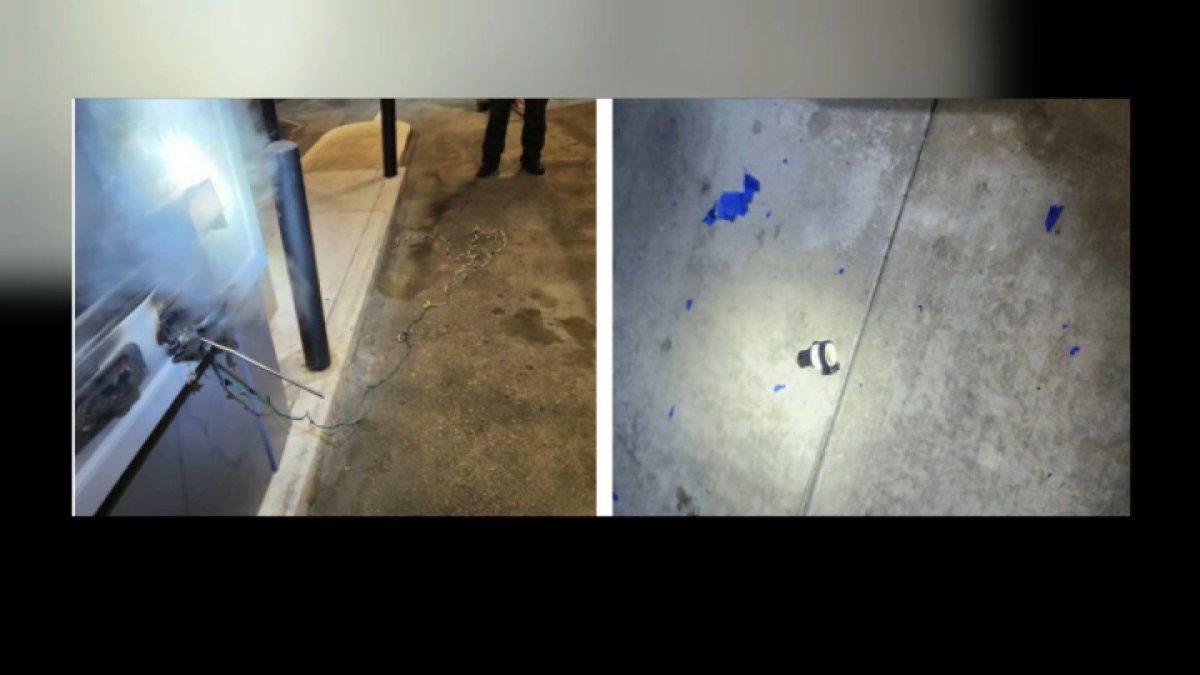
ATM Explosions & Financial Crime: A Deep Dive into the Rancho Bernardo Case
The brazen use of explosives targeting Automated Teller Machines (ATMs) is a growing concern within the financial security landscape. This article provides an in-depth analysis of a recent case involving Son Thanh Nguyen, a 46-year-old mira Mesa resident who pleaded guilty to federal charges related to an ATM explosion in Rancho Bernardo, California.We’ll explore the details of the incident, the investigative techniques employed, the legal ramifications, and the broader implications for ATM security and financial institutions. This case serves as a stark reminder of the evolving tactics employed by criminals and the constant need for enhanced preventative measures.
Did You Know? According to the FBI, ATM-related crimes have seen a resurgence in recent years, with a notable increase in the use of explosive devices, particularly in California and Texas. (Source: FBI Crime Data Explorer, 2024)
The Rancho Bernardo ATM Explosion: A Detailed Account
On June 28, 2024, a First Citizens Bank ATM in Rancho Bernardo was the target of a calculated attack. Son Thanh Nguyen drove to the location in the early morning hours and deployed an improvised explosive device (IED) into the cash dispenser slot. The resulting explosion completely destroyed the ATM, yet, remarkably, failed to yield any cash. This highlights a critical point: the sophistication of the method doesn’t always equate to success for the perpetrator.
Pro Tip: Financial institutions should regularly review and update their ATM security protocols, including enhanced surveillance systems, alarm integrations, and dye-pack deployment strategies.
The U.S. Attorney’s Office confirmed the use of an IED, indicating a level of pre-planning and technical knowledge on the part of Nguyen. The construction of such a device requires access to specific chemicals and equipment, raising questions about the source of these materials and potential connections to other illicit activities. The incident wasn’t isolated; investigators linked Nguyen to a similar attempted break-in at a California Coast Credit Union ATM in University Heights approximately two months prior. While Nguyen only pleaded guilty to the Rancho Bernardo incident, the pattern suggests a deliberate and escalating series of criminal acts.
Investigative Techniques & Evidence Gathering
The successful apprehension of nguyen hinged on meticulous investigative work. Key elements included:
* Surveillance Footage Analysis: Bank surveillance cameras captured footage of the vehicle used in the crime, allowing investigators to trace the license plate back to Nguyen. This underscores the importance of high-resolution, strategically positioned security cameras.
* Forensic Evidence: A subsequent search of Nguyen’s residence uncovered crucial evidence, including chemicals and equipment consistent with the construction of the IED. Clothing matching the attire worn during the ATM attack was also recovered. This demonstrates the power of physical evidence in linking a suspect to a crime scene.
* Digital Forensics: While not explicitly detailed in reports, it’s highly probable that digital forensics played a role, examining Nguyen’s electronic devices for evidence of planning, communication, or acquisition of materials.
* LSI Keywords: Forensic analysis, criminal investigation, evidence collection, surveillance technology.
What role do you think advancements in AI-powered video analytics could play in preventing ATM crimes?
Legal Ramifications & Sentencing
Nguyen pleaded guilty to one count of malicious use of fire and explosive materials to damage property. This federal charge carries meaningful penalties, including imprisonment and significant fines. The sentencing will likely consider factors such as the extent of the damage caused, the potential for harm to individuals, and Nguyen’s criminal history. The prosecution’s decision to focus on the Rancho Bernardo incident suggests a strategic approach, potentially securing a conviction on a stronger case while acknowledging complexities in proving the university Heights attempt.
| Crime | Potential Penalties (Federal) | Key Considerations |
|---|---|---|
| Malicious Use of Explosives | Up to 10 years imprisonment, $250,000 fine | Severity of damage, risk to public safety, prior criminal record |
| Attempted ATM Burglary | Up to 5 years imprisonment, $250,
Previous Article  Frosty the Snowman 2025: How & Where to Watch the Holiday ClassicAI Chip Shortage: SSD, SD Card & Flash Drive Delays – SanDisk, Samsung Impacted  Related Posts
Saturday Weather: Rain & Storms Forecast for Southern USDecember 27, 2025
Uzbekistan Economy: Record €123 Billion GDP & Mirziyoyev’s Reform ...December 27, 2025
Wong Apology: Bondi Attack & Jewish Community Concerns – Latest U ...December 27, 20251  2  3  4  5 |