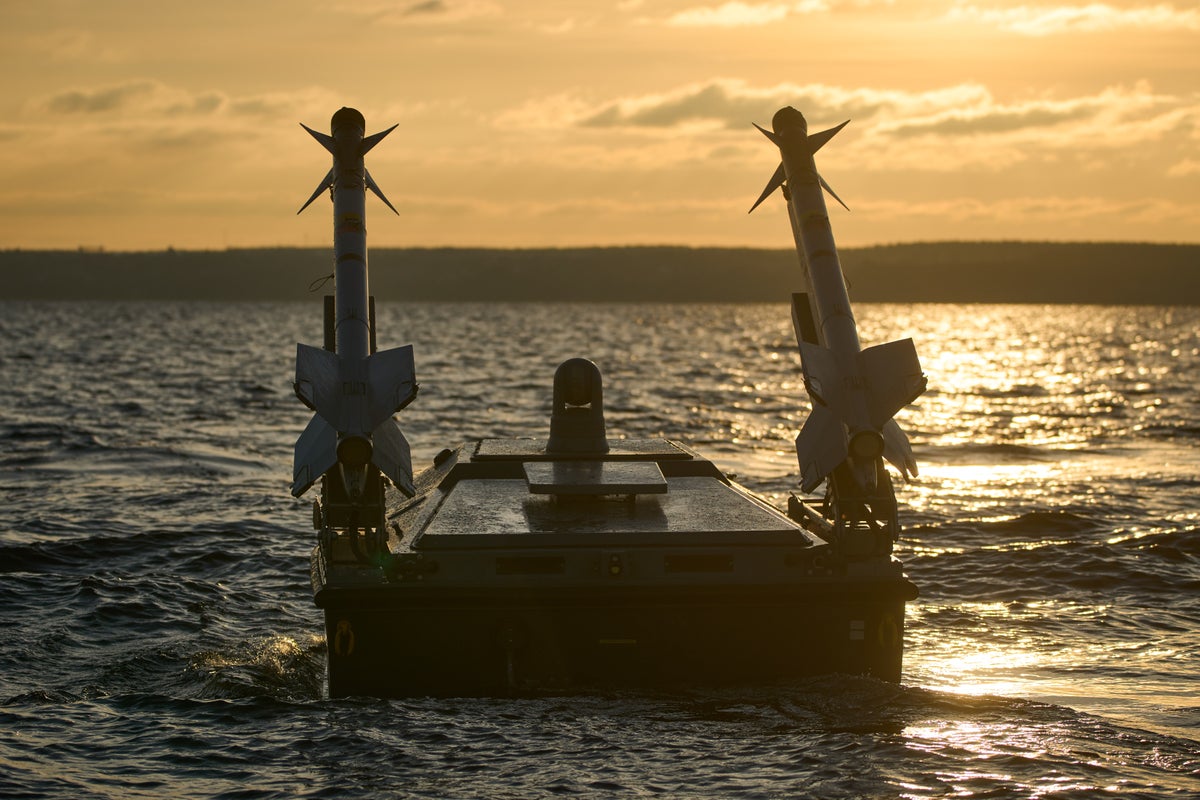
Ukraine’s Maritime Drone Warfare: A Turning Point Fueled by AI
ukraine is fundamentally reshaping naval conflict with its innovative use of sea drones, achieving a recent milestone by reportedly downing a Russian fighter jet – a feat the commander of Ukraine’s intelligence agency calls a “breakthrough.” This success isn’t a fluke, but the result of a strategic evolution, and the next phase promises even greater autonomy and effectiveness through advanced artificial intelligence.
A New Era of Maritime Operations
For years, naval warfare has been dominated by large, expensive warships.Though, Ukraine is demonstrating that a fleet of smaller, smarter, and more agile drones can disrupt that paradigm.these unmanned systems offer a cost-effective way to challenge conventional naval power, and they’re rapidly evolving.
Currently, target identification relies on a collaborative effort between human operators and AI.But the future, according to the commander, envisions a more independent drone capability.you can expect drones to launch, autonomously search for targets, differentiate between civilian and military vessels, and make critical decisions with minimal human intervention.
Leveraging Data for AI Advancement
this leap in autonomy is powered by a “huge amount” of operational data collected during ongoing conflict. Ukraine’s military is actively using this archive of video and sensor data to train increasingly complex AI models.This data-driven approach allows for continuous advancement in targeting accuracy and reduces the cognitive load on drone operators.
Here’s how Ukraine is advancing its drone capabilities:
* enhanced Targeting: AI algorithms are refining the ability to identify and prioritize threats.
* Autonomous Operation: Drones are gaining the capacity to operate with less direct human control.
* Civilian/Military Differentiation: Improved AI is crucial for minimizing collateral damage and adhering to international law.
* Reduced Operator Workload: Automation frees up personnel to focus on strategic oversight.
Expanding Partnerships and Future Development
Ukraine isn’t pursuing this revolution in isolation. They are actively seeking to expand co-production of drones with NATO countries, starting next year. This collaboration will accelerate development and bolster Ukraine’s drone fleet.
Recent agreements with greece exemplify this strategy. During President Zelenskyy’s visit to Athens, Kyiv and Athens announced joint initiatives including:
* Joint development of maritime uncrewed aerial vehicles (UAVs).
* Expanded training exercises.
* Increased data sharing on maritime threats.
Beyond these partnerships, Ukraine is exploring several promising avenues for future development. These include:
* Longer-Range Strike Capabilities: Extending the reach of drone operations.
* Submersible Drones: Adding a new dimension to maritime warfare.
* Complex mixed-Fleet Operations: Coordinating multiple drone types for enhanced effectiveness.
Maintaining Effectiveness Amidst Russian Adaptation
russia has undoubtedly begun to adapt to the threat posed by Ukrainian sea drones. Though, the commander emphasizes that Ukraine’s program remains highly effective. “We’re working on many fronts to change this situation and create a turning point,” he stated.
Currently, Ukraine is successfully “holding the enemy in check.” This demonstrates the resilience and adaptability of the program, and signals a important shift in the dynamics of the conflict.
Looking Ahead
Ukraine’s experience with maritime drones offers valuable lessons for navies worldwide.It highlights the potential of unmanned systems to disrupt traditional power structures and create new opportunities for asymmetric warfare. As AI continues to mature, you can expect to see even more sophisticated and autonomous drone capabilities emerge, further solidifying their role as a critical component of modern naval strategy.
Worth a look