The Precision of Cell Division: Rethinking CENP-E‘s role in Chromosome Alignment and its Implications for Cancer Therapy
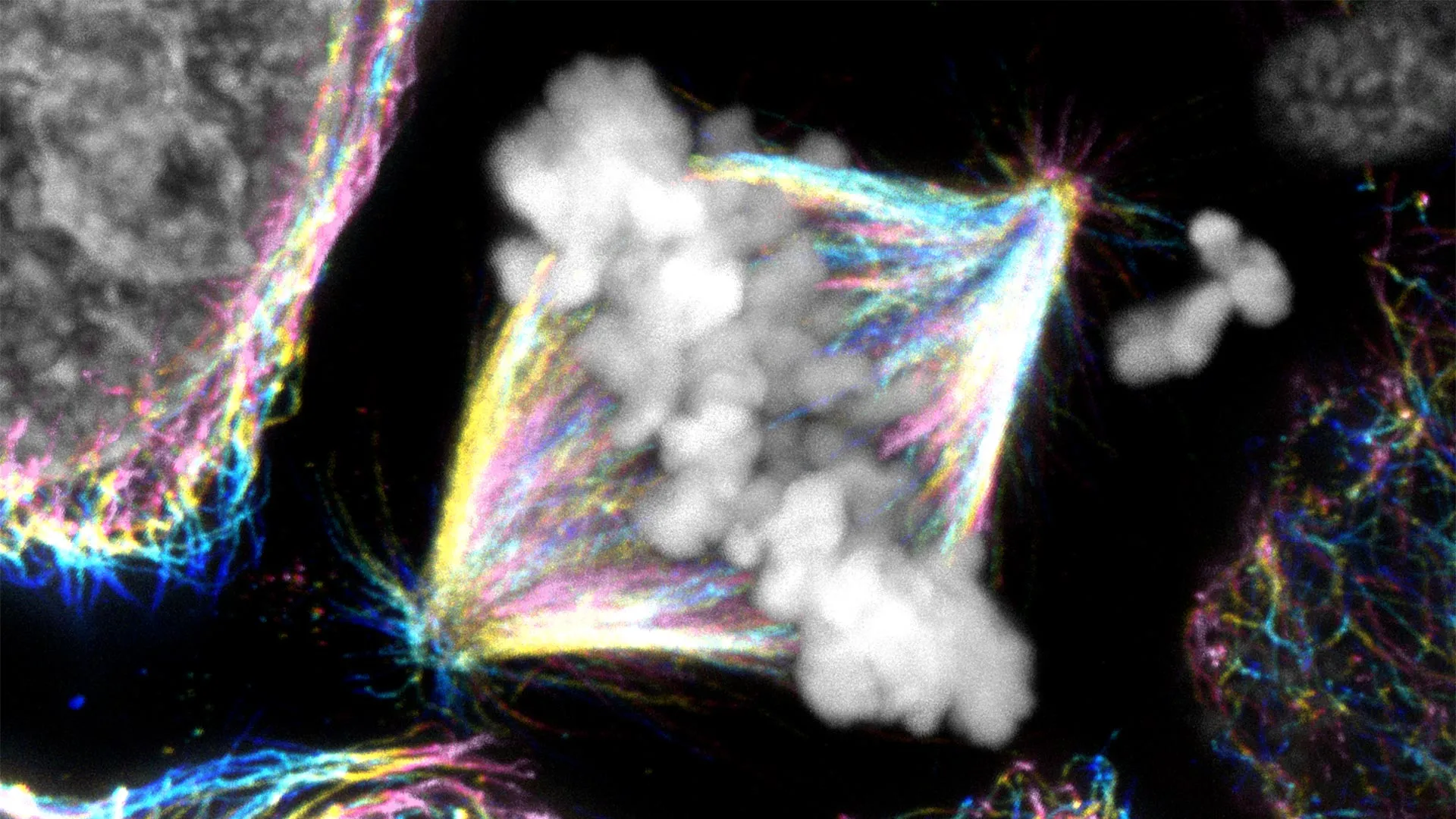
For decades, the intricate choreography of cell division – mitosis – has been a central focus of biological research. A critical step in this process is ensuring each chromosome accurately connects to the cellular machinery (microtubules) and aligns correctly at the center of the cell before splitting. Recent groundbreaking research from the University of Zagreb is fundamentally reshaping our understanding of how this alignment, known as congression, is achieved, with notable implications for understanding and potentially treating cancer.
The Long-Held Belief and the Emerging Reality
Traditionally, the protein CENP-E was considered the “engine” driving lagging chromosomes towards the center of the dividing cell.Textbooks have, for nearly twenty years, depicted it as a motor protein actively pulling chromosomes into position. Though, this model has now been challenged by a meticulous examination led by researchers at the University of Zagreb, revealing a far more nuanced role for CENP-E.
Instead of a locomotive, CENP-E functions as a crucial coupling mechanism. It secures the initial connection between a chromosome and the microtubules,acting as a stabilizer rather than a driver. Without this stable connection, chromosomes stall at the periphery of the cell, unable to progress through mitosis. This revelation represents a significant paradigm shift in cell biology, moving away from a force-based clarification towards a model centered on precise regulation and timing.
Aurora Kinases: The Traffic Control System of Chromosome Movement
The Zagreb team’s work also illuminates the role of Aurora kinases, a family of proteins acting as critical regulators of chromosome attachment. these kinases generate “red light” signals that prevent premature or incorrect attachments between chromosomes and microtubules, particularly near the poles of the cell. While essential for preventing errors, these signals can sometimes be to effective, hindering the formation of even correct attachments.
This is where CENP-E steps in.The research demonstrates that CENP-E modulates the activity of Aurora kinases, fine-tuning their signals to allow the first stable, correct attachments to form. Once this initial connection is established, the inherent geometry of the mitotic spindle and the dynamic behavior of microtubules naturally guide the chromosome to its correct position. As Dr. Tolić eloquently puts it, “It’s not about brute force, it’s about creating the conditions for the system to run smoothly.”
Why This Matters: The Link to Cancer and Therapeutic Potential
the implications of this research extend far beyond refining textbook diagrams. errors in chromosome segregation are a defining characteristic of cancer cells. Tumors frequently exhibit chromosomal abnormalities – duplications or deletions of chromosome segments – frequently enough stemming from failures in the initial attachment process.
By demonstrating that CENP-E regulates these earliest attachments and directly interacts with Aurora kinase activity, the zagreb team has bridged two previously considered independent processes. This connection reveals a potential vulnerability in rapidly dividing cancer cells. Targeting this regulatory mechanism could offer new avenues for therapeutic intervention, potentially correcting or slowing down aberrant cell division.
“This isn’t just about rewriting a model,” emphasizes Dr. Vukušić, “It’s about identifying a mechanism that directly links to disease. That opens doors for diagnostics and for thinking about new therapies.” Specifically, understanding how CENP-E and Aurora kinases interact could lead to the growth of drugs that selectively disrupt this process in cancer cells, leaving healthy cells relatively unaffected.
A Testament to Collaborative,Cutting-Edge Research
This groundbreaking work was made possible by ample funding from the European Research Council,the Croatian Science Foundation,and various EU development programs. It also highlights the increasing importance of computational biology, leveraging advanced computing resources at the University of Zagreb’s SRCE center alongside conventional laboratory techniques.
The success of this research underscores the power of interdisciplinary collaboration and international partnerships in tackling complex biological questions. It’s a prime example of how modern biology transcends the boundaries of microscopes and test tubes, embracing computation and collaborative expertise.
Maintaining Order in a Chaotic Process
Cell division is a remarkably complex process, occurring trillions of times daily within the human body. Each division must overcome the inherent tendency towards disorder to ensure genetic stability. The research from Zagreb provides a crucial piece of the puzzle, revealing a hidden strategy cells employ to maintain this order.By reinterpreting the role of CENP-E and its connection to other cellular regulators, the team has considerably advanced our understanding of this fundamental biological process.
ultimately, this discovery isn’t just about understanding how cells divide; it’s about understanding why they sometimes fail, and how we can intervene to correct those failures – a critical step towards developing more effective cancer therapies and improving human health.
**Key elements incorporated to achieve E-E-A-
Keep reading