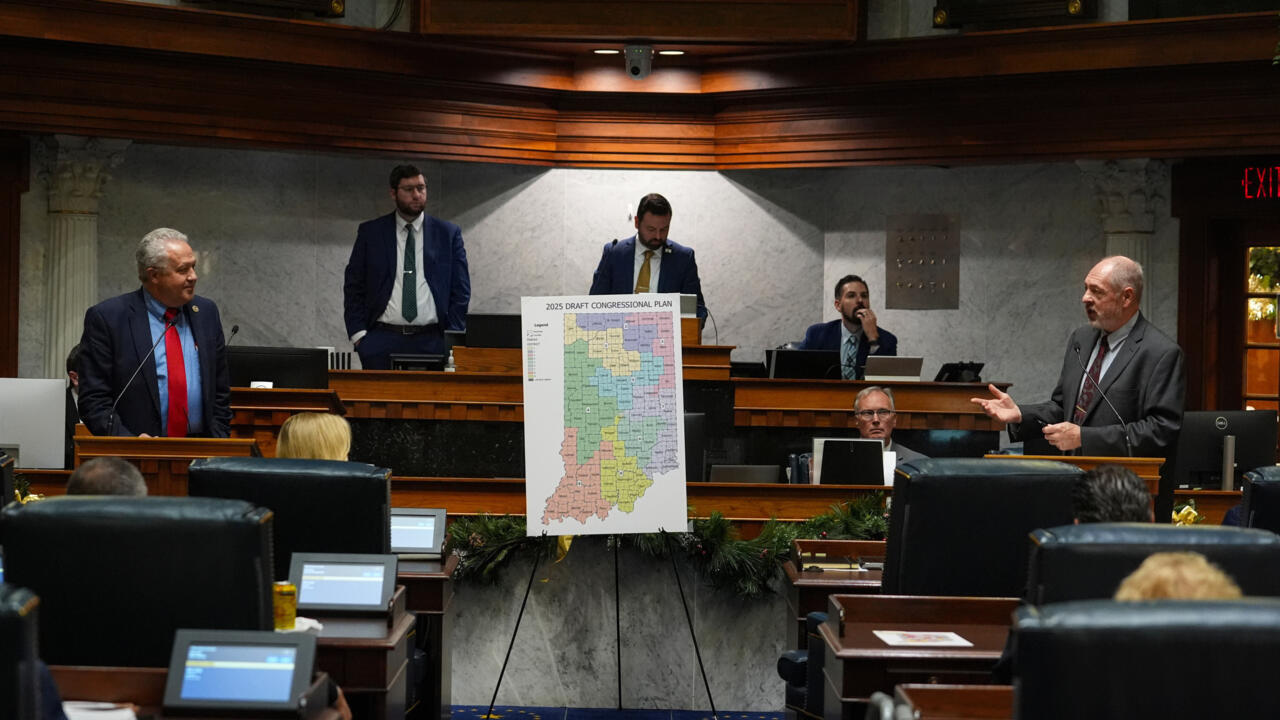
Trump’s Redistricting Push Suffers Major Setback in Indiana, Signaling a Shifting Landscape for 2026
Donald Trump’s ambitious and controversial attempt to engineer a Republican advantage in the 2026 midterm elections hit a notable roadblock this week. The Indiana State Senate delivered a stunning rebuke to the former president, rejecting a proposed mid-decade redistricting map despite intense pressure from the White House. This defeat underscores a growing tension within the Republican party and highlights the increasingly complex battle for control of the US House of Representatives.
For months, Trump has been advocating for Republican-led states to redraw congressional districts before the 2030 census. This unprecedented move aims to capitalize on current legislative majorities and solidify Republican dominance. It breaks with decades of established political practice, which typically ties redistricting to the decennial census data.
A National Redistricting War
The Indiana setback is just one front in a broader national struggle over electoral maps. Hear’s a breakdown of the key developments:
* Texas: The Supreme Court recently approved a Republican-drawn map in Texas, projected to add five seats to the Republican column.
* California: In direct response, California voters approved a Democratic-drawn map, aiming to offset Texas’s gains with a potential addition of up to five Democratic seats.
* Virginia,Maryland,and Illinois: These states are actively considering similar mid-cycle redistricting efforts.
* North Carolina & Missouri: Republicans have secured smaller redistricting wins in these states.
* Florida: florida Republicans are signaling a potential revision of their existing map.
Trump’s heavy-Handed Tactics Backfire
The Indiana situation revealed the extent to which Trump was willing to intervene. He personally called state lawmakers, and unleashed a barrage of social media attacks against those who opposed his plan. He even threatened primary challenges against dissenting Republicans, singling out Senate Republican Rodric Bray as “either a bad guy, or a very stupid one!”
Trump warned on his Truth Social platform that any Republican opposing redistricting would face a “MAGA Primary” challenge in the spring. Though,Bray and over a dozen other Indiana Republican senators stood firm,arguing that the votes simply weren’t there to pass the proposed map.
This resistance demonstrates a growing discomfort within the party regarding Trump’s aggressive tactics and the potential for overreach. You might be wondering why this matters. It’s a sign that even within a party largely loyal to Trump, there are limits to how much pressure lawmakers will accept.
Escalating Threats and safety Concerns
The situation in Indiana took a disturbing turn with reports of threats against republican lawmakers who publicly opposed the redistricting plan. Several reported being targeted by “swatting” incidents and even receiving pipe-bomb threats. This escalation highlights the increasingly polarized political climate and the dangers of inflammatory rhetoric.
What Does This Mean for 2026?
The Indiana defeat doesn’t necessarily derail Trump’s overall strategy, but it’s a significant blow. It reveals vulnerabilities in his approach and suggests that his heavy-handed tactics may not always be effective.
here’s what you should watch for:
* Continued Legal Challenges: Redistricting maps, nonetheless of which party draws them, are almost certain to face legal challenges alleging gerrymandering.
* State-by-State Battles: The fight for control of congressional districts will continue to play out in state legislatures across the country.
* Impact on House Control: The outcome of these redistricting battles will have a direct impact on the balance of power in the US House of Representatives,and ultimately,the future of American politics.
Ultimately,the Indiana outcome serves as a potent reminder that even with a former president’s backing,political realities on the ground can prove surprisingly resilient. The 2026 midterm elections are shaping up to be a fiercely contested battle, and the fight over redistricting is a crucial component of that struggle.
Disclaimer: This article is based on reporting from France 24 and AFP as of December 6, 2025. The political landscape is subject to change.
Keep reading