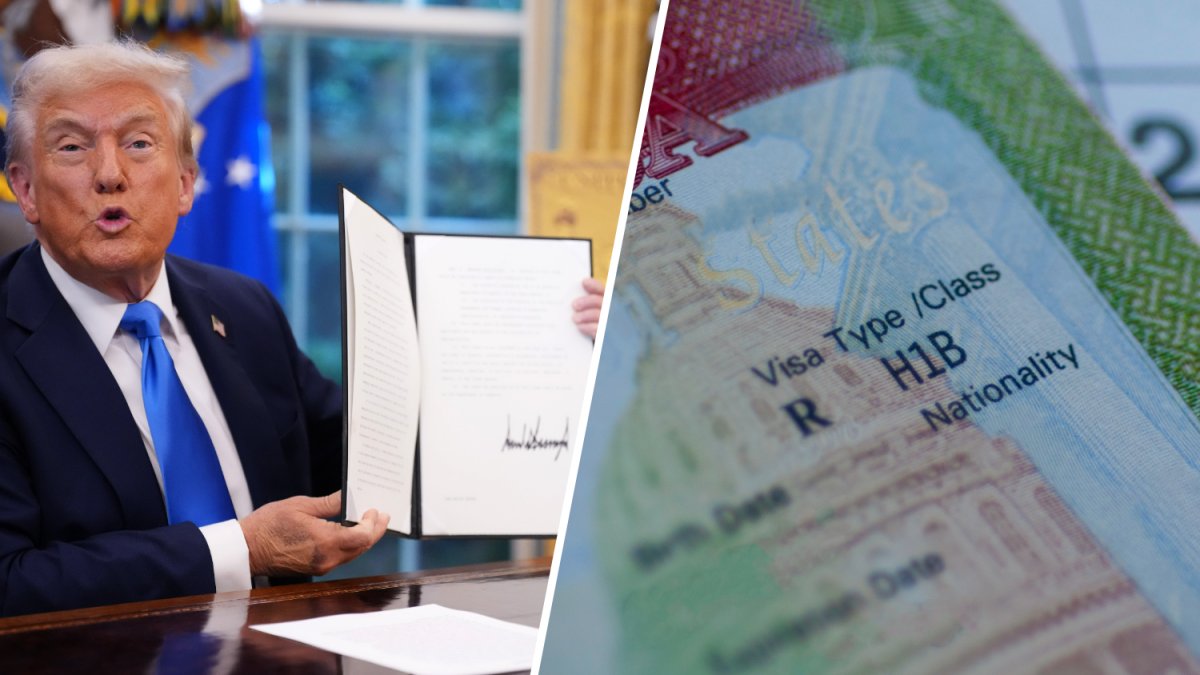
$100,000 H-1B Visa Fee: California Leads legal Challenge Against Trump Management
Are you an employer relying on skilled foreign workers? Or perhaps a professional considering an H-1B visa to pursue opportunities in the US? The recent imposition of a $100,000 fee on new H-1B visa applications has sent shockwaves through industries nationwide. This article breaks down the legal battle unfolding,the potential impact on California,and what it means for you.
The Legal Challenge: A Fight Over Authority
California Attorney General rob Bonta, alongside 19 other state attorneys general, has filed a lawsuit against the Trump administration over the newly implemented H-1B visa fee. The core argument? The fee is illegal.
The states contend the Department of Homeland Security (DHS) overstepped its authority by enacting this significant fee without Congressional approval or the legally required public notice and comment period. Attorney General bonta emphasized this point during a press conference, stating the administration cannot unilaterally “rewrite immigration law.”
This isn’t simply a disagreement over policy; it’s a constitutional challenge. The lawsuit,filed in federal court in Massachusetts,asserts the President cannot bypass Congress or disregard established legal procedures. This marks California’s 49th legal challenge against the Trump administration this year, highlighting a pattern of opposition to federal policies.
Why This Matters: Impact on California & Beyond
The $100,000 H-1B visa fee isn’t just a financial burden – it’s a potential crisis for critical sectors.California, in particular, stands to be significantly impacted.
Consider these key points:
* Healthcare Shortages: Nearly 17,000 individuals working in medicine and healthcare in fiscal year 2024 held H-1B visas, with half being physicians and surgeons.
* Access to Care: The increased cost coudl force hospitals and clinics to leave positions unfilled, leading to fewer providers, longer wait times, and reduced access to care, especially for vulnerable populations.
* Future Physician Shortfall: Without H-1B visa holders, the US could face an 86,000 physician shortfall within the next decade.
* Broader Labour Market: Beyond healthcare, sectors like education and technology also rely on H-1B visas to fill critical skill gaps.
Bonta argues the fee is “devastating” given existing labor shortages. it threatens to exacerbate these issues,hindering economic growth and impacting essential services.
The Other Side: Protecting American Jobs?
The Trump administration defends the fee as a measure to “protect American jobs.” The White House argues that some companies, especially in the tech industry, have abused the H-1B system to find cheaper labor.
Prior to this new policy,employers faced fees ranging from $960 to $7,595 when filing an initial H-1B petition. The $100,000 fee represents a dramatic increase, intended to disincentivize the hiring of foreign workers.
This perspective resonates with supporters of the “Make America Great Again” movement, who believe prioritizing American workers is paramount. However, critics argue this approach overlooks the vital contributions of skilled immigrants and the economic benefits they bring.
What Happens Next?
The lawsuit is currently progressing through the federal court system. The outcome will have far-reaching implications for employers, foreign workers, and the US economy.
The Department of Homeland Security and Department of Labor have been contacted for comment, but have not yet responded. We will continue to monitor the situation and provide updates as they become available.
Evergreen Insights: Understanding the H-1B Visa Program
The H-1B visa program has been a subject of debate for years. Here’s a deeper look at its purpose and complexities:
* what is it? The H-1B visa allows US employers to temporarily employ foreign workers in specialty occupations that require theoretical or technical expertise.
* Who is eligible? Applicants typically need a bachelor’s degree or equivalent experience.
* Annual Cap: There’s an annual cap of 65,000 H-1B visas, with an additional 20,000 reserved for those with US master’s degrees or higher.
* Lottery System: Demand often exceeds the available visas, leading to a lottery selection process.
* Prevailing Wage: employers must pay H-1B
- Более 150 будущих педагогов получат губернаторскую стипендию – Одноклассники
- Chinese AI has leveled up, and brought renewed focus on the open weight model shift
- Trump Threatens Tariffs on Canada Over Wildfire Smoke and Forest Management (time.news)
- What Is a 'Blue Slip'? The Senate Custom Trump Wants Gone (daybreakwire.com)