AI-Powered breakthrough Offers hope for Next-Generation Mpox adn Smallpox Vaccines
The recent global outbreak of mpox (formerly monkeypox), sickening over 150,000 people and resulting in nearly 500 deaths in 2022, underscored the urgent need for improved preventative and therapeutic strategies. Current reliance on smallpox vaccines – while effective – presents critically important challenges due to their complex manufacturing process and high cost. Now, a groundbreaking study published in Science Translational medicine details a promising new approach leveraging the power of artificial intelligence to identify a key viral target, paving the way for more accessible and effective mpox and perhaps smallpox vaccines and antibody treatments.
The Limitations of Current Approaches & The Promise of Targeted Intervention
Existing mpox prevention relies heavily on vaccines originally developed for smallpox. These vaccines utilize a live, attenuated (weakened) virus, making their production a lengthy, expensive, and logistically complex undertaking. A more streamlined solution – a vaccine based on a single, easily manufactured protein – has long been a goal for researchers.The challenge lay in identifying which viral protein would elicit a robust immune response capable of neutralizing the virus.
“Unlike a whole-virus vaccine that’s big and elaborate to produce, our innovation is just a single protein that’s easy to make,” explains Jason McLellan, professor of Molecular Biosciences at The University of Texas at Austin and co-lead author of the study.This shift towards a subunit vaccine – focusing on a specific viral component – represents a significant advancement in vaccine advancement.
Unlocking the Viral Puzzle with artificial Intelligence
The research team, a collaboration between The University of Texas at Austin and the Fondazione Biotecnopolo di Siena in Italy, began by analyzing blood samples from individuals who had recovered from mpox or been previously vaccinated. They successfully identified 12 neutralizing antibodies, but pinpointing the specific viral protein these antibodies targeted proved elusive. Mpox displays numerous surface proteins, and identifying the crucial one responsible for infection and susceptible to antibody neutralization was a daunting task.
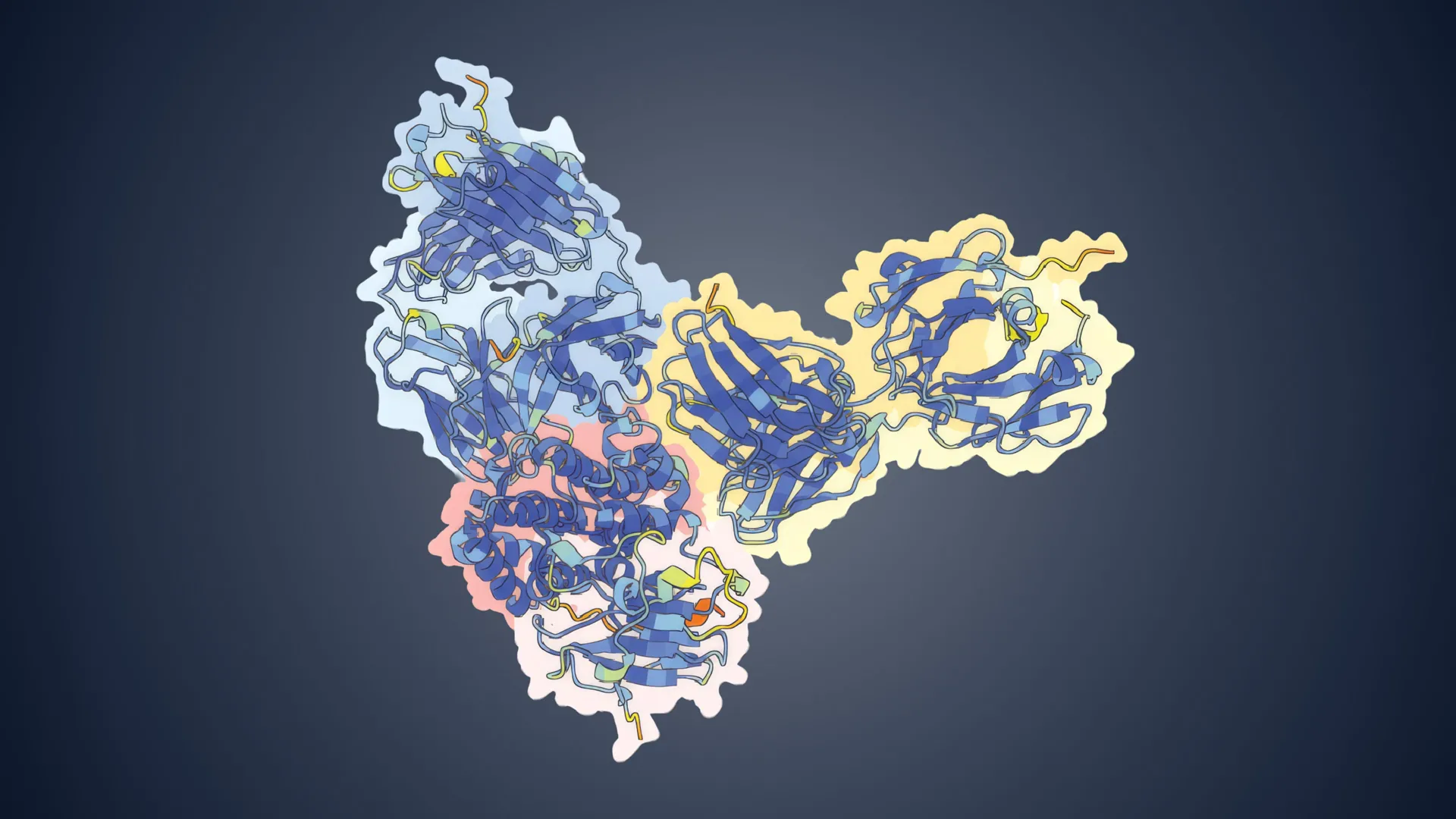
This is where the power of AI came into play. Researchers utilized the AlphaFold 3 model – a cutting-edge AI system capable of predicting protein structures and interactions – to analyze the roughly 35 viral surface proteins and predict which were most likely to bind strongly to the identified antibodies.
The results were striking. AlphaFold 3 confidently identified a previously overlooked protein, OPG153, as a prime candidate. Subsequent laboratory testing confirmed the AI’s prediction: OPG153 is indeed a key target for neutralizing antibodies.
“It would have taken years to find this target without AI,” McLellan emphasizes. “It was really exciting because no one had ever considered it before for vaccine or antibody development. It had never been shown to be a target of neutralizing antibodies.”
Implications for Mpox and Smallpox – A Dual Benefit
The revelation of OPG153 as a critical antigen holds significant implications for both mpox and smallpox. Given the close evolutionary relationship between the two viruses, a vaccine or antibody therapy targeting OPG153 could potentially offer protection against both diseases. This is notably crucial for smallpox, a highly transmissible and deadly pathogen that remains a biosecurity concern.
“Reverse Vaccinology” and the Path Forward
The research team is now focused on refining OPG153 and the identified antibodies to enhance their effectiveness, reduce production costs, and simplify manufacturing. This approach, dubbed “reverse vaccinology” by McLellan, represents a paradigm shift in vaccine development.
“We started with people who survived infection with monkeypox virus, isolated antibodies that they naturally produced and worked backward to find what part of the virus acted as the antigen for those antibodies. Then we engineered the antigen to elicit similar antibodies in mice,” McLellan explains.
UT Austin has filed a patent submission for the use of OPG153 (and its derivatives) as a vaccine antigen, and the Fondazione Biotecnopolo di Siena has filed a patent application for antibodies that target OPG153, signaling a strong commitment to translating this research into tangible solutions. The ultimate goal is to initiate human clinical trials to evaluate the safety and efficacy of these next-generation mpox and smallpox vaccines and antibody therapies.
Expert Commentary & Why This matters
This research represents a significant leap forward in our ability to combat poxviruses. The triumphant application of AI in identifying a previously unknown viral target demonstrates the transformative potential of computational biology in accelerating vaccine development. The promise of a simpler, more affordable, and readily scalable vaccine is particularly encouraging, offering a pathway to protect vulnerable populations and prepare for future outbreaks. This work not onyl addresses the immediate threat of mpox but also strengthens our defenses against the potentially devastating consequences